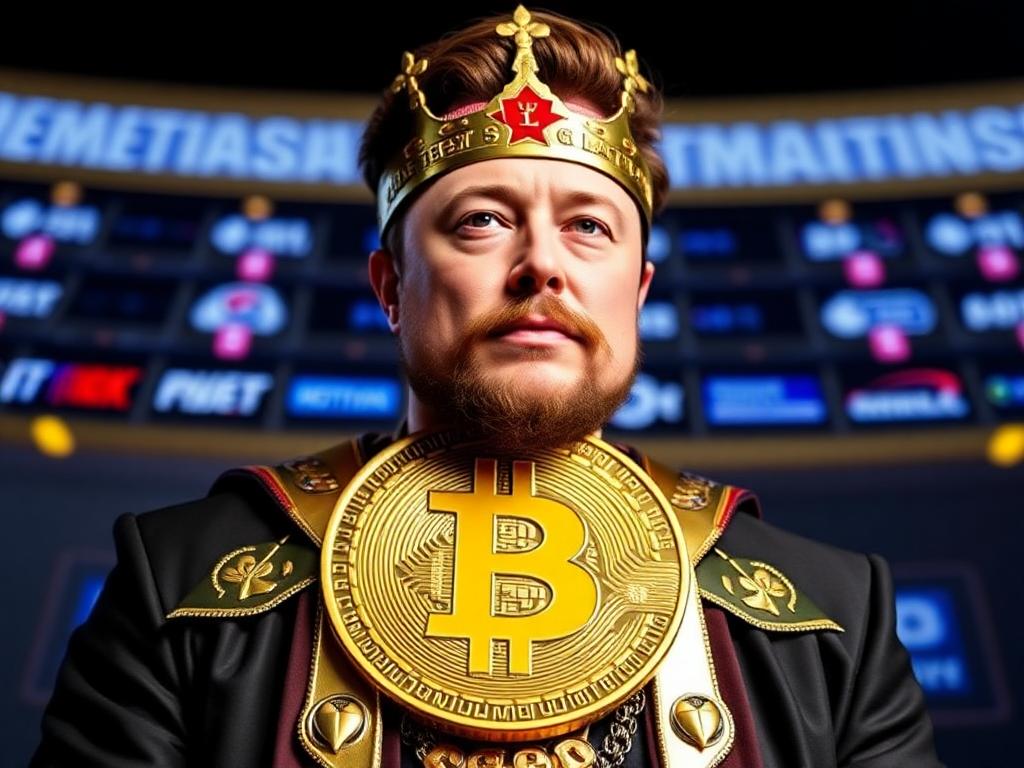
Elon Musk has once again captured the internet’s attention with his latest transformation. On Wednesday, he updated his profile on X (formerly Twitter), adopting the name “Kekius Maximus.” This enigmatic alias, blending pop culture references with internet subtext, has left his 210 million followers speculating wildly.
Accompanying the name change, Musk updated his profile picture to a cartoon image of Pepe the Frog. The iconic character is depicted in Roman regalia, clutching a video game controller—a striking departure from Musk’s usual style.
While Musk has offered no explanation for this unexpected rebranding, the move has triggered a ripple effect across various online communities. Within hours, the value of a little-known cryptocurrency sharing the name “Kekius” surged dramatically, with investors scrambling to cash in on the sudden spotlight.
The name itself seems to be a fusion of “Maximus Decimus Meridius,” the Roman hero from Gladiator, and “kek,” a term originating from gaming culture that has since been co-opted by certain online groups. Some see the move as playful, while others worry it could inadvertently signal affiliation with controversial ideologies.
Pepe the Frog, initially an innocuous comic character, has a fraught history. Though widely used in non-offensive ways, it has been associated with fringe groups, sparking debates over its symbolism. Musk’s use of the meme in Roman attire has only added to the intrigue.
Observers and analysts are divided on the motivation behind this change. Is Musk simply having fun? Or is there a deeper strategy at play, perhaps to influence crypto markets or provoke debate?
Whatever the case, Musk’s online antics have reignited discussions about internet culture and its intersections with modern-day influence.
What’s your take on Musk’s latest move? Is it clever marketing, harmless fun, or something more? Share your thoughts below and join the conversation!
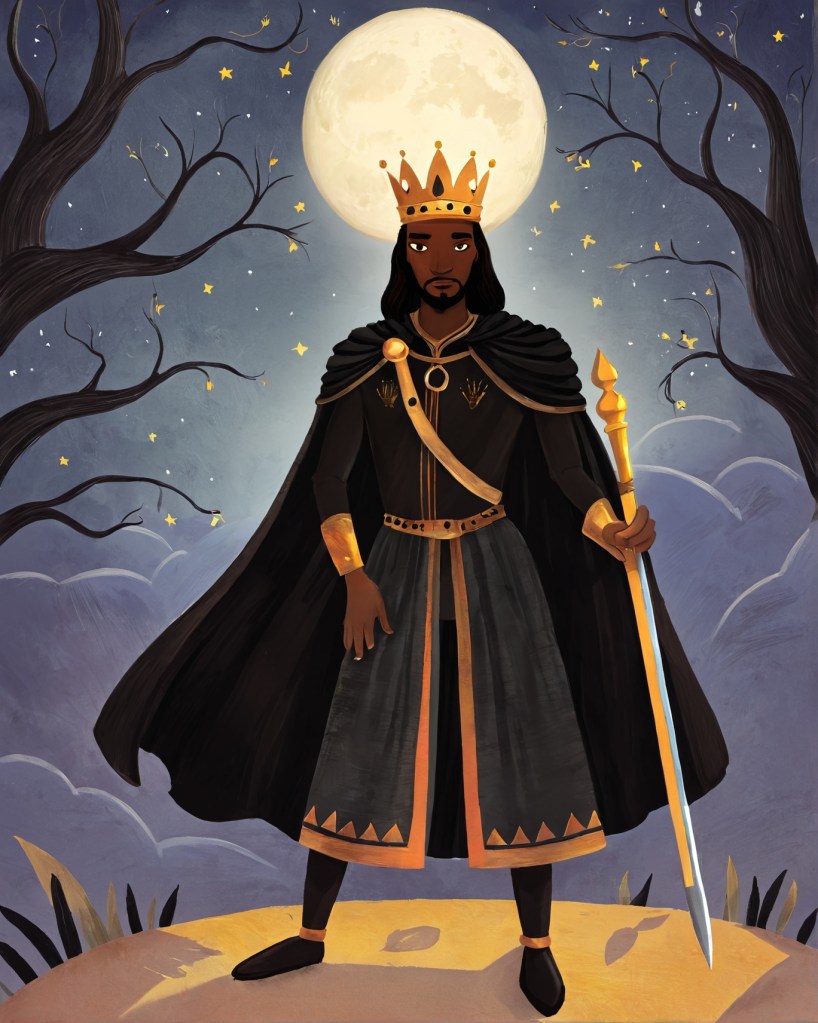
Darkness has always fascinated humankind, from ancient myths to modern-day storytelling. One of the most intriguing figures that emerges from the depths of imagination is the King in Black. Whether depicted as a mythical ruler of shadows, an antagonist in fantasy lore, or a metaphor for power corrupted by darkness, the King in Black captivates audiences with his mystery, menace, and allure.
In this article, we’ll explore the essence of the King in Black, his symbolic meanings across cultures, his influence in pop culture, and why this enigmatic figure still resonates with readers today. Stay until the end and let us know your thoughts—like, comment, and share your interpretation of the King in Black!
Who is the King in Black?
The King in Black represents dark authority—a ruler who controls, or is consumed by, the forces of shadow. Unlike ordinary kings, this figure operates in the realm beyond light, where power is shrouded in mystery. He doesn’t rule through kindness but through fear, manipulation, and cunning strategies. Yet, he isn’t always a villain; sometimes, he symbolizes the balance necessary to maintain cosmic harmony.
In many stories, the King in Black embodies themes of:
Control over darkness: Commanding unseen forces or forbidden knowledge.
Isolation and fear: His power often leaves him alienated, both feared and misunderstood.
Duality: While darkness suggests evil, it can also imply hidden wisdom or protection.
The King in Black Across Myths and Stories
Many cultures have versions of a shadowed ruler, each offering a unique take on what it means to command darkness. Let’s explore a few of these interpretations:
Mythological Archetypes: In Norse mythology, Loki, the trickster god, is often depicted as a chaotic ruler who thrives in the shadows. Similarly, in Hindu mythology, Rahu—the dark planet—represents an eclipse, symbolizing hidden power that disrupts light. Both characters embody the King in Black’s archetype: a figure of darkness who disrupts the order yet holds crucial knowledge.
Literary Inspirations: Writers have often explored the trope of the shadow king. Shakespeare’s Macbeth, for instance, shows how ambition and the allure of power plunge a king into moral darkness. Meanwhile, in fantasy fiction, characters like Sauron from The Lord of the Rings demonstrate how darkness can corrupt, transforming rulers into tyrants.
Modern Interpretations: In pop culture, the King in Black motif has evolved into characters such as villainous overlords in comics and films. These figures often represent chaos, rebellion, or the seductive appeal of forbidden power. The King in Black (Knull) from the Marvel Universe is a perfect example—a dark god who controls a symbiotic army and wages war against light itself.
The Seduction of Darkness: Why the King in Black Fascinates Us
Why does the figure of the King in Black intrigue so many readers? The answer lies in his duality. He represents not just darkness as evil, but the inner struggle within every person. We are drawn to characters who embody the fear we suppress—our insecurities, our ambition, and our desire for control. The King in Black’s story is a cautionary tale about what happens when the thirst for power overwhelms the light within us.
But it’s also a story of redemption. The darkness can teach us resilience, introspection, and the courage to confront what we fear most. It invites us to ask: Can there be light without shadow?
How the King in Black Connects with Today’s World
The King in Black’s symbolism resonates strongly in today’s world, where people constantly battle inner conflicts. We are drawn to stories where darkness is not just fought but understood. Whether it’s through fantasy novels, films, or graphic novels, readers and audiences connect with the King in Black because he reflects our personal struggles—from dealing with mental health issues to the fight between ambition and humility.
Moreover, the King in Black teaches us that even in the darkest moments, knowledge and power can be found, as long as we don’t lose ourselves to the void.
What Does the King in Black Mean to You?
The King in Black isn’t just a character from ancient myths or modern fantasy; he is a symbol that takes on different meanings depending on the person interpreting him. Some may see him as a villain, others as a tragic figure consumed by ambition. Some may find comfort in his darkness, while others fear his shadowy reign.
What’s your interpretation of the King in Black? Do you think his story is one of redemption or ruin? Let us know your thoughts in the comments below!
Conclusion: The Eternal Reign of the King in Black
The King in Black’s story is far from over—his presence continues to evolve in literature, films, and cultural conversations. Whether as a figure of fear, wisdom, or duality, he challenges us to confront the darkness within and around us.
If this exploration of the King in Black intrigued you, don’t keep it to yourself—like, comment, and share this article to spark more conversations! Let’s see how many different interpretations of the King in Black we can gather from readers like you!
 Janson's blog