The Agonizing Tragedy of Sohrab and Rustum: A Heartbreaking Tale of Fate and Folly
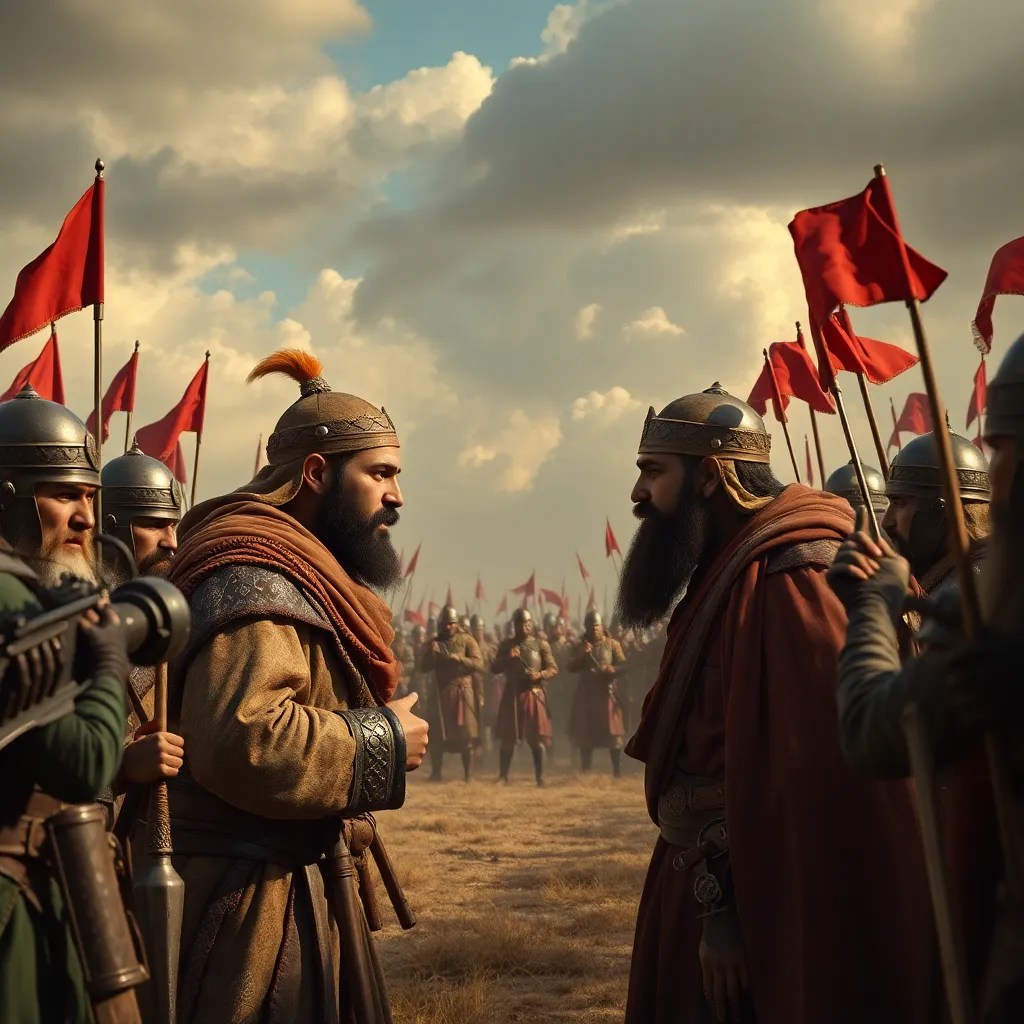
In the vast expanse of Persian literary heritage, few tales resonate as profoundly as the heartbreaking story of Sohrab and Rustum, retold with somber brilliance by Matthew Arnold in his 1853 narrative poem. Derived from Ferdowsi’s Shahnameh, Arnold reimagines the timeless tragedy in English verse, infusing it with profound melancholy and stoic inevitability that haunt the soul long after the final line. With every word, Arnold masterfully amplifies the grief of a father and son locked in a cruel embrace of fate, where recognition comes only too late.

The Fateful Protagonists: Sohrab and Rustum

Sohrab, the embodiment of youthful vigor and unbridled ambition, charges onto the battlefield with dreams of glory. He is the very image of a noble warrior, endowed with both strength and compassion. Yet his innocence, his yearning for recognition, and his tender hope to find the father he has never known—these very qualities make his tragic end all the more unbearable.

Opposite him stands Rustum, the famed warrior of Persia, weighed down by the burdens of age, pride, and a lifetime of battles. Rustum, whose greatness echoes across empires, is a man blind to the threads of fate that bind him to the very foe he faces. His ignorance of Sohrab’s identity, though understandable, fills the reader with a crushing sense of foreboding. The tragedy is not merely in their fatal combat but in Rustum’s unyielding belief that he fights an anonymous enemy, only to discover—when it is far too late—that the boy he has slain is his own flesh and blood.

The Supporting Figures and the Unseen Forces of Fate

Arnold’s verse introduces us to figures and forces that deepen the tragedy of Sohrab and Rustum. Tahmineh, Sohrab’s mother, remains a spectral presence throughout the narrative, her unspoken anguish lingering in the background. She bore Sohrab after a single night with Rustum and raised him alone, never revealing his lineage. This secret, rooted in her fear of losing her child to Rustum’s martial world, sows the seeds of the catastrophe.

Even Rustum’s horse, the magnificent Ruksh, becomes a silent participant in the tragedy. Ruksh, Rustum’s steadfast companion in countless battles, symbolizes loyalty and duty—qualities that propel Rustum toward a fatal confrontation with his own son.

The world of Sohrab and Rustum is also one of stoic landscapes that seem to reflect the characters’ despair. The Oxus River, meandering through the poem with an indifferent constancy, becomes a powerful metaphor for the relentless flow of time and fate. It witnesses the folly of men, absorbs their grief, and carries their stories to oblivion.

The Tragic Duel: A Slow-Building Crescendo of Sorrow

Arnold’s rendering of the climactic battle is a masterclass in restrained yet devastating storytelling. The duel between Sohrab and Rustum unfolds with a tragic inevitability that grips the heart. Arnold describes the clash of father and son with vivid detail, capturing the raw power of their combat while letting the emotional weight simmer beneath the surface. Sohrab’s youthful vigor matches Rustum’s seasoned strength, but the older warrior’s experience proves decisive.

When Rustum’s final, fatal blow lands, it is not triumph but doom that settles over the battlefield. Sohrab’s dying words—his revelation of his parentage—pierce Rustum like a dagger. The mighty warrior, who has vanquished countless foes, is brought to his knees by the cruel irony of fate. Arnold’s language here is devastatingly beautiful, painting Rustum not as a hero but as a broken man, shattered by the realization that his own hand has destroyed his legacy.

Grief Beyond Words: The Universal Tragedy

What makes Sohrab and Rustum so heart-wrenching is its universal resonance. At its core, the poem is not just about a father and son—it is about the devastating consequences of misunderstanding, pride, and the inexorable march of fate. Sohrab dies not only because Rustum fails to recognize him, but because the forces of the universe seem to conspire against them.

Arnold’s melancholic tone is unrelenting, and the reader cannot help but feel both sympathy for Rustum and an overwhelming grief for Sohrab. Rustum’s anguish is palpable as he cradles his dying son, a moment of recognition that comes far too late. And as the Oxus River flows on, indifferent to the tragedy it has witnessed, the reader is left with an aching sense of loss.

The Eternal River: A Metaphor for Life’s Indifference

The poem’s final lines, which describe the eternal flow of the Oxus River, serve as a poignant reminder of life’s indifference to human suffering. While Sohrab’s death devastates Rustum and echoes in the hearts of readers, the river flows on, unchanging, unconcerned. Arnold’s imagery here is haunting, driving home the idea that human grief, no matter how profound, is but a ripple in the vast ocean of existence.

Why This Tale Still Matters

Arnold’s Sohrab and Rustum endures not only for its poetic beauty but for its emotional depth. It is a story that forces us to confront the fragility of human connections and the inexorable power of fate. The characters, though drawn from an ancient epic, feel achingly real in their struggles and sorrows.

In a world often consumed by pride, misunderstanding, and unspoken truths, Sohrab and Rustum is a timeless reminder of the cost of silence and the tragedy of missed opportunities. It compels us to question how often we, like Rustum, fail to see the truths before us until it is too late.

As readers, we are left mourning for Sohrab, who dies with unfulfilled dreams and unanswered questions, and for Rustum, whose legendary strength cannot shield him from the most devastating blow of all. Their story is a testament to the enduring power of love, loss, and the human condition.

Share Your Thoughts

If this tale of devastating loss and unspoken truths has moved you, share your thoughts in the comments. How did Sohrab’s innocence and Rustum’s grief impact you? Let us grieve together for a tragedy that transcends time.

Click like if this tale stirred your soul, and share this article with others who need to experience the haunting beauty of Sohrab and Rustum. Perhaps, in their story, we can find a reflection of our own lives—and a lesson we must never forget.
Popular Literary Forms in 2024

In 2024, various forms of literature continue to captivate readers, each with its unique appeal and popularity. Here’s a look at the most popular literary forms along with notable references for each:

1. Novel

Novels remain the most widely read form of literature. They encompass a variety of genres, including fiction, romance, and science fiction. In 2024, readers are particularly drawn to novels that explore contemporary themes and diverse narratives. Some of the most anticipated novels include titles like The Covenant of Water by Abraham Verghese and Fourth Wing by Rebecca Yarros, which have gained significant traction on platforms like Goodreads and Amazon.

2. Short Story

Short stories are increasingly popular for their brevity and ability to deliver impactful narratives in a compact format. In 2024, collections such as How Long ‘til Black Future Month? by N.K. Jemisin and When the Hibiscus Falls by M. Evelina Galang are among the top recommendations. These collections are celebrated for their engaging storytelling and accessibility, appealing to both casual and dedicated readers.

3. Poetry

Poetry continues to resonate with readers, offering emotional depth and artistic expression. Contemporary poets like Amanda Gorman and Ocean Vuong have garnered significant attention, with their works often featured in bestseller lists. In 2024, poetry collections that reflect social issues and personal experiences are particularly popular, making poetry a vibrant part of the literary landscape.

4. Drama

Drama, particularly in the form of plays and screenplays, remains a vital literary form. The resurgence of interest in theatrical performances and adaptations for streaming platforms has contributed to its popularity. Notable works in 2024 include plays that address contemporary social issues, drawing audiences both in theaters and through digital mediums.

5. Nonfiction

Nonfiction literature, encompassing memoirs, biographies, and essays, is increasingly popular among readers seeking real-life stories and insights. In 2024, works like Spare by Prince Harry and The Light We Carry by Michelle Obama have captured widespread attention, reflecting a growing interest in personal narratives that connect with broader societal themes. Nonfiction’s ability to inform and engage readers makes it a significant part of the current literary scene.These literary forms highlight the diverse interests of readers in 2024, showcasing a blend of traditional storytelling and modern themes that resonate across various demographics.

Spring Song of a Dove

Upon the rooftop’s edge, where dusk descends,
A dove does sing, its song a tender grace.
The world below in evening’s calm suspends,
As day retreats, and night begins to trace.
Its melody, a balm to weary hearts,
Invites the stars, with notes so pure and bright.
In harmony, the city’s pulse it starts,
Transforming silence into twilight light.
With wings of peace, it carries dreams anew,
A dove’s sweet song, a promise clear and true.

Poetic Truth in English Literature: An Exploration

Introduction

Poetic truth is a concept that has been central to the discourse of literature and art for centuries. Unlike the literal truth that is grounded in factual accuracy, poetic truth is about capturing the essence, the deeper emotional and existential truths of the human experience. This concept holds a significant place in English literature, where poets and writers strive to unveil the deeper layers of reality through imaginative and often symbolic representation.

Historical Background

The idea of poetic truth can be traced back to ancient philosophical debates, notably among the Greeks. Plato criticized poetry for its capacity to mislead and distort reality, yet he also acknowledged its potential to reveal deeper truths. Aristotle, in his “Poetics,” argued that poetry is more philosophical and higher than history because it deals with universals, whereas history deals with particulars. This foundational argument set the stage for the enduring tension between literal and poetic truth.

Poetic Truth in the Renaissance

The Renaissance was a period of flourishing arts and a renewed interest in classical philosophy, where the notion of poetic truth gained significant traction. Edmund Spenser’s “The Faerie Queene” epitomizes the Renaissance pursuit of moral and philosophical truth through allegory. Spenser’s epic poem is not merely a fantastical narrative; it is a profound exploration of virtues, human nature, and the moral struggles of life. The allegorical figures and landscapes he creates serve to illuminate truths about human existence and ethical ideals in ways that factual recounting cannot.

Romanticism and the Expansion of Poetic Truth

The Romantic era marked a dramatic shift towards emphasizing individual perception and emotional depth as core components of poetic truth. William Wordsworth’s preface to “Lyrical Ballads” is a seminal text in this regard. Wordsworth championed the idea that poetry should capture the “spontaneous overflow of powerful feelings” and that the poet’s role is to convey the beauty and sublimity of nature and human experience. His works, such as “Lines Composed a Few Miles Above Tintern Abbey,” exemplify this pursuit of poetic truth by delving into the profound emotional and spiritual responses elicited by nature.

Samuel Taylor Coleridge, another pivotal figure of Romanticism, further expanded on this idea. In his “Biographia Literaria,” Coleridge introduced the concept of the “willing suspension of disbelief.” He suggested that poetic truth involves a blend of imagination and reality, where readers accept the fantastical elements of a narrative because they reveal deeper truths about the human condition. Coleridge’s “The Rime of the Ancient Mariner” embodies this, using supernatural events to explore themes of guilt, redemption, and the interconnectedness of all life.

Victorian Era and Realist Concerns

The Victorian era brought a more complex interplay between poetic truth and realism. While poets like Alfred Lord Tennyson and Robert Browning continued to explore profound truths through their work, there was also a growing emphasis on social realities and the human psyche. Tennyson’s “In Memoriam A.H.H.” is a poignant exploration of grief and faith, where the poetic truth lies in its deep emotional resonance rather than mere factual recounting of events.

Robert Browning’s dramatic monologues, such as “My Last Duchess” and “Porphyria’s Lover,” delve into the psychological depths of their characters, offering insights into human motivations and moral complexities. These works showcase how poetic truth can reveal the inner workings of the mind and soul, often presenting a reality that is more penetrating than external appearances.

Modernism and Beyond

The Modernist movement further revolutionized the concept of poetic truth. T.S. Eliot, in his essay “Tradition and the Individual Talent,” argued for the objective correlative, where emotions are expressed through a set of objects, situations, or events that evoke a particular response. Eliot’s “The Waste Land” is a masterful example, using fragmented imagery and a collage of voices to depict the disintegration and potential renewal of post-World War I society. The poem’s truth lies in its ability to capture the chaotic and fragmented nature of modern life.

Similarly, W.B. Yeats’ poetry often blends myth, history, and personal experience to reveal deeper truths about the human condition. His work “The Second Coming” reflects on the cyclical nature of history and the tension between destruction and creation, capturing profound existential and historical truths.

Conclusion

Poetic truth in English literature is a multifaceted concept that transcends mere factual accuracy to explore deeper emotional, psychological, and philosophical truths. From the allegorical landscapes of the Renaissance to the emotional depths of Romanticism, the psychological insights of the Victorian era, and the fragmented realities of Modernism, English literature is rich with examples of how poetic truth provides a unique lens through which to understand the complexities of human experience. This enduring quest for deeper understanding through imaginative and symbolic representation continues to shape and define the landscape of English literature.

Figures of Speech: An Exploration in English Literature

Introduction

Figures of speech, also known as rhetorical devices or stylistic devices, are linguistic tools that writers use to convey meanings in more creative, effective, and persuasive ways. These devices play a crucial role in enhancing the expressiveness of language, adding depth to literature, and evoking emotions in readers. In English literature, the use of figures of speech is a hallmark of artistic writing, making texts more vivid and engaging.

Types of Figures of Speech

Figures of speech can be broadly categorized into two main types: schemes and tropes. Schemes involve a deviation from the ordinary pattern or arrangement of words, while tropes involve a deviation from the ordinary meaning of words.

  1. Schemes:
    • Alliteration: The repetition of initial consonant sounds in closely positioned words. For example, “Peter Piper picked a peck of pickled peppers.”
    • Anaphora: The repetition of a word or phrase at the beginning of successive clauses or sentences. For instance, Martin Luther King Jr.’s famous speech: “I have a dream… I have a dream…”
    • Antithesis: The juxtaposition of contrasting ideas in balanced phrases. For example, “It was the best of times, it was the worst of times.”
  2. Tropes:
    • Metaphor: An implicit comparison between two unlike things by stating one is the other. For example, “Time is a thief.”
    • Simile: An explicit comparison between two unlike things using “like” or “as.” For instance, “Her smile was as bright as the sun.”
    • Personification: Attributing human qualities to inanimate objects or abstract concepts. For example, “The wind whispered through the trees.”

Historical Context and Evolution

The use of figures of speech dates back to classical rhetoric in Ancient Greece and Rome, where they were studied and categorized by rhetoricians like Aristotle, Cicero, and Quintilian. These classical foundations influenced Renaissance literature, which saw a proliferation of elaborate rhetorical devices in poetry and prose.

In the Elizabethan era, figures of speech became a central feature of English literature, with playwrights like William Shakespeare employing a vast array of stylistic devices to enhance the emotional and aesthetic impact of their works. Shakespeare’s use of metaphor, simile, and personification, for example, is evident in his plays and sonnets, contributing to the richness and enduring appeal of his language.

The 18th and 19th centuries continued to witness the evolution of figures of speech, with Romantic poets like William Wordsworth and Samuel Taylor Coleridge using them to evoke the beauty of nature and the depth of human emotion. In the Victorian era, authors like Charles Dickens used rhetorical devices to provide social commentary and create memorable characters.

Functions and Effects in Literature

Figures of speech serve several important functions in literature:

  1. Enhancing Imagery: By creating vivid images, figures of speech help readers visualize scenes and characters more clearly. For example, John Keats’s use of rich imagery in “Ode to a Nightingale” immerses the reader in the poem’s sensory experiences.
  2. Conveying Emotions: They allow writers to express complex emotions in a nuanced manner. Emily Dickinson’s poetry, for instance, often employs metaphors and similes to explore themes of love, death, and immortality.
  3. Adding Rhythm and Musicality: Schemes like alliteration and assonance contribute to the rhythmic quality of prose and poetry, enhancing their musicality and making them more pleasurable to read.
  4. Emphasizing Ideas: Repetition and parallelism can highlight important themes and ideas, making them more memorable. The use of anaphora in speeches and literature, as seen in Charles Dickens’s “A Tale of Two Cities,” reinforces central themes and adds dramatic emphasis.
  5. Creating Irony and Humor: Tropes like irony and hyperbole can introduce humor and wit, adding layers of meaning to the text. Oscar Wilde’s plays often use these devices to satirize social norms and human folly.

Figures of Speech in Modern Literature

In contemporary literature, figures of speech continue to be a vital tool for writers. Modernist authors like T.S. Eliot and James Joyce pushed the boundaries of language, using innovative rhetorical techniques to convey fragmented realities and complex psychological states.

Postmodern literature often employs figures of speech in self-reflexive and playful ways, as seen in the works of authors like Thomas Pynchon and David Foster Wallace. These writers use rhetorical devices to challenge traditional narrative structures and engage readers in new ways.

Conclusion

Figures of speech are integral to the richness and diversity of English literature. They allow writers to go beyond the literal meanings of words, creating more profound and resonant texts. By studying these devices, readers can gain a deeper appreciation of the artistry involved in literary creation and the power of language to move, persuade, and inspire. Whether in the classical epics, the plays of Shakespeare, the romantic poetry of the 19th century, or the experimental novels of the modern era, figures of speech remain a testament to the enduring beauty and complexity of the written word.

The Profound Allegory of the Seven Deadly Sins in Literature: An In-Depth Literary Exploration

Abstract: Delving into the profound allegory of the Seven Deadly Sins in literature, this article embarks on a journey through the rich tapestry of literary works spanning diverse cultures and epochs. It examines the nuanced manifestations, reverberations, and moral implications of these timeless vices, shedding light on their enduring relevance in the human experience.

Introduction: The Seven Deadly Sins, an archetypal motif embedded in the annals of literary tradition, transcends temporal and cultural confines. This scholarly endeavor seeks to unravel the profound significance of these sins as depicted in literary masterpieces, delving into their multifaceted representations and ethical ramifications. Through an immersive exploration of diverse literary oeuvres, we endeavor to unearth the universality of human nature encapsulated within the prism of these timeless moral transgressions.

Pride: Pride, the cardinal sin and harbinger of downfall, finds poignant expression in literature through characters ensnared by hubris. From the tragic heroes of Greek epics to the vainglorious protagonists of Shakespearean dramas, pride serves as a somber reminder of the perilous precipice of self-aggrandizement, leading to inevitable nemesis.

Envy: Envy, the gnawing ache of coveting another’s fortune, weaves its sinister tendrils through the fabric of literary narratives. From the venomous machinations of Shakespeare’s Iago to the festering jealousy in Dostoevsky’s tormented souls, envy emerges as a primal force propelling characters towards malevolent deeds and moral dissolution.

Wrath: Wrath, the tempestuous tempest lurking within the human soul, unleashes its fury in literary realms through characters consumed by unbridled rage. From the blood-soaked battlefields of Homer’s epics to the brooding vengeance of Brontë’s Heathcliff, wrath emerges as a cataclysmic force, obliterating reason and sowing seeds of destruction.

Sloth: Sloth, the insidious malaise of spiritual lethargy, pervades literary landscapes as a harbinger of stagnation and moral decay. From the existential ennui of Camus’ protagonists to the languorous decadence of Fitzgerald’s elites, sloth serves as a poignant allegory for the perils of apathy and the erosion of existential vitality.

Greed: Greed, the insatiable hunger for material wealth and power, ensnares characters in a web of moral compromise and ethical erosion. From the rapacious exploits of Dickens’ Scrooge to the venal machinations of Stone’s Gekko, greed emerges as a corrosive force, corroding the soul and eroding the moral fabric of society.

Gluttony: Gluttony, the voracious pursuit of sensory gratification, tantalizes literary palettes with its indulgent allure. From the bacchanalian feasts of Shakespearean revelry to the decadent excesses of Wilde’s aristocracy, gluttony emerges as a seductive siren, luring characters into the abyss of hedonistic abandon and moral bankruptcy.

Lust: Lust, the primal yearning for carnal ecstasy, ignites fiery passions in the literary realm, transcending societal norms and moral boundaries. From the star-crossed ardor of Shakespeare’s lovers to the erotic reveries of Nin’s protagonists, lust emerges as a tempestuous force, engulfing characters in a whirlwind of desire and despair.

The Lantern – A Short Story

In the heart of medieval England, where the whispers of history danced amidst cobblestone streets and towering castles, there existed a quaint village nestled in the shadow of a great forest. Its name was Willowbrook, and its story was woven with threads of love, betrayal, and the flickering light of a solitary lantern.

At the heart of Willowbrook stood a grand manor, home to Lord Cedric, a man of great wealth and power. His presence commanded respect, yet beneath his stern facade lay a heart burdened with secrets. Lady Elara, his wife, adorned in silks and jewels, was the envy of the village, but her beauty concealed a yearning for something more than the confines of her gilded cage.

Amidst this opulent yet stifling existence, there emerged a figure of intrigue – a mysterious wanderer known only as The Wanderer. Cloaked in darkness, he arrived in Willowbrook like a whisper in the night, his eyes alight with an otherworldly glow. With a lantern in hand, he wandered the streets, weaving tales of distant lands and forgotten dreams.

It was on a moonlit night, beneath the canopy of stars, that Lady Elara first encountered The Wanderer. Enthralled by his tales of adventure and freedom, she found herself drawn to him like a moth to a flame. Their clandestine meetings became a dance of forbidden desire, each moment stolen amidst the shadows.

But as whispers of their affair spread like wildfire through the village, jealousy reared its ugly head. Sir William, a knight loyal to Lord Cedric, harbored a love for Lady Elara that burned with a fierce intensity. Consumed by rage and envy, he vowed to rid Willowbrook of The Wanderer and claim Lady Elara for himself.

Under the cloak of night, Sir William ambushed The Wanderer as he wandered the forest paths, his lantern casting eerie shadows amidst the ancient trees. A fierce struggle ensued, the clash of steel echoing through the silent night. In the end, it was the treacherous blade of Sir William that extinguished the light of The Wanderer’s lantern, leaving him lying lifeless amidst the fallen leaves.

Upon discovering The Wanderer’s fate, Lady Elara’s heart shattered into a million fragments. The lantern, once a symbol of their clandestine love, now lay shattered alongside her dreams. Wracked with grief and guilt, she confessed her sins to Lord Cedric, her voice trembling like the delicate wings of a wounded bird.

In a fit of rage and despair, Lord Cedric cast Lady Elara from his manor, her name tarnished by scandal and betrayal. Alone and broken, she wandered the streets of Willowbrook, her footsteps echoing like a haunting refrain. The once-vibrant village now lay cloaked in sorrow, its streets filled with whispers of a love lost and a light extinguished.

As for Sir William, his victory was hollow, his heart consumed by remorse and regret. Haunted by the memory of The Wanderer’s final moments, he found no solace in his triumph. The lantern, now a symbol of his sins, cast a flickering light upon his tortured soul, a reminder of the darkness that lurked within.

And so, in the heart of medieval England, amidst the tangled webs of love and betrayal, the tale of The Lantern was written. A tragic saga of forbidden love and shattered dreams, it echoed through the annals of time, a haunting reminder of the fragile beauty of the human heart.

John Milton: A Visionary Poet Who Defied Darkness

John Milton, a towering figure in English literature, overcame the challenges of blindness to produce some of the most enduring and influential works in the canon of Western literature. Born on December 9, 1608, in London, Milton lived through a period of political and social upheaval, witnessing the English Civil War and the execution of King Charles I. His life and works are marked by a profound engagement with political, religious, and philosophical themes.

Milton’s Blindness: One of the most remarkable aspects of Milton’s life was his resilience in the face of adversity. In 1652, at the age of 43, he lost his eyesight, likely due to glaucoma. Despite this profound setback, Milton refused to let his blindness extinguish his literary ambitions. He adapted by dictating his compositions to scribes, showcasing an indomitable spirit that would characterize the rest of his career.

“Paradise Lost”: Milton’s magnum opus, “Paradise Lost,” stands as a testament to his creative genius. This epic poem, composed in blank verse, explores the biblical narrative of the Fall of Man. Published in 1667, “Paradise Lost” delves into themes of free will, disobedience, and the cosmic battle between good and evil. The work is characterized by its vivid imagery, powerful language, and philosophical depth.

Excerpt from “Paradise Lost”: “Better to reign in Hell than serve in Heaven.”

Satan, in “Paradise Lost,” Book I

This famous line reflects the rebellious spirit of Satan, one of the central figures in Milton’s epic. It encapsulates the theme of individualism and defiance that runs through the poem.

“Paradise Regained”: Following “Paradise Lost,” Milton penned “Paradise Regained,” a shorter epic that explores the temptation of Christ in the wilderness. Published in 1671, this work presents a contrasting vision, emphasizing Christ’s triumph over temptation and the restoration of paradise through redemption.

Excerpt from “Paradise Regained”: “The world was all before them, where to choose Their place of rest, and Providence their guide.”

Closing lines of “Paradise Regained”

This concluding sentiment highlights the theme of divine guidance and the idea of individuals having the freedom to choose their destiny, a recurring motif in Milton’s writings.

“Samson Agonistes”: Written in 1671, “Samson Agonistes” is a tragic drama that explores the biblical story of Samson, focusing on his captivity and ultimate sacrifice. The work is a powerful exploration of divine justice, human suffering, and the redemptive power of faith.

Excerpt from “Samson Agonistes”: “Yet not the more Cease I to wander where the Muses haunt Clear spring, or shady grove, or sunny hill, Smit with the love of sacred song; but chief Thee, Sion, and the flow’ry brooks beneath.”

In these lines, Milton expresses his enduring commitment to the pursuit of poetic inspiration, even in the midst of personal and societal challenges.

Legacy: John Milton’s contributions to literature extend far beyond his individual works. His use of blank verse, intricate theological explorations, and commitment to individual liberty have left an indelible mark on subsequent generations of writers. Despite the darkness that enveloped his later years, Milton’s legacy shines brightly as a beacon of literary and philosophical enlightenment. His ability to transform personal adversity into timeless art stands as an enduring testament to the triumph of the human spirit.

Abdur Rehman Baba: The Poet of Pashto Elegance

Abdur Rehman Baba, born in 1651 in the present-day Khyber Pakhtunkhwa province of Pakistan, stands as one of the most celebrated poets in Pashto literature. His works, primarily composed in the Pashto language, have transcended cultural and linguistic boundaries, earning him admiration not only in the Pashto-speaking regions but also among poetry enthusiasts worldwide. This article delves into the life, legacy, and poetic contributions of Abdur Rehman Baba, providing readers with an insightful glimpse into the rich tapestry of his literary masterpieces.

Life of Abdur Rehman Baba:

Abdur Rehman Baba was born into the Kakazai tribe, a prominent Pashtun ethnic group known for their rich cultural heritage. Raised in the scenic valleys of Peshawar of Pakistan, his upbringing was deeply influenced by the rugged beauty of the region and the traditional Pashtun way of life. Despite the turbulence of the times, marked by invasions and political upheavals, Abdur Rehman Baba’s poetic spirit thrived.

Abdur Rehman Baba was not just a poet; he was a mystic, a philosopher, and a humanist. His verses often reflected a deep connection with spirituality and a profound understanding of human nature. His poetry was not confined to the Pashto language alone; it resonated with the universal themes of love, peace, and tolerance.

Poetic Themes and Style:

Abdur Rehman Baba’s poetry is characterized by its simplicity, yet it carries profound meanings and emotions. His verses often revolve around themes of love, peace, unity, and the divine. The poet’s deep spirituality is evident in his works, where he explores the relationship between the individual soul and the divine.

One of his most famous works, the “Kulyaat-e-Rehman” (The Complete Works of Rehman), is a collection of his poetry that has been cherished by Pashto-speaking communities for generations. The anthology comprises ghazals, rubais, and other traditional Pashto poetic forms, showcasing the poet’s versatility and mastery over his craft.

Excerpts from Abdur Rehman Baba’s Poetry (Translated into English):

  1. On Love and Tolerance: “I am in love, and Truth is my sweetheart, I am not afraid of difficulties, as love is my guard. Let’s live together, O people of the world, In peace and harmony, where love is our word.”
  2. On the Transience of Life: “Life is but a fleeting moment, A journey through time, transient and potent. Embrace each day with joy and grace, For life’s beauty lies in its ephemeral embrace.”
  3. On Spiritual Awakening: “Seek within, the answers you yearn to find, In the silence of your soul, wisdom you’ll bind. The path to God is paved with love, A journey within, guided from above.”

Legacy and Influence:

Abdur Rehman Baba’s poetry continues to resonate with people, transcending the boundaries of language and culture. His messages of love, peace, and spirituality have universal appeal and remain relevant in the contemporary world. The poet’s tomb in Peshawar has become a site of pilgrimage for admirers, symbolizing the enduring impact of his words on generations.

Conclusion:

Abdur Rehman Baba’s life and poetry stand as a testament to the enduring power of language and culture. His works, translated into various languages, continue to inspire and captivate readers worldwide. The poet’s ability to distill complex emotions into simple yet profound verses has cemented his place as a literary icon not only in Pashto literature but in the broader realm of world poetry. As we explore the legacy of Abdur Rehman Baba, we find a timeless treasure trove of wisdom and beauty that transcends the confines of time and space.

“Hamesha” – the forgotten song! Tears of a Dejected Lover

Music has the incredible power to convey emotions, tell stories, and touch our hearts in profound ways. One such example is the hauntingly beautiful song performed by Naqash Munir, in which he portrays the life of a dejected lover through his own composed masterpiece. Let’s delve into the lyrical and emotional depths of this song, exploring the themes, the artist’s style, and the impact of his melodious voice.

The Artist: Naqash Munir: Let’s take a moment to get to know the artist behind this heart-wrenching composition. Naqash Munir is a versatile musician known for his soulful singing and his ability to convey a wide range of emotions through his music. He is not only a gifted vocalist but also a talented songwriter and composer. Naqash Munir’s dedication to his craft is evident in the way he infuses raw emotion into every note he sings.

The Song’s ‘Hamesha’: The song’s title, often holds a special significance in a piece of music. It serves as a gateway to understanding the song’s central theme and emotions. In this case, the song seems to revolve around the theme of unrequited love and the anguish of a lover who has been left heartbroken.

Lyrics Analysis: The lyrics of the song are nothing short of poetic brilliance. Naqash Munir’s words are both evocative and deeply moving. As he sings in his melodious voice, he paints a vivid picture of a lover who has been abandoned, left to navigate the tumultuous sea of emotions that come with a shattered heart.

Musical Composition: Naqash Munir’s composition beautifully complements the poignant lyrics. The melody is haunting and melancholic, drawing the listener into the emotional landscape of the song. The arrangement is simple yet powerful, with acoustic instruments allowing the focus to remain on his voice and the lyrical content. His voice, with its rich timbre and emotive delivery, is the driving force behind the song’s impact. His ability to convey the raw emotions of the protagonist is a testament to his exceptional vocal talent.