Exploring Satire in Polonius’ Irony: “Brevity is the Soul of Wit”
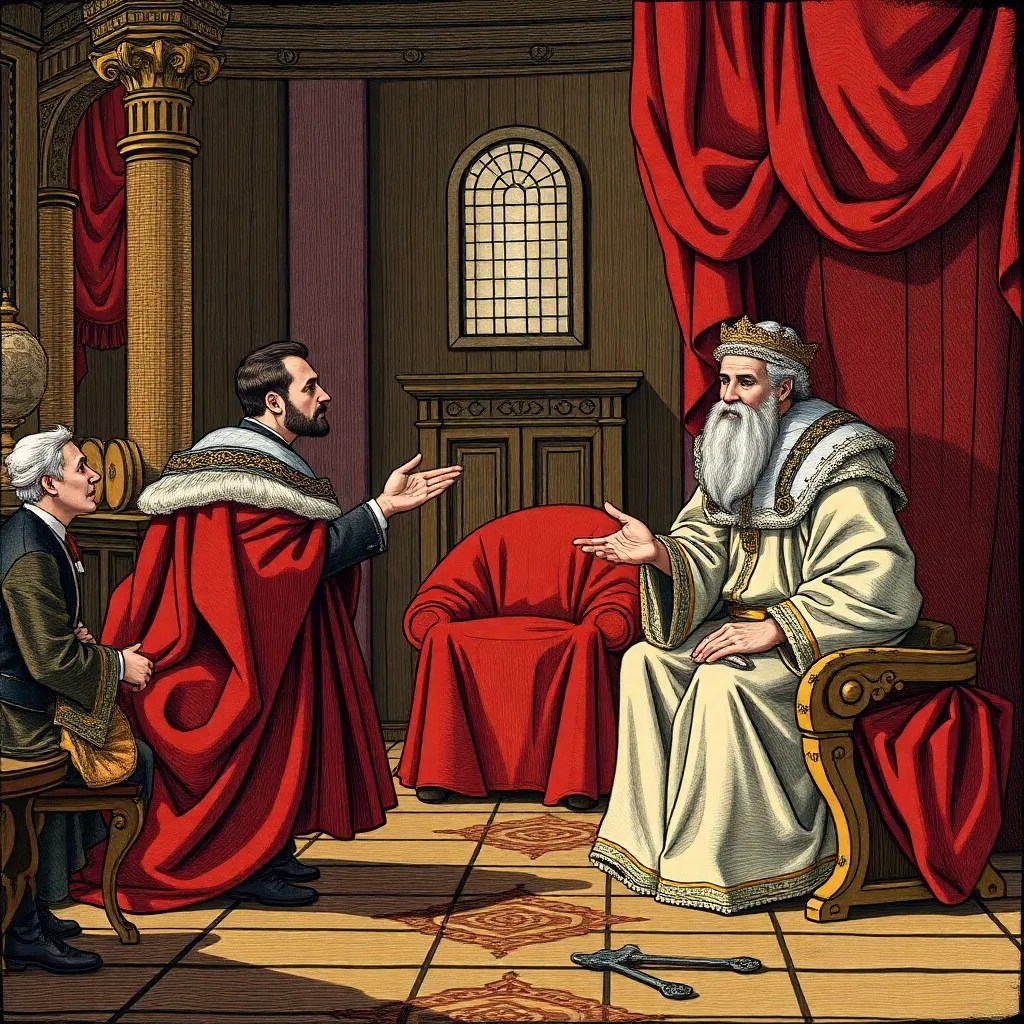
William Shakespeare’s Hamlet is an intricate tapestry of themes, character dynamics, and wit, where even the most trivial-seeming dialogues are loaded with profound significance. Among the numerous memorable lines is Polonius’ famous assertion: “Brevity is the soul of wit, and tediousness the limbs and outward flourishes.” This phrase is often quoted as a celebration of conciseness, but in the context of Hamlet, its satirical undertones expose much about Polonius’ character and Shakespeare’s use of dramatic irony.

The Context of Polonius’ Statement

Polonius, the verbose and often self-important courtier, utters this line in Act II, Scene II, while addressing King Claudius and Queen Gertrude. Ironically, Polonius is anything but brief as he rambles on about Hamlet’s perceived madness. His overly long and convoluted speech directly contradicts the very principle he is attempting to espouse, thereby creating a layer of humor and satire that audiences and readers have enjoyed for centuries.

The Satirical Irony Behind Polonius’ Words

  1. Polonius as a Parody of Wisdom
    Polonius frequently tries to appear wise and insightful, but his actions often undermine his words. His declaration about brevity is an inadvertent satire of himself, as he indulges in the very tediousness he criticizes. Shakespeare portrays Polonius as a pompous character who believes his verbosity signals intelligence, making him a comical figure rather than a sage advisor.
  2. Critique of Court Etiquette
    Shakespeare uses Polonius to satirize the culture of courtly sycophancy and pretentiousness. In Elizabethan society, verbose speeches and elaborate courtesies were the norm among courtiers trying to gain favor. Through Polonius, Shakespeare mocks this tendency, suggesting that true wit and wisdom lie in succinctness—a value Polonius neither practices nor embodies.
  3. Dramatic Irony for the Audience
    The line is a masterstroke of dramatic irony. Polonius’ long-winded preamble to the King and Queen causes impatience, highlighting the gulf between his perception of himself and how others see him. The audience, in on the joke, laughs at his lack of self-awareness while also reflecting on the value of economy in language.

The Larger Theme: Wit and Human Folly

This line serves as a microcosm of one of Shakespeare’s enduring themes: the contrast between appearance and reality. Polonius appears wise and authoritative but is in fact shallow and foolish. Shakespeare’s subtle satire extends beyond the character to broader human folly—how often do people preach virtues they themselves fail to practice?

Modern Relevance of Polonius’ Satire

In today’s world of endless speeches, verbose emails, and social media posts, Polonius’ declaration is more relevant than ever. The phrase reminds us of the value of clarity and brevity in communication. Yet, like Polonius, many of us fall prey to overexplaining, leading to unintentional humor or miscommunication.

By analyzing Polonius’ dialogue, we see how Shakespeare expertly layers comedy with critique. The humor makes the message memorable, and the critique prompts self-reflection. Polonius’ paradoxical wit reminds us that sometimes, the loudest advocates of wisdom can unwittingly become its greatest jesters.

Do you see traces of Polonius in modern society—leaders, writers, or influencers who contradict their own advice? Share your thoughts in the comments! And if this literary dive into Shakespeare’s wit intrigued you, don’t forget to like and share this article with fellow literary enthusiasts.

Lady Una: The Embodiment of Truth and Virtue in The Faerie Queene

Edmund Spenser’s The Faerie Queene stands as a monumental work in English literature, woven with intricate allegories and vibrant characters that represent various moral virtues. Among these characters, Lady Una emerges as a quintessential figure, embodying truth and virtue amidst a landscape rife with deception and malevolence. In this exploration, we delve deeply into the character of Lady Una, her symbolic significance, her role in the epic narrative, and the broader themes she embodies.

I. Introduction to Lady Una

Lady Una, introduced early in The Faerie Queene, is the personification of truth and one of the poem’s most compelling characters. Spenser crafts her character with an air of nobility and grace, often contrasting her virtues against the vices that pervade the world around her. In a narrative that unfolds like a grand tapestry, Lady Una’s presence is a vital thread, linking various elements of the story through her unwavering dedication to truth and virtue.

From the outset, Lady Una is depicted as an archetype of purity, described with language that evokes her ethereal beauty and moral integrity. Spenser uses rich imagery to convey her divine qualities, likening her to celestial beings. This connection to the divine is not merely aesthetic; it reflects her role as a guiding force for the Red Cross Knight, her companion, who embarks on a quest for self-discovery and redemption.

II. Symbolism and Allegory

Lady Una’s character is laden with allegorical meaning. Her name itself, derived from the Latin word for “one,” signifies unity and truth. This linguistic choice reinforces her role as a stabilizing force in a chaotic world. Throughout the epic, her journey embodies the pursuit of truth—a theme central to Spenser’s moral vision.

In the epic tradition, characters often serve as allegories for specific virtues or vices. Lady Una embodies truth, contrasting sharply with the deceptions represented by the character of Duessa. Duessa, who symbolizes falsehood and deception, is depicted as Lady Una’s antithesis, showcasing the stark dichotomy between truth and falsehood. This juxtaposition not only highlights Lady Una’s virtuous qualities but also serves to critique the societal norms of Spenser’s time.

III. The Trials of Lady Una

As Lady Una accompanies the Red Cross Knight on his quest, she faces numerous trials that test her resilience and commitment to truth. One significant episode occurs when she is captured by the monstrous Errour, a creature that symbolizes confusion and moral decay. This encounter serves as a pivotal moment in the narrative, illustrating the challenges faced by those who seek truth in a world dominated by lies and deception.

The battle between the Red Cross Knight and Errour represents a larger struggle between good and evil, with Lady Una’s presence reinforcing the knight’s quest. Her unwavering faith in his potential to overcome the darkness is a testament to her strength and serves to inspire him in his moments of doubt. Spenser masterfully portrays her not merely as a damsel in distress but as a powerful figure who actively influences the narrative’s direction.

IV. Lady Una as a Catalyst for Growth

Lady Una’s influence extends beyond her immediate actions; she serves as a catalyst for the Red Cross Knight’s growth. Her character embodies the virtues that he must embrace to achieve his ultimate purpose. Through her guidance, he learns the importance of perseverance, humility, and the relentless pursuit of truth.

This mentorship is particularly evident in their interactions, where Lady Una’s wisdom shines through. She often provides counsel that reflects a deep understanding of human nature and the moral complexities that define the quest for virtue. Spenser captures this dynamic through dialogue that is both poetic and profound, allowing readers to witness the transformative power of Lady Una’s character.

V. The Impact of Lady Una’s Character

Lady Una’s presence is not confined to her immediate role in the narrative; she represents a broader cultural and literary archetype of the virtuous woman. In the context of the Renaissance, Spenser’s portrayal of Lady Una reflects contemporary ideals of femininity, where virtue, grace, and strength are intertwined. Her character serves as a model for women in literature and society, embodying the qualities that were esteemed during Spenser’s time.

Moreover, Lady Una’s journey is emblematic of the broader human experience. Her trials resonate with universal themes of struggle, resilience, and the quest for truth. Through her character, Spenser invites readers to reflect on their own journeys, encouraging them to seek out truth and virtue even in the face of adversity.

VI. Conclusion: The Legacy of Lady Una

In conclusion, Lady Una stands as one of the most significant characters in The Faerie Queene, representing the timeless virtues of truth, grace, and resilience. Spenser’s intricate portrayal of her character elevates her beyond the role of a mere companion; she becomes a symbol of hope and inspiration.

Through her trials, mentorship, and unwavering commitment to truth, Lady Una embodies the essence of Spenser’s moral vision. Her legacy endures in the annals of English literature, serving as a testament to the enduring power of truth and virtue in the face of overwhelming challenges.

As literature enthusiasts, we are reminded of the impact of Lady Una’s character not only within the context of Spenser’s epic but also in our lives. Her story encourages us to embrace truth and to recognize the profound strength that lies within our own journeys.