Peshawar Radio Station: Marconi’s Legacy in South Asia’s Broadcasting History
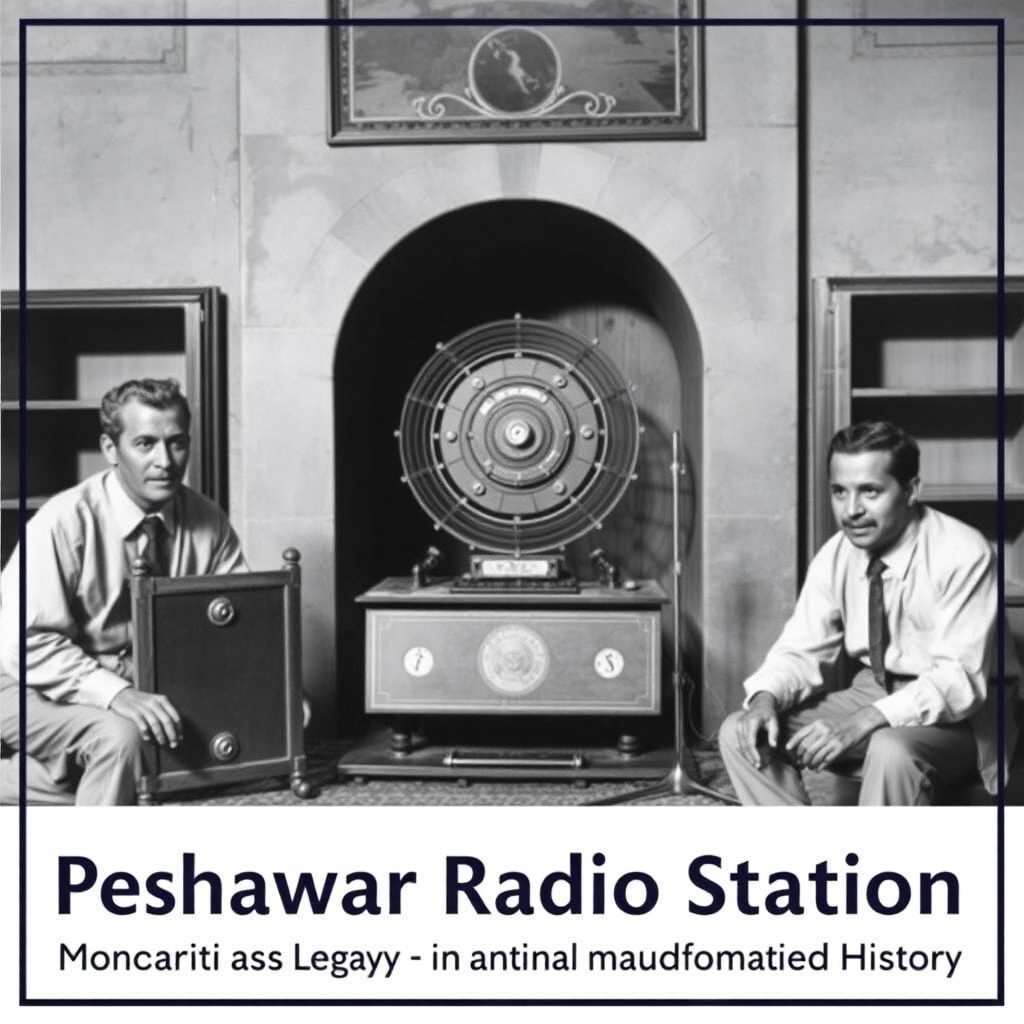
The Peshawar Radio Station, established in 1935, holds a unique place in broadcasting history due to its direct connection with Guglielmo Marconi, the inventor of the wireless telegraph. During the Round Table Conference in London (1930-1932), Abdul Qayyum Khan, a political leader from the North-West Frontier Province (NWFP) of British India, met Marconi and requested a radio transmitter for his province. Marconi agreed and personally engineered the transmitter, which was subsequently installed in Peshawar. The station was inaugurated by Sir Ralph Edwin Hotchkin Griffith, the Governor of NWFP, in 1935.
This transmitter, personally engineered by Marconi himself, was installed in Peshawar and inaugurated by Sir Ralph Edwin Hotchkin Griffith, the Governor.
The station began with a 250-watt transmitter operating on 1500 kHz, providing local coverage. Initially, it was managed by the provincial government, but control was later transferred to the Indian national government in Delhi. In March 1939, the station became a relay station, receiving programming via telephone line from Delhi. A new broadcasting facility with updated equipment was inaugurated on December 1, 1942, featuring a 10 kW RCA transmitter operating on 629 kHz.
The Peshawar Radio Station’s establishment with Marconi’s personally engineered transmitter underscores its unique status in the history of broadcasting in the region.
 Janson's blog