Alexander Pope: A Literary Titan Misunderstood in His Age Yet Revered Through Time
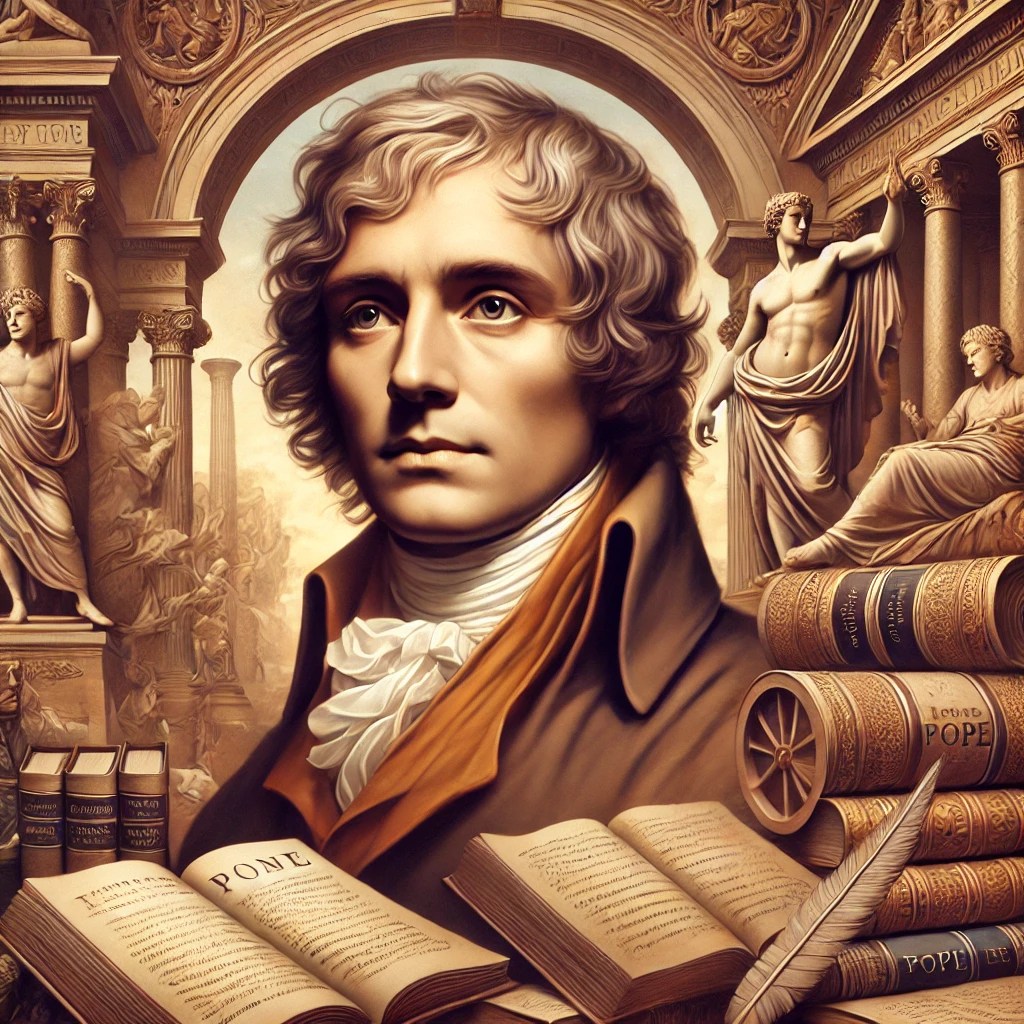
Introduction to Alexander Pope
Alexander Pope, an 18th-century English poet, stands as one of literature’s great satirists, yet his life was marked by considerable personal and professional challenges. The idea that “Pope was great, but not in his age” speaks to the dichotomy of Pope’s legacy: while admired by some, he was also subject to severe criticism. His biting wit and distinctive satirical style drew both praise and disdain from contemporaries. Religious limitations, societal bias, and health struggles all shaped Pope’s career. This article explores how, despite these hurdles, Pope’s literary genius was ultimately recognized after his time, with a reputation that grew as later critics and writers acknowledged his mastery of language, satire, and moral reflection.
Early Life and Education
Born in London in 1688 to a Catholic family, Pope grew up amid significant restrictions. Catholics faced harsh discrimination in England, limiting Pope’s access to formal education and career opportunities. As a result, he became a largely self-taught scholar, immersing himself in the works of classical poets like Homer, Virgil, and Ovid. This early passion for classical literature molded his poetic style, grounding it in the traditions of Neoclassicism. Yet, his health presented another challenge; a severe form of tuberculosis left Pope with lifelong physical ailments. These difficulties isolated him but also spurred his drive to make an indelible mark on English literature, a goal he would achieve with vigor and resilience.
The Landscape of 18th-Century English Literature
Pope’s rise occurred in a period when Neoclassicism, which stressed order and reverence for the classics, dominated English literature. Satire emerged as a preferred tool for examining social issues, with writers like John Dryden and Jonathan Swift critiquing their world through wit and irony. Pope became a leading figure in this satirical movement, blending classical influences with contemporary commentary. His Catholic background, physical condition, and lack of noble connections, however, distinguished him from his peers. These characteristics, combined with his intellect, positioned him as a unique voice in English letters. Pope’s perspective allowed him to both critique and emulate his contemporaries, solidifying his status as a transformative force in literature.
Pope’s First Success: Pastorals and An Essay on Criticism
Pope’s initial foray into literature began with Pastorals (1709), which gained him early attention for its use of classical forms to depict rural life. His true breakthrough came with An Essay on Criticism (1711), a work that presented his thoughts on poetry and criticism in eloquent, memorable language. The poem, penned in heroic couplets, combines insights into art with satirical observations on literary critics, showcasing Pope’s unique talent for blending philosophy with poetic elegance. Famous lines like “To err is human; to forgive, divine” highlight Pope’s capacity for capturing timeless truths. This success, though, also brought Pope new detractors, who saw his youthful ambition as audacious. Nevertheless, An Essay on Criticism established Pope’s voice in English letters.
Satire and Social Critique in The Rape of the Lock
Pope’s The Rape of the Lock (1712) remains one of his most acclaimed works, using mock-epic style to satirize the vanities of aristocratic society. The poem tells the humorous tale of a quarrel over a stolen lock of hair, which Pope presents in the grand style of Homeric epic, amplifying the absurdity of high-society customs. This mix of “high” and “low” style offered readers a critique of trivial conflicts while paying homage to classical epic tradition. Pope’s satirical wit struck a chord with readers, but it also sparked controversy. While some viewed it as lighthearted fun, others found the critique of upper-class pretensions biting. The Rape of the Lock affirmed Pope’s skill at merging humor and social critique, helping to establish satire as his trademark.
Political and Religious Constraints
Pope’s Catholic faith imposed significant limitations on his career. England’s Protestant establishment barred Catholics from many professions and social privileges, which hindered Pope’s public prospects. Lacking access to patronage, he relied heavily on the sale of his books, a unique approach that allowed him financial independence uncommon among writers of his time. His works often reflected a sense of exclusion and a critical view of established norms. Pope’s satire, at times, became his shield and his weapon, allowing him to critique the power structures and conventions of his era without directly attacking individuals. This balancing act was essential to his survival and success in a society often hostile to his faith and views.
Pope’s Major Work: The Dunciad
The Dunciad (1728) represents Pope’s most scathing critique of mediocrity in literature and society. Targeting individuals he deemed representatives of “dullness,” the poem ridicules the shallow writers and critics who, in Pope’s view, sullied the literary field. By portraying them as servants of the goddess Dulness, Pope calls into question the very quality of English letters in his day. This harsh satire earned him numerous enemies, and his targets included prominent figures like Colley Cibber and Joseph Addison. Although divisive, The Dunciad showcased Pope’s mastery of satire and solidified his role as a critic of society’s intellectual failings, cementing his place as an uncompromising force in English literature.
Moral Philosophy in An Essay on Man
In An Essay on Man (1733-1734), Pope delves into questions of existence, ethics, and human nature, exploring humankind’s place within the universe. The work’s central line, “Whatever is, is right,” embodies a philosophical optimism, reflecting the belief in a harmonious, divinely ordered world. Written in heroic couplets, the poem grapples with the balance between human imperfection and universal design. Pope’s approach was influenced by Enlightenment ideas, though the poem was critiqued for its idealism. Despite mixed reactions, An Essay on Man resonated with thinkers across Europe and became one of Pope’s most widely read works, influencing both philosophical and literary discourse well beyond his time.
The Challenge of Literary Fame in His Lifetime
Pope’s fame did not shield him from personal attacks and public criticism. His satirical barbs in works like The Dunciad invited hostility from literary rivals and public figures. These adversaries questioned his intentions and accused him of being overly ambitious, especially as he defended his reputation vigorously. In response, Pope often addressed his critics through satirical poetry, reinforcing his position as a fiercely independent voice. By the end of his life, however, he saw a decline in popularity as other literary trends emerged. Nevertheless, Pope’s contributions were undeniable, and his self-assertive approach to fame reflected his unyielding commitment to his vision and principles.
Pope’s Legacy and Influence on Later English Literature
Though Pope’s career was marked by controversy, his influence only grew after his death. Romantic poets, including Byron, Wordsworth, and Shelley, admired his mastery of language and satirical wit, even as they diverged from his formal style. His use of the heroic couplet left a lasting mark on English poetry, while his philosophical and moral writings continued to provoke thought among readers and critics. Over time, literary scholars recognized Pope’s contributions to both poetic form and social commentary. His works became subjects of admiration and study, underscoring how his fame only increased after his time, with his legacy recognized as one of skill, resilience, and cultural insight.
Conclusion: Pope’s Reception and Enduring Legacy
In reflecting on Pope’s journey, it becomes evident that his life embodied the idea of being “great, but not in his age.” While admired by some in his time, it took years for his genius to gain full appreciation in the literary world. Pope’s ability to confront societal shortcomings, blend humor with philosophy, and wield the English language with precision has cemented his place among the literary greats. His career exemplifies how true brilliance often requires the lens of history to be fully appreciated, with his influence enduring long after his era. Alexander Pope’s legacy serves as a testament to the power of the written word, enduring beyond the limitations of time and circumstance.

 Janson's blog