The Pearl by John Steinbeck: A Tale of Greed, Class, and Morality
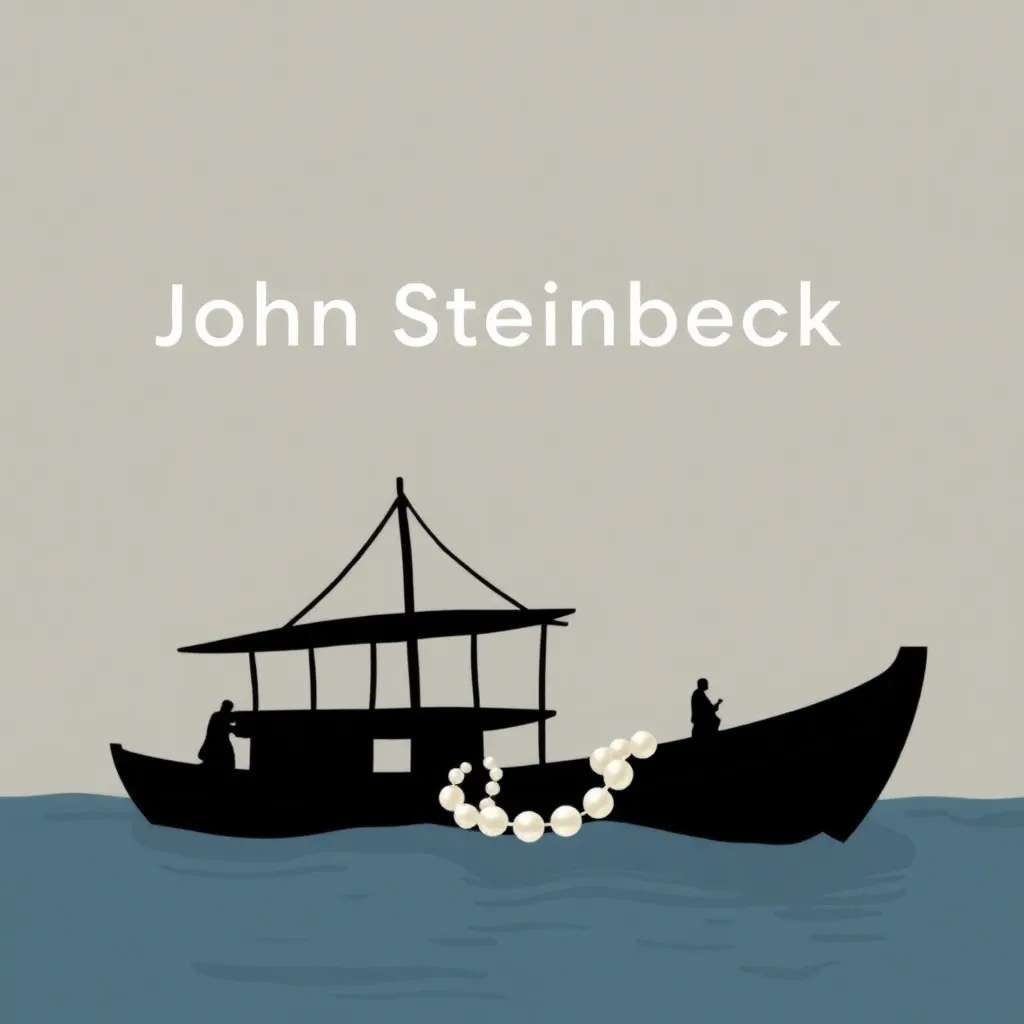
John Steinbeck’s The Pearl is a novella that masterfully explores themes of greed, class division, human nature, and the consequences of ambition. Set in a small coastal town in Baja California, Mexico, the story follows Kino, a poor pearl diver, and his family as they encounter both hope and tragedy when Kino discovers a magnificent pearl, the “Pearl of the World.” The novella’s brevity and symbolism make it a powerful work that resonates with readers on multiple levels. In this article, we will delve into one special element of The Pearl—the transformative and corrupting influence of the pearl itself—and examine how it becomes a central symbol of the story.

The Discovery of the Pearl

The plot of The Pearl revolves around Kino’s discovery of an unusually large, lustrous pearl while diving for oysters. Kino, a poor but contented man, dreams of a better life for his family. The pearl promises to be the means to achieve those dreams. It is seen as a symbol of hope and possibility—a means to pay for his son Coyotito’s education, marry his wife Juana in a church, and improve their living conditions. Kino is consumed by the prospect of a brighter future, and initially, the pearl seems to represent a new beginning.

However, it soon becomes evident that the pearl’s influence is more insidious than Kino could have imagined. While it initially appears to be a symbol of hope and opportunity, it quickly becomes a source of conflict and destruction, both within Kino’s family and in the wider community.

The Corruption of Kino

One of the most striking elements of The Pearl is the way in which Kino’s character is gradually transformed by the pearl. Kino begins as a simple, hardworking man, motivated by the desire to provide for his family. Yet, as the story progresses, the pearl changes him. His desire for wealth grows more intense, and his actions become increasingly irrational. He becomes paranoid, distrustful, and violent.

Kino’s transformation is reflected in his behavior towards his wife, Juana. At the beginning of the novella, Kino and Juana have a loving and supportive relationship. They are partners in their struggles, sharing a sense of unity and purpose. However, as Kino becomes consumed by the pearl, he begins to ignore Juana’s warnings and suggestions. Juana, who initially sees the pearl as a blessing, soon recognizes its dangerous influence and urges Kino to throw it away. She sees that the pearl is no longer a symbol of hope, but a symbol of evil. Kino, blinded by his greed, refuses to listen to her. He is determined to keep the pearl, no matter the cost.

Kino’s descent into violence is marked by his willingness to harm others to protect the pearl. He attacks those who would take it from him, even resorting to killing in the process. This transformation from a humble, hard-working man to a violent and obsessed figure illustrates the corrupting influence of wealth and the dangers of allowing material possessions to define one’s identity and priorities.

The Pearl as a Symbol

The pearl itself is the central symbol in the novella, representing not just wealth, but the destructive power of greed. Steinbeck uses the pearl to highlight how the pursuit of material gain can corrupt individuals, families, and entire communities. Kino’s obsession with the pearl reflects a universal human tendency to become consumed by desires and ambitions, often at the expense of one’s integrity and relationships.

At first, the pearl represents the promise of a better life. However, as Kino’s desire for the pearl grows, it comes to symbolize the darker aspects of human nature—greed, envy, and pride. Kino’s initial dream of improving his family’s life is overtaken by his obsession with acquiring more and more wealth, and the happiness he hopes to find turns into sorrow and tragedy. The pearl, once a symbol of hope, becomes a curse, and its true value is revealed to be much less than its cost.

The local townspeople, who initially celebrate Kino’s discovery, also fall prey to the pearl’s corrupting influence. They all become obsessed with the potential fortune Kino can acquire and view him through the lens of their own desires. The doctor, who refuses to treat Kino’s son Coyotito’s scorpion sting until he learns of the pearl’s existence, becomes a symbol of how greed can distort human compassion. The priest, the dealers, and the trackers who pursue Kino are all driven by the pearl’s promise of wealth, reflecting the widespread impact of materialism.

The Tragic Conclusion

The tragic end of The Pearl underscores the novella’s powerful moral lesson. After Kino’s violence and the death of his son, Coyotito, Kino comes to realize that the pearl has brought nothing but pain and destruction to his life. In the final act of the novella, Kino and Juana, now devastated by the loss of their son, make the decision to throw the pearl back into the sea. This act of abandoning the pearl signifies Kino’s recognition that his greed has cost him everything. It is a moment of profound insight, but it comes too late to reverse the damage that has been done.

The conclusion of the novella reveals that true wealth lies not in material possessions but in the things that cannot be bought—love, family, and peace of mind. Kino’s ultimate rejection of the pearl serves as a poignant reminder of the dangers of materialism and the importance of retaining one’s humanity in the face of temptation.

Conclusion

In The Pearl, John Steinbeck presents a timeless tale about the corrosive effects of greed and the moral lessons that can be learned from the pursuit of wealth. The pearl itself is a powerful symbol of both hope and destruction, and its role in the story highlights the dangers of letting material desires overshadow the values that truly matter in life. Through Kino’s journey, Steinbeck asks us to reflect on our own values and the costs of our ambitions. In the end, The Pearl is a cautionary tale that reminds readers of the fragile nature of happiness and the destructive potential of unchecked greed.

Roxana of Bactria: The Enigmatic Bride of Alexander the Great

Introduction: The Mystery of Roxana’s Origins

The union between Alexander the Great, the legendary Macedonian conqueror, and Roxana, a young woman of Bactrian descent, has intrigued historians and storytellers for centuries. Historical accounts tell us that Roxana, who became Alexander’s first and perhaps most beloved wife, was from Bactria, a region located in present-day Afghanistan and Central Asia. Yet, many scholars and enthusiasts speculate that she may have belonged to the powerful Sogdian or even Pathan (Pashtun) clans near ancient Mardan, in the Northwest region of India (modern-day Pakistan). The mystery of Roxana’s lineage and the circumstances surrounding her meeting with Alexander add an intriguing layer to an already fascinating tale.

The Historical Setting: Alexander’s Invasion of Bactria

In 327 BCE, Alexander embarked on his invasion of Bactria and Sogdiana, regions known for their fierce resistance and rugged terrain. These lands, located along the frontiers of his empire, were home to many independent tribes. After establishing control over the Persian Empire, Alexander aimed to consolidate power in these territories, an area with strategic and symbolic significance. Bactria, in particular, was notable for its ethnic diversity, comprising a blend of Persian, Greek, and Central Asian influences.

Roxana’s father, Oxyartes, was a noble of the region. As Alexander moved through the territories, Oxyartes found himself and his family at the center of a political struggle for survival. Roxana herself, a young woman known for her beauty and grace, was an ideal candidate for a political alliance.

The Fateful Encounter: Love or Strategy?

Accounts vary as to how Alexander and Roxana first met, but the most commonly accepted version is that Alexander encountered Roxana during his campaigns in Sogdiana, specifically at the Siege of the Sogdian Rock. This fortress, an imposing cliffside stronghold, was believed to be impenetrable. Local tribes had taken refuge there, confident that Alexander’s forces could not breach the fortification.

In an extraordinary show of determination, Alexander’s troops scaled the rock and captured it, forcing the locals to surrender. Among the prisoners taken was Roxana. When Alexander saw her, he was reportedly struck by her beauty, but historians suggest that his decision to marry her went beyond mere attraction. Marrying Roxana would forge a bond with the local nobility and, by extension, secure the loyalty of the fiercely independent tribes in Bactria and Sogdiana. Their marriage, therefore, served a dual purpose of diplomacy and personal connection.

The Wedding: Symbolism and Political Unity

The marriage of Alexander and Roxana was conducted in a traditional Persian ceremony, symbolizing the merging of two cultures. Roxana was neither Macedonian nor Persian but belonged to a culture with deep-rooted traditions and loyalty to its people. The marriage represented Alexander’s desire to integrate his empire culturally, not just militarily. By adopting the customs and practices of his new territories, he sought to unify diverse populations under his rule.

Some historians, including Plutarch, indicate that Alexander’s affection for Roxana was genuine. Despite her status as a “political bride,” she became the only woman Alexander married in his lifetime. This marriage likely resonated with his troops and local allies alike, emphasizing his commitment to the newly conquered lands.

Roxana’s Influence and the Tragic Aftermath

After Alexander’s untimely death in 323 BCE, Roxana’s life took a tragic turn. She was pregnant at the time, and her son, Alexander IV, became a pawn in the political struggles that erupted within Alexander’s empire. Roxana tried to protect her son’s inheritance, but the Macedonian generals saw her and her child as threats to their ambitions. Roxana was ultimately executed in 310 BCE, and her son met a similar fate, marking a sorrowful end to her journey.

Conclusion: The Lasting Legacy of Roxana and Alexander

The story of Roxana and Alexander endures as a poignant reminder of the delicate balance between love, loyalty, and political ambition. While the origins of Roxana remain a subject of debate, her marriage to Alexander underscores his commitment to cultural integration within his empire. The idea that she might have had ties to the Pathan tribes of Northern India only deepens the allure of this historical union, suggesting that Alexander’s conquests reached not only across continents but into the diverse cultural fabric of South Asia.

Roxana’s life, shaped by both love and tragedy, leaves a legacy that resonates through history. Her story invites us to explore the interplay of personal and political motivations that shaped one of history’s greatest empires. The journey of Alexander and Roxana’s relationship continues to fascinate scholars, inviting further research and discussion.

“My God, my God, look not so fierce on me!”: A Deep Dive into the Tragic End of Doctor Faustus

Christopher Marlowe’s Doctor Faustus is a seminal work of Elizabethan drama that delves into the themes of ambition, knowledge, and damnation. The tragic end of Doctor Faustus, encapsulated in the anguished cry, “My God, my God, look not so fierce on me!” serves as a poignant reflection of his ultimate realization and despair.

Read more: “My God, my God, look not so fierce on me!”: A Deep Dive into the Tragic End of Doctor Faustus

Background of the Story

Doctor Faustus tells the tale of Dr. John Faustus, a highly accomplished scholar disillusioned with the limits of traditional forms of knowledge. Driven by an insatiable thirst for power and understanding, Faustus turns to necromancy, hoping to transcend human limitations. He summons the demon Mephistophilis and strikes a pact with Lucifer, exchanging his soul for 24 years of unlimited knowledge and magical abilities.

Throughout the play, Faustus experiences the highs and lows of his bargain. Initially, he revels in his newfound powers, performing grandiose feats and indulging in hedonistic pleasures. However, as the end of his 24-year term approaches, Faustus becomes increasingly tormented by the consequences of his deal. The fleeting nature of his power and the permanence of his damnation weigh heavily upon him.

The Imminent End and Faustus’s Realization

As the final hour of his life approaches, Faustus’s bravado gives way to fear and regret. The scene is charged with a palpable sense of impending doom. Faustus is haunted by the thoughts of eternal damnation and the irreversible nature of his pact with Lucifer. In his last moments, he is overwhelmed by terror and remorse, seeking a way to escape his fate but finding none.

The line “My God, my God, look not so fierce on me!” is uttered in this climactic moment of the play. It is a cry of desperation and a plea for mercy. Here, Faustus confronts the full weight of his transgressions and the reality of divine judgment. This line reflects his intense inner turmoil and the fear of eternal punishment. It is a stark contrast to his earlier arrogance and defiance, highlighting the depth of his tragic fall.

Literary Significance

This dialogue is rich in literary and thematic significance. First, it underscores the theme of damnation and the consequences of overreaching ambition. Faustus’s cry to God is futile; his repentance comes too late. This reflects the moral lesson of the play: the perils of forsaking spiritual salvation for temporal gains.

Secondly, the repetition of “My God, my God” emphasizes Faustus’s desperation and the intensity of his fear. It echoes the biblical cry of Jesus on the cross, “My God, my God, why hast thou forsaken me?” (Matthew 27:46), creating a poignant parallel. However, unlike Christ, Faustus’s suffering is self-inflicted and rooted in his hubris and folly.

Lastly, this line exemplifies the play’s tragic structure. Faustus is a classic tragic hero, whose flaw—excessive pride and ambition—leads to his downfall. His final plea is a recognition of his humanity and fallibility, evoking a sense of pity and fear in the audience. It marks the culmination of his tragic journey from a revered scholar to a damned soul.

Conclusion

The anguished plea, “My God, my God, look not so fierce on me!” encapsulates the tragic essence of Marlowe’s Doctor Faustus. It is a powerful expression of Faustus’s ultimate realization of his error and his fear of divine retribution. Through this line, Marlowe delivers a timeless cautionary tale about the dangers of unchecked ambition and the irreversible consequences of forsaking one’s soul for earthly power. The tragic end of Doctor Faustus remains a compelling study of human frailty and the existential cost of hubris.

Love’s Triumph: Tale of the Pushtoons – a short story

In the rugged terrain of the Pushtoon tribal lands, where the mountains echoed with tales of honor and betrayal, there lived two families whose destinies were intertwined by ancient bonds of love and enmity. The Khans and the Maliks, both proud and fierce, had been locked in a bitter feud for generations.

At the heart of this saga were two young lovers, Zainab Khan and Rahim Malik. Their love bloomed amidst the thorns of rivalry, defying the enmity that their families held for each other. Zainab, with her piercing eyes and flowing raven hair, captured Rahim’s heart from the moment they met at a bustling bazaar, where the aroma of spices mingled with the chatter of merchants.

Their secret meetings were filled with whispered promises, hidden away from the prying eyes of their families. But as their love blossomed, so did the seeds of hatred sown by their elders. The elders, burdened by the weight of tradition and honor, could not bear the thought of their blood mingling with the enemy’s. The rivalry between the Khans and the Maliks reached a boiling point when a dispute over grazing land erupted into violence.

Gunshots echoed through the valleys, and blood stained the soil as lives were lost on both sides. In the midst of this chaos, Zainab and Rahim clung to each other, their love a beacon of hope in the darkness. But tragedy struck when Rahim was gravely wounded in a skirmish, caught in the crossfire of the feud. Zainab’s heart shattered as she watched her beloved fight for his life, his once vibrant spirit dimmed by pain and agony.

Determined to save him, she pleaded with her family to seek help from the Maliks, their sworn enemies. In a gesture of unexpected kindness, the Maliks welcomed Zainab into their home, offering hospitality to their enemy’s daughter. Despite their initial suspicion, Zainab’s sincerity and love for Rahim won over their hearts. Under their care, Rahim slowly began to heal, his strength returning with each passing day. As Rahim recovered, the rift between the Khans and the Maliks seemed to soften, fueled by the realization that love and friendship were more precious than pride and enmity.

The two families came together to celebrate the newfound peace, their differences set aside in the spirit of unity. Amidst the festivities, Zainab and Rahim exchanged vows, their love transcending the boundaries of tradition and rivalry. As they danced under the starlit sky, surrounded by the laughter of their families and the music of the tabla and rubab, they knew that their love had triumphed against all odds.

And so, in the land of the Pushtoons, where honor and loyalty were prized above all else, the tale of Zainab and Rahim became a legend—a testament to the enduring power of love to conquer hate and bring about peace in even the most divided of hearts.

“The Pathans” by Sir Olaf Caroe

Introduction

“The Pathans” is a remarkable book written by Sir Olaf Caroe that offers a comprehensive and insightful exploration of the Pathan tribes in the Indian subcontinent. In this book review, I will share my personal experience with this exceptional work, which I first learned about from my English teacher in 1982. Additionally, I will provide an overview of Sir Olaf Caroe and his expertise, ensuring this review is search engine optimized to enhance its discoverability.

Sir Olaf Caroe: A Notable Figure

Sir Olaf Caroe, a distinguished British civil servant and diplomat, possessed an immense knowledge of South Asian history and politics. He served as the Governor of the North-West Frontier Province (now Khyber Pakhtunkhwa) during the crucial period of British India’s decolonization. Caroe’s firsthand experience in the region lends a unique authenticity to his writings, making him a highly regarded authority on the subject.

Unveiling the World of the Pathans

“The Pathans” takes readers on an enthralling journey into the intricate tapestry of Pathan tribes, delving into their origins, customs, and societal structures. Caroe’s meticulous research and attention to detail allow readers to gain a profound understanding of the Pathan culture, unravelling their rich heritage and the challenges they have faced throughout history.

A Captivating Narrative Style

Caroe’s skill as a storyteller shines through in “The Pathans.” His prose is eloquent, captivating readers with vivid descriptions and evocative storytelling. By seamlessly blending historical accounts, personal anecdotes, and cultural insights, Caroe successfully creates a narrative that engages readers and keeps them enthralled from cover to cover.

In-Depth Analysis of Pathan Culture and History

One of the standout features of “The Pathans” is Caroe’s meticulous analysis of Pathan culture and history. He explores their warrior traditions, tribal dynamics, and the interplay between religious and societal influences. Caroe’s deep dive into the complexities of Pathan society offers readers a nuanced perspective, dispelling myths and shedding light on their significant contributions to the region’s history.

Implications for Modern Geopolitics

Caroe’s profound understanding of the Pathans extends beyond their cultural heritage. He draws insightful connections between the region’s history and modern geopolitical dynamics. By examining the Pathan tribes’ role in shaping the politics of the Indian subcontinent, Caroe provides readers with valuable insights into the present-day complexities of the region.

My Personal Experience with “The Pathans”

As an avid reader, I stumbled upon “The Pathans” in 1982, recommended to me by my English teacher. The book left an indelible impression on me. Caroe’s captivating storytelling transported me to the rugged terrains of the North-West Frontier Province, immersing me in the lives and struggles of the Pathans. His vivid descriptions and profound analysis awakened a deep appreciation for the region’s culture and history within me.

Conclusion

“The Pathans” by Sir Olaf Caroe is an exceptional work that offers readers a captivating and insightful exploration of the Pathan tribes. With Sir Olaf Caroe’s expertise and intimate knowledge of the region, this book provides a comprehensive understanding of the Pathan culture, history, and their influence on modern geopolitics.

In conclusion, “The Pathans” is a must-read for anyone seeking a deeper understanding of the Pathan tribes and their significant role in South Asian history. Sir Olaf Caroe’s expertise and engaging narrative style make this book a compelling and enlightening read. From the origins of the Pathan tribes to their cultural traditions and political complexities, Caroe’s meticulous research and analysis provide a rich and immersive experience for readers.

By delving into my personal experience with “The Pathans,” I can attest to the lasting impact this book has had on my understanding and appreciation of the Pathan culture. It is a testament to Sir Olaf Caroe’s skill as a writer and his dedication to shedding light on the complexities of the region.

Frequently Asked Questions (FAQs)

  1. Is “The Pathans” suitable for readers with little prior knowledge of South Asian history? Absolutely! Sir Olaf Caroe’s book is written in a way that is accessible to readers from various backgrounds, providing the necessary context to understand the Pathan tribes and their historical significance.
  2. How does “The Pathans” contribute to the understanding of modern geopolitics?

Caroe’s insightful analysis of the Pathans’ historical role helps readers grasp the intricate connections between past events and contemporary geopolitical dynamics in the Indian subcontinent.

  • Can “The Pathans” be considered an authoritative source on the Pathan culture?

Yes, Sir Olaf Caroe’s firsthand experience in the region and his extensive research make “The Pathans” a highly regarded and authoritative source on the topic.

  • Does the book include personal anecdotes from the author?

Yes, Sir Olaf Caroe incorporates personal anecdotes throughout the book, adding a human element and further enhancing the readers’ engagement with the subject matter.

  • How does “The Pathans” contribute to the broader understanding of cultural diversity in South Asia?

By highlighting the unique traditions, customs, and societal structures of the Pathan tribes, the book broadens our understanding of the diverse cultural landscape within South Asia.

Whether you are a history enthusiast, a student of geopolitics, or simply interested in exploring the rich tapestry of the Pathan tribes, “The Pathans” is a captivating and informative book that will undoubtedly leave a lasting impression. Sir Olaf Caroe’s expertise, combined with his engaging narrative style, ensures that this book remains a timeless and valuable resource for understanding the Pathan culture and its significance in the Indian subcontinent.

Book Review – “Hamlet” William Shakespeare

Introduction

In this book review, we delve into the timeless masterpiece, “Hamlet,” written by the legendary playwright, William Shakespeare. Regarded as one of the greatest tragedies ever written, “Hamlet” continues to captivate readers and theater enthusiasts with its complex characters, rich language, and thought-provoking themes.

Analysis of Characters

Hamlet: A Tragic Hero in Turmoil

At the heart of the play is the protagonist, Prince Hamlet. Shakespeare brilliantly portrays Hamlet’s internal struggle as he grapples with the weight of avenging his father’s death. Hamlet’s indecisiveness, introspection, and profound soliloquies make him a character of enduring fascination. His complexity allows readers to empathize with his plight and explore the depths of human nature.

Ophelia: Fragility and Tragic Love

Ophelia, Hamlet’s love interest, brings a sense of fragility and tragic love to the story. Through her character, Shakespeare addresses themes of madness, innocence, and the destructive power of unrequited love. Ophelia’s descent into madness and her eventual tragic demise add a layer of emotional intensity to the narrative.

Claudius: The Cunning Manipulator

Claudius, Hamlet’s uncle and the new king of Denmark, represents the embodiment of Machiavellian power. He is a cunning manipulator who stops at nothing to maintain his position, even resorting to murder. Shakespeare’s portrayal of Claudius highlights the corrupting influence of power and the lengths individuals will go to secure their ambitions.

Themes Explored

The Nature of Revenge

“Hamlet” delves deep into the complexities of revenge and its consequences. Hamlet’s pursuit of vengeance drives the plot, raising questions about the morality and futility of seeking retribution. The play explores the destructive nature of revenge, illustrating how it can consume individuals and lead to a tragic chain of events.

The Weight of Sanity and Madness

Shakespeare explores the thin line between sanity and madness in “Hamlet.” The prince’s feigned madness and the genuine madness of characters like Ophelia provide a lens through which the audience contemplates the fragile boundaries of the human mind. The play raises questions about the nature of sanity, the impact of external pressures, and the limits of one’s mental resilience.

The Complexity of Human Existence

Through its exploration of Hamlet’s existential dilemmas, the play delves into the profound complexities of human existence. Shakespeare prompts readers to reflect on life’s purpose, the inevitability of mortality, and the existential crises that shape our identity. The timeless themes explored in “Hamlet” continue to resonate with audiences across generations.

The Language of “Hamlet”

One cannot discuss “Hamlet” without acknowledging Shakespeare’s unparalleled command of language. The play is a treasure trove of eloquent soliloquies, poetic metaphors, and powerful imagery. Shakespeare’s use of iambic pentameter and his ability to craft memorable phrases, such as “To be or not to be,” have become iconic and synonymous with the play itself.

Conclusion

In conclusion, William Shakespeare’s “Hamlet” stands as a literary masterpiece that has withstood the test of time. Its exploration of complex characters, profound themes, and eloquent language continues to captivate readers and theater enthusiasts alike. The play’s examination of revenge, the intricacies of human existence, and the fragility of sanity leaves a lasting impact on its audience.

Shakespeare’s ability to delve into the depths of human nature and present it through engaging storytelling is unparalleled. “Hamlet” serves as a reminder of the power of literature to provoke thought, evoke emotions, and provide a profound understanding of the human experience.

Whether you’re a lover of classical literature, a theater enthusiast, or simply someone seeking a thought-provoking read, “Hamlet” is a must-read. Its timeless appeal and universal themes ensure its place as an essential work in the literary canon.

So, delve into the world of “Hamlet” and immerse yourself in the tale of a tragic hero, the complexities of revenge, and the eternal questions that continue to resonate with audiences through the ages. William Shakespeare’s “Hamlet” remains a masterpiece that will continue to be celebrated and studied for generations to come.