For Poetry Lovers
Ode to Autumn – by John Keats
Ode to Autumn – by John Keats
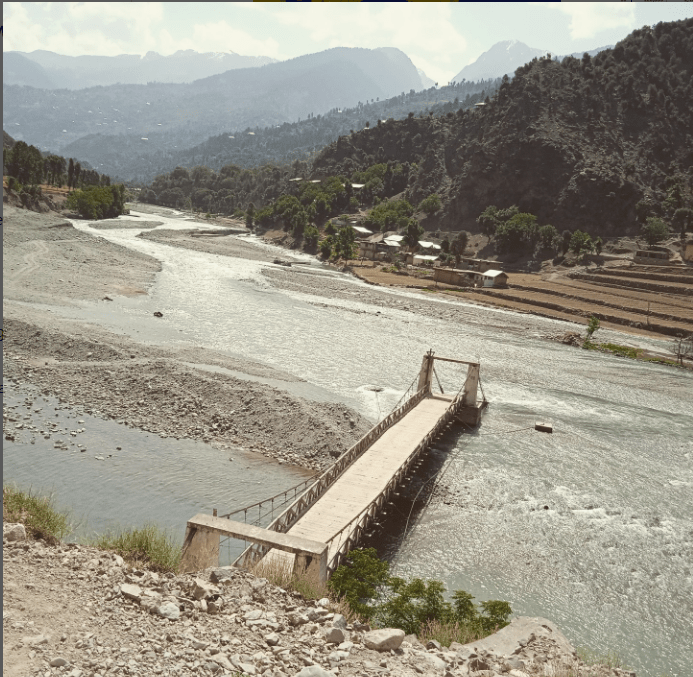
Despite best efforts, I could not find a suitable description for this BRIDGE! Can you help me with that?
Welcome to our channel – https://shorturl.at/vbmvs! Today, we delve into the fascinating world of polo stick making, a craft steeped in tradition and artistry. In this video, you’ll witness the meticulous process and skill that goes into creating these essential sports implements.
From selecting the finest wood to the final finishing touches, each step is a testament to the craftsmanship that has been passed down through generations.
The journey begins with the careful selection of high-quality timber, which is crucial for ensuring durability and performance. Watch as artisans skillfully carve and shape the wood, transforming raw materials into stunning polo sticks.
Next, the sticks undergo a sanding process that not only smooths their surface but enhances their aesthetic appeal. This attention to detail is what sets handcrafted polo sticks apart from mass-produced alternatives.
Finally, the polishing and assembly stages bring the polo stick to life. With vibrant finishes and personalized touches, each stick becomes a unique expression of the artisan’s skill and creativity.
The making of a polo stick is not merely a craft; it’s an art form that embodies passion, precision, and tradition. To learn more about this captivating process, we invite you to read our detailed blog post linked in the description below.
If you enjoyed this video, please share the blog post on your social media platforms. Help us spread the love for this incredible craft and the artisans behind it. Thank you for watching, and be sure to subscribe for more engaging content!
Here is a dynamic explainer video that breaks down essential SEO strategies. Learn how to optimize your website, increase traffic, and strengthen your online visibility.
Watch, like, comment and share!
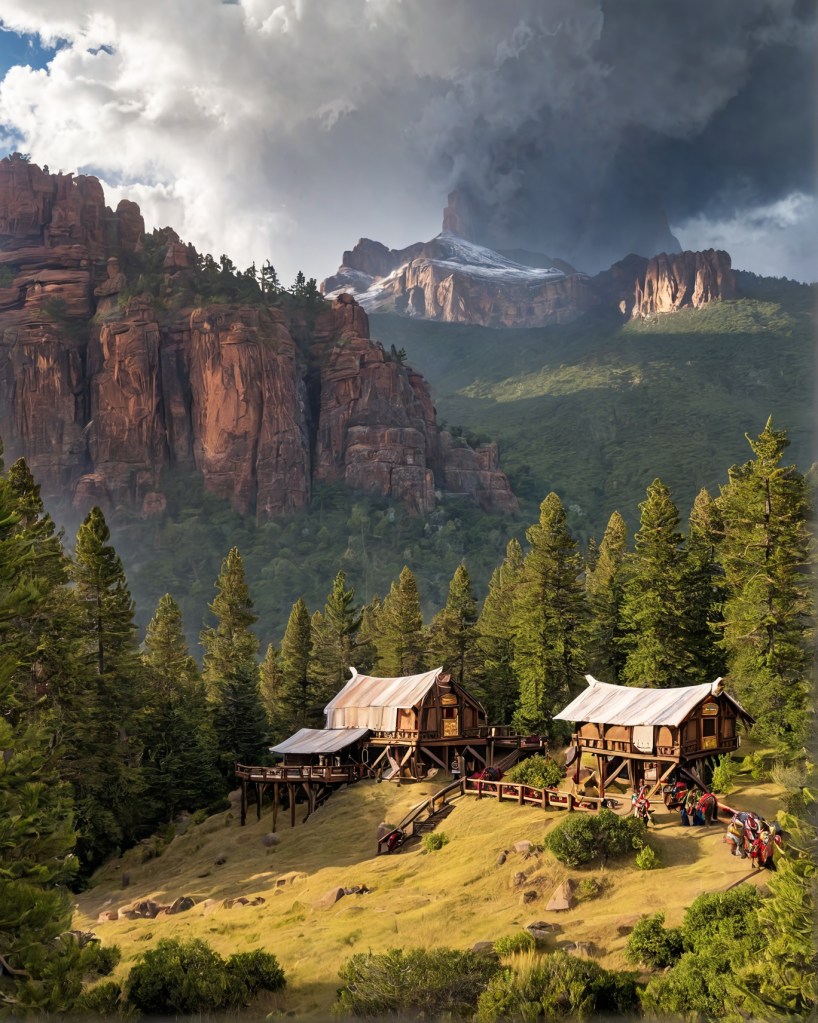
In the remote valleys of Nepal, there was a towering peak known as Thunder Mountain. The mountain earned its name not because of the storms that raged around it, but because of the legend whispered among the villagers: at its summit lay a hidden treasure, guarded by the mighty thunder god, Indra.
Many had tried to reach the top, but none returned. Some said the mountain itself was cursed, that those who sought wealth would find only ruin. Others believed the treasure was real, waiting for someone brave enough to claim it.
Among the villagers lived a young man named Dev, who had grown up hearing these stories. Unlike the others, Dev wasn’t interested in wealth. He was a humble farmer, content with the life he led. But after a terrible drought struck the village, leaving his crops withered and his people hungry, Dev decided to climb Thunder Mountain—not for treasure, but to ask the thunder god to bring rain.
Armed with nothing but a walking stick and a heart full of determination, Dev began his ascent. The journey was long and treacherous, the path steep and jagged. As he climbed higher, the air grew thin, and the sky darkened with storm clouds.
Just as he neared the summit, a deafening roar echoed through the mountains, and a bolt of lightning struck the ground before him. A figure appeared, cloaked in thunder and lightning—it was Indra, the thunder god himself.
“Why have you come, mortal?” boomed Indra, his voice shaking the very ground.
Dev, though trembling, stood his ground. “I have not come for treasure,” he said, “but to ask for rain to save my village. We are suffering, and I seek your mercy.”
Indra stared at him for a long moment, then laughed, his voice crackling like thunder. “Many have come seeking wealth, but you are the first to ask for something not for yourself. You are brave, young man, but also wise.”
With a wave of his hand, Indra summoned a storm. Rain poured down from the heavens, drenching the mountain and the valley below. The drought was broken.
Before disappearing into the clouds, Indra spoke one last time. “You may not have sought treasure, but you have found it. Remember, the greatest riches are those that serve others.”
Dev returned to his village, where the crops bloomed again and the people rejoiced. He never spoke of his encounter with the thunder god, but from that day forward, he was known as the hero of Thunder Mountain—a man who had found the true treasure hidden in selflessness.
Like, comment, repost and subscribe.
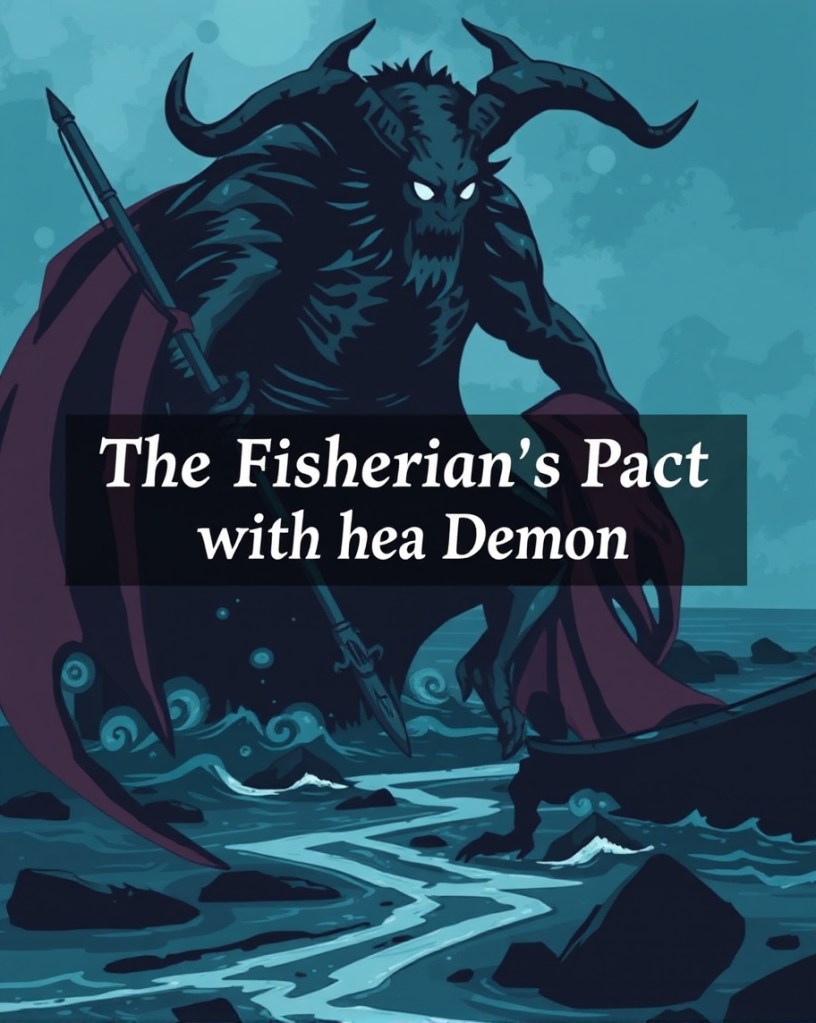
In a quaint coastal village in Sri Lanka, where the waves whispered secrets to those who would listen, lived a humble fisherman named Rohan. The village depended on the sea for their livelihood, but the waters were unpredictable and often harsh. Rohan, known for his skill and courage, braved the deep waters daily, casting his nets in hopes of a good catch.
Read More
And made by me.

In the remote village of Puthia, nestled along the banks of a winding river in Bangladesh, tales of the River Goddess, Ganga, were passed down through generations. The villagers believed that Ganga had the power to shape the fate of their lives through her enchanted waters.
Read More
In a remote village nestled at the foot of the Himalayas, there was a shimmering lake known as Phoksundo. The villagers believed it was enchanted, and legends said that deep beneath its still waters, ancient spirits granted wishes to those deemed worthy. However, few dared approach, for it was also said that the lake tested one’s heart before granting any desires.
One day, an old fisherman named Bhola, weary of his struggles, decided to try his luck. He had lived a hard life, fishing from dawn to dusk, yet still he remained poor. The promise of a wish that could change his fate was too tempting to resist.
With a humble boat and trembling hands, Bhola rowed to the center of the lake. As the mist curled around him, the water shimmered more brightly, as if alive with hidden magic. He closed his eyes, thinking of the wealth and comfort he had long desired, and whispered, “I wish to be rich.”
Suddenly, the water rippled, and an ethereal voice echoed from the depths. “Your wish will be granted, but first, you must give something in return.”
Bhola’s heart pounded. “What do you ask of me?” he called, gripping the sides of his boat.
The voice responded softly, “What do you value most?”
Bhola thought of his small, weathered home. He thought of his meager possessions, the old fishing nets, his worn-out clothes, but none of these mattered. Then, his mind drifted to his daughter, Asha, who waited for him on the shore every evening, her laughter the only light in his life.
“I have nothing to give,” Bhola finally answered, fearing the lake would ask for the one thing he could not surrender.
For a long moment, the lake was silent. Then, the voice spoke again, kinder this time. “You are wrong, old man. You have everything.”
Suddenly, the boat began to move on its own, gently carrying Bhola back to the shore. When he stepped out, confused but unharmed, he saw Asha running towards him with open arms.
That night, Bhola sat outside his home, watching his daughter play in the distance. The air seemed lighter, the world brighter. And then it dawned on him: wealth did not lie in gold or riches, but in the simple joys he had overlooked—the love of his daughter, the peace of his village, the beauty of the world around him.
The lake had tested his heart, and in doing so, it had given him the greatest treasure of all: contentment.
Like, comment, repost and subscribe.
Part 1: The Encounter
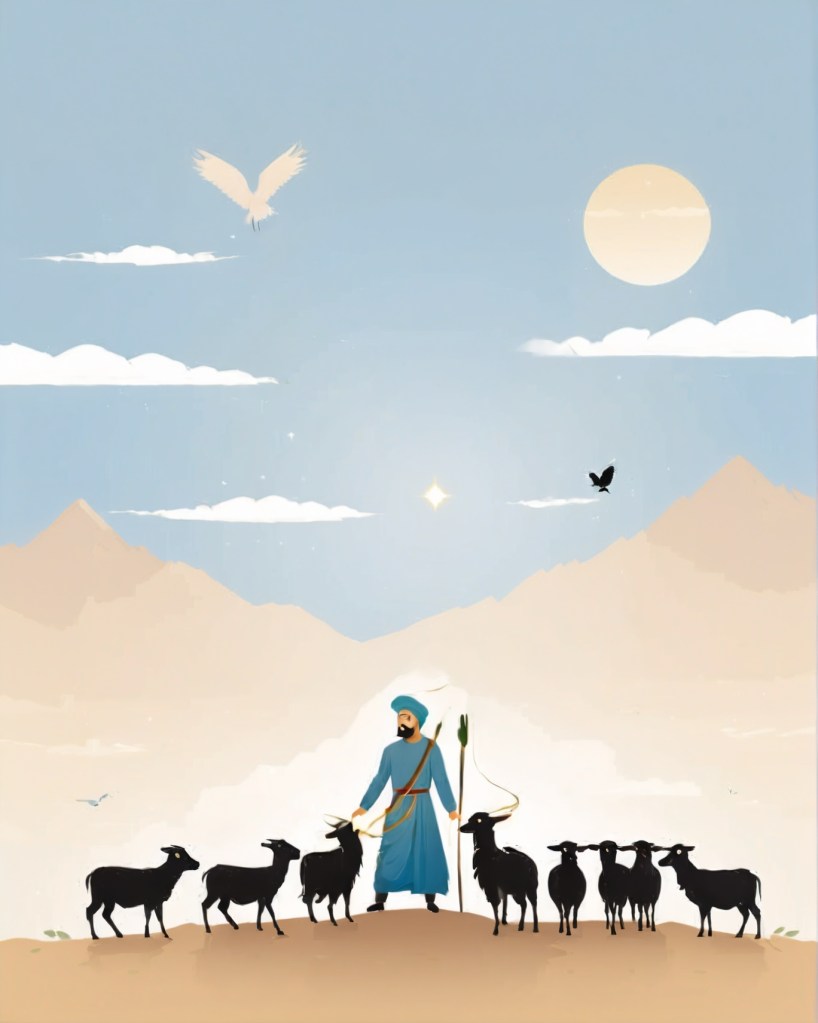
In the ancient city of Herat, surrounded by fertile plains and rugged mountains, there lived a humble shepherd named Ramin. He was known throughout the region for his kindness and wisdom, and his days were spent tending to his flock of sheep and enjoying the serene beauty of the countryside.
One crisp morning, as Ramin guided his sheep across the hillside, he noticed something unusual—a brilliant, golden light shining through the trees. Intrigued, he followed the light and discovered a majestic phoenix, its feathers a radiant mix of gold and crimson, perched on a rocky outcrop. The phoenix appeared to be injured, its wings fluttering weakly.
Ramin approached cautiously, his heart filled with awe and concern. The phoenix, sensing Ramin’s gentle nature, allowed him to come closer. “You have a kind heart,” the phoenix spoke in a voice as melodious as a thousand chimes. “I am the Guardian of the Flames, and I have been wounded by dark forces seeking to extinguish my light.”
Without hesitation, Ramin took off his cloak and fashioned it into a makeshift bandage. He tended to the phoenix’s wounds with care, using herbs and poultices he had learned about from his grandmother. The phoenix, grateful for the shepherd’s compassion, began to regain its strength.
Part 2: The Phoenix’s Gift
As the phoenix’s strength returned, it revealed its true nature to Ramin. It was not just any mythical bird but a creature of ancient wisdom and immense power, capable of bringing balance to the natural and mystical realms. The phoenix had the ability to foresee events and guide those with pure intentions.
In gratitude for Ramin’s kindness, the phoenix granted him a gift—a single feather imbued with its magical essence. “This feather holds a fragment of my power,” the phoenix explained. “It will grant you insight and strength when you need it most. Use it wisely, for it will help you protect what is dear to you.”
Ramin thanked the phoenix, who then took to the sky, leaving a trail of golden flames in its wake. The shepherd returned to his flock, the feather safely tucked into his belt, feeling both honored and apprehensive about the responsibility it carried.
Part 3: The Dark Threat
Weeks passed peacefully, but one fateful night, a shadowy presence began to creep across the land. A malevolent sorcerer named Azad, driven by greed and envy, sought to seize the phoenix’s power for himself. He unleashed dark magic, threatening to engulf the land in darkness.
Ramin sensed the looming threat and knew that the time had come to use the feather. He held it up to the moonlight, and it began to glow with a brilliant, fiery light. The feather guided him to the heart of the sorcerer’s stronghold, where he found Azad preparing a dark spell to summon an army of shadow creatures.
Drawing upon the feather’s power, Ramin confronted Azad. The sorcerer laughed cruelly, dismissing the shepherd as insignificant. But as Ramin invoked the magic of the feather, the room was filled with a blinding light, pushing back the darkness and disrupting Azad’s spell.
Part 4: The Final Battle
The confrontation reached its peak as Azad summoned a monstrous shadow beast to fight Ramin. With the feather’s guidance, Ramin channeled its energy into a protective shield, deflecting the beast’s attacks. The battle was fierce, but Ramin’s bravery and the feather’s magic allowed him to prevail.
In a final, desperate move, Ramin used the feather’s power to create a vortex of light that dispelled the shadows and trapped Azad in a magical prison. The land began to heal as the darkness receded, and the skies cleared.
The phoenix, witnessing Ramin’s valor, appeared once more, its golden plumage shimmering in the dawn light. “You have used the gift wisely and protected the land from great peril,” the phoenix said. “Your bravery and kindness have restored balance and earned you my eternal respect.”
Part 5: The Legacy
With the sorcerer defeated and peace restored, Ramin returned to his simple life as a shepherd, though his deeds became the stuff of legend. The story of Ramin and the phoenix was passed down through generations, a tale of courage, wisdom, and the extraordinary bond between a humble shepherd and a mythical guardian.
The feather, now a cherished relic, was kept in a sacred place, a symbol of the triumph of light over darkness and the enduring power of compassion. Ramin’s legacy lived on as a beacon of hope and a reminder that even the simplest of lives can hold the power to change the world.
And so, in the hills and valleys around Herat, the tale of the shepherd and the phoenix continued to inspire those who sought to protect the balance between the natural and mystical realms, guided by the enduring light of a golden feather.
Like, comment, repost and subscribe.
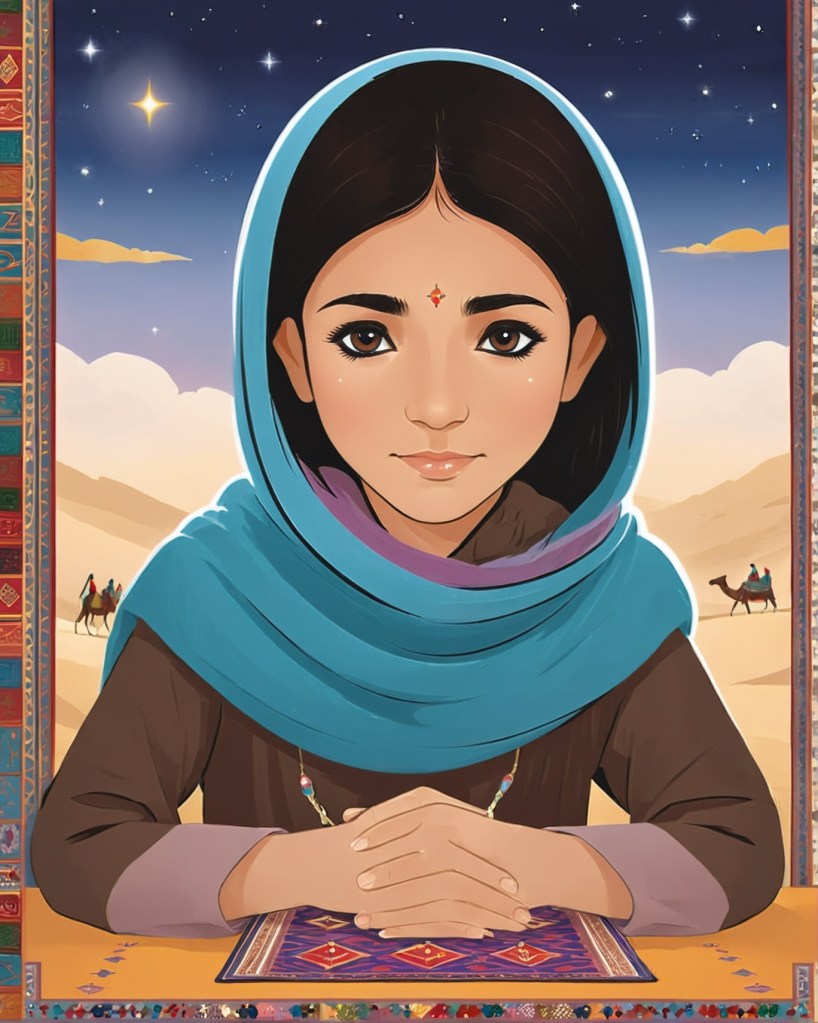
Part 1: The Discovery In the ancient city of Balkh, known for its vibrant markets and majestic architecture, lived a girl named Zarmina. Her family was well-respected for their craftsmanship in weaving intricate textiles, but Zarmina was more interested in the stories of magic and adventure that her grandmother told her by the hearth.
Read More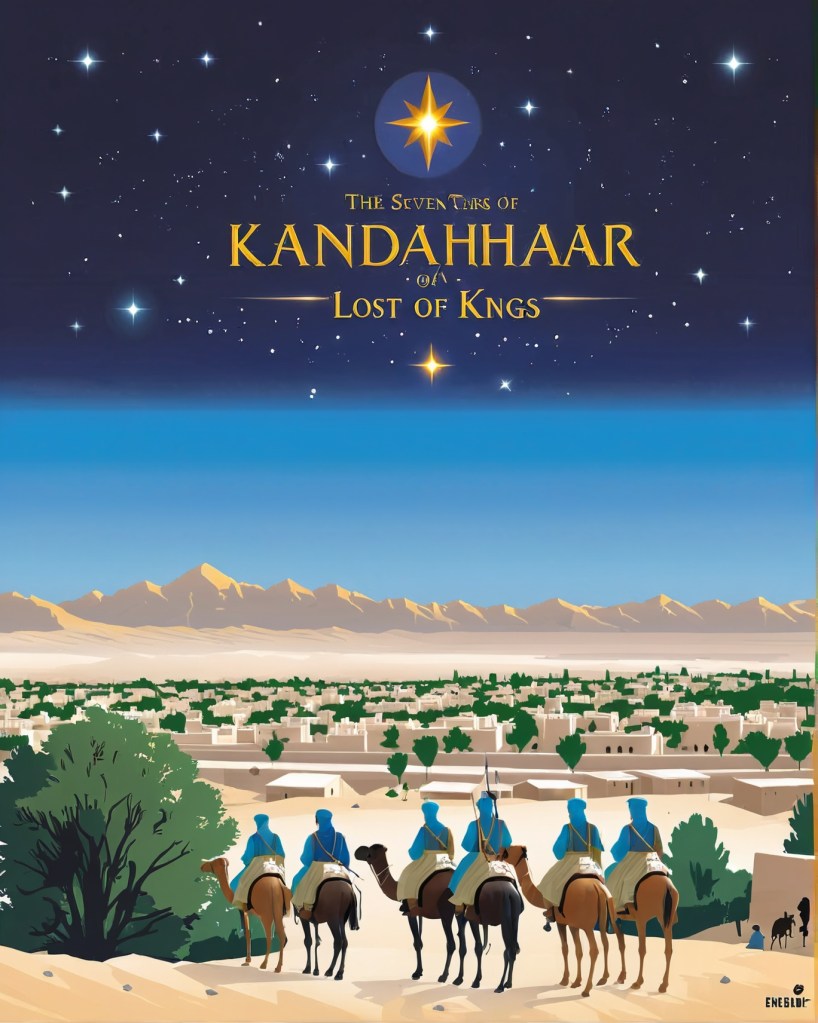
Part 1: The Legend Unfolds
In the ancient city of Kandahar, nestled amidst the arid beauty of the Afghan landscape, legends of lost kings and hidden treasures have long been whispered among the people. It was said that seven kings, each representing a different star in the night sky, had once ruled with wisdom and grandeur. Their reigns were marked by prosperity, but when their time came, they hid their treasures across the land, leaving only cryptic clues for those who would seek them.
One evening, as the sun dipped below the horizon, casting a golden hue over the city, a young historian named Amina stumbled upon an old, tattered scroll in the archives of the city’s grand library. The scroll, written in ancient script, detailed the legend of the Seven Stars of Kandahar. Each king had hidden a portion of their wealth and knowledge, leaving behind a series of riddles and maps that would lead to their hidden vaults.
Intrigued by the possibility of uncovering the long-lost treasures, Amina decided to embark on a quest to solve the riddles and reveal the secrets of the seven kings. With a heart full of determination and a mind keen on unraveling mysteries, she set out on her journey.
Part 2: The Quest Begins
Amina’s quest took her across the diverse landscapes of Kandahar. Each clue led her to a different location, a site of historical significance or natural beauty. The first riddle guided her to an ancient fortress, now a crumbling ruin on a hill overlooking the city. Here, she discovered a hidden chamber beneath the fortress, where she found the first artifact—a golden star inscribed with the symbol of the King of the North.
The artifacts were not merely treasures but keys to understanding the kings’ wisdom and legacy. Each star held a piece of a greater puzzle, a map to the next location. Amina traveled through deserts, climbed rugged mountains, and explored lush oases, each journey revealing more about the kings’ lives and the rich history of Kandahar.
Part 3: The Trials
As Amina pursued the clues, she encountered various challenges that tested her resolve and intellect. She deciphered ancient scripts, navigated treacherous terrain, and solved complex riddles. Each king’s treasure was hidden within a unique trial that required both physical and mental skill.
One notable challenge involved navigating an underground labyrinth beneath the sands of a lost city. The maze was filled with traps and illusions, but Amina’s keen sense of direction and perseverance saw her through. At the heart of the labyrinth, she uncovered the second artifact—a silver star representing the King of the East.
Another trial took place at the edge of a vast, shimmering lake. Here, Amina had to use her knowledge of astronomy to align ancient stone markers with the positions of the stars, revealing the location of the third artifact—a bronze star representing the King of the South.
Part 4: The Final Revelation
The final clue led Amina to the most challenging location—the summit of a remote mountain where the sky met the earth. Here, the last riddle was inscribed on a grand stone altar, surrounded by celestial carvings. To solve it, Amina had to align the seven stars with the constellations of the night sky.
As she completed the alignment, a hidden chamber revealed itself beneath the altar. Inside, Amina found a magnificent vault containing the ultimate treasure—a golden star representing the King of the West, surrounded by scrolls and artifacts from all the kings. The vault also contained a message from the kings, explaining their desire to pass on their wisdom and ensure that their legacy lived on through those who sought knowledge and truth.
Part 5: The Legacy of the Kings
With the treasures and knowledge of the seven kings now in her possession, Amina returned to Kandahar. The city celebrated her success, and the artifacts were displayed in a grand exhibition, showcasing the rich history and heritage of the lost kings.
Amina’s journey not only uncovered the physical treasures but also brought to light the wisdom and values of the seven kings. Their stories of leadership, courage, and unity inspired the people of Kandahar and beyond. The legend of the Seven Stars became a cherished part of the city’s heritage, a reminder of the profound legacy left by those who once ruled with honor and foresight.
And so, the tale of the Seven Stars of Kandahar continued to inspire generations, a symbol of the enduring quest for knowledge and the timeless value of wisdom passed down through the ages.
Like, comment, repost and subscribe.
 Janson's blog