Folktale – Zohra and Majnoon
The love story of Zohra and Majnoon is a timeless tale of unrequited love, sacrifice, and eternal devotion.
The love story of Zohra and Majnoon is a timeless tale of unrequited love, sacrifice, and eternal devotion.
The Pashtun love story of Gul-e-Rukh and Rafiq is a tale of passionate love, societal challenges, and tragic separation.
Podcast: Gul Meena and Fateh Khan: A poignant Pashto folktale of forbidden love, resilience, and tragedy. Their devotion defies societal norms, showcasing the timeless struggle between love and tradition in Pashtun culture, leaving a legacy of heartbreak and sacrifice.
A timeless Pashto love tragedy of Yousaf Khan and Sherbano, entwining passion, betrayal, and sacrifice against the backdrop of tribal traditions.
One of the most heart-warming folktale in the Pashtun culture. Listen, like, comment and share.
Immerse yourself in a heartwarming Pashto love story filled with romance, passion, and cultural richness. This podcast beautifully narrates a tale of devotion and resilience, offering a glimpse into timeless emotions that transcend language and resonate with every listener.
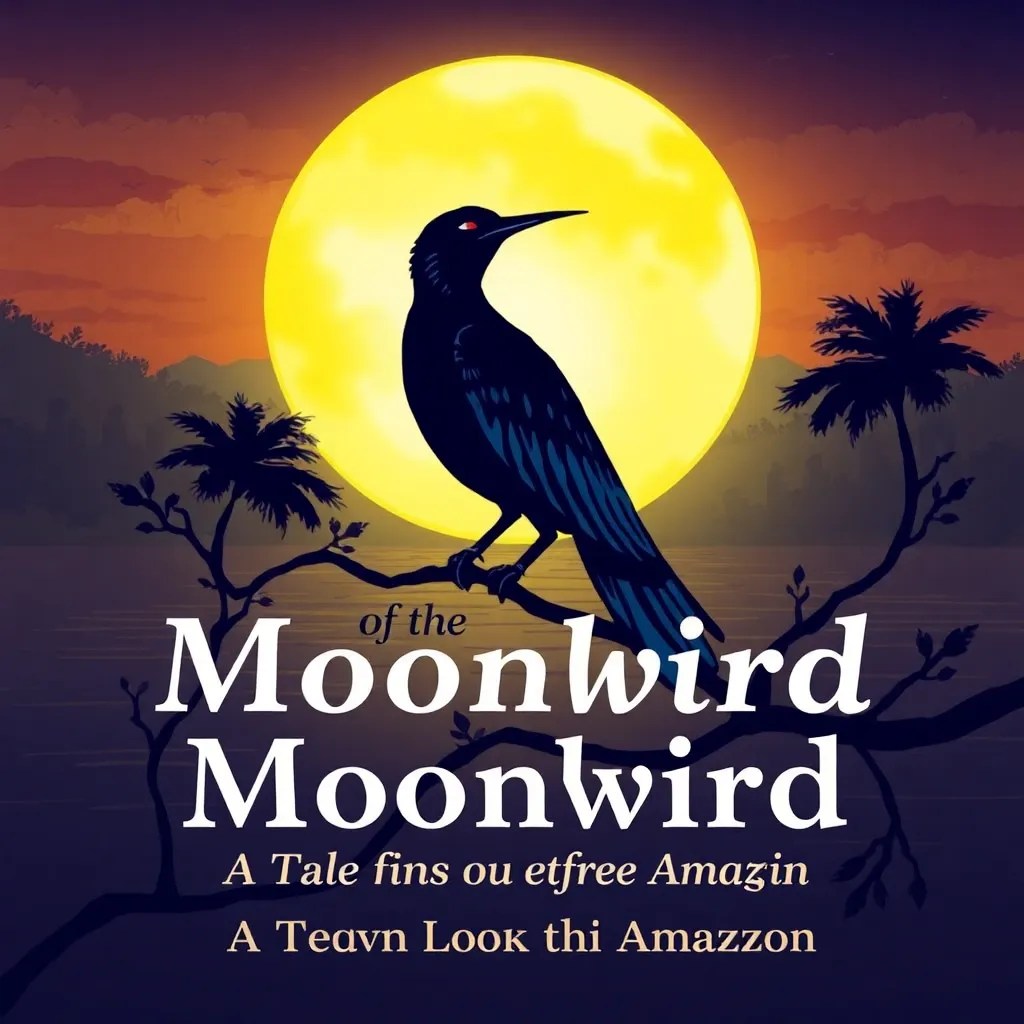
In the heart of the Amazon rainforest, where the canopy is so thick that sunlight barely trickles through, a small tribe called the Arinava lived in harmony with the ancient trees, whispering rivers, and the spirits of their ancestors. They were a gentle people, deeply connected to the rhythms of the jungle, living off its fruits and wild game, and knowing nothing of the world beyond.
In this timeless place, legends were their compass, passed down from elders in the warm glow of the fire each night. One tale they held sacred was that of The Moonbird, a mystical creature said to bring messages from the spirit realm. It was as white as the full moon, with eyes that shimmered like stars, and feathers that glowed in the night.
One evening, a young boy named Ayu went to the river to fetch water. Ayu had always been curious and braver than the others, though it often got him into trouble. As he knelt beside the riverbank, he noticed a faint glow on the opposite shore. His heart skipped. There it was, perched on a branch—a large, luminous bird. He was sure it was the Moonbird of legend, watching him with eyes that seemed to see into his soul.
Ayu felt a tug on his heart, a quiet urging to follow. Stepping lightly so as not to startle the bird, he made his way across the river and deeper into the forest. The bird flew ahead, stopping every so often to make sure he kept pace. Hours seemed to melt away as Ayu ventured farther than he had ever gone, until he reached a small clearing he had never seen before.
In the center of the clearing lay a strange stone structure, partly covered in moss, with engravings unlike anything Ayu had ever seen. At the top of the structure was a peculiar mark—a circle with lines radiating outward, like the sun. Ayu sensed this was a sacred place, built by hands long forgotten.
As he stood in awe, the bird perched atop the stone and began to sing a low, haunting melody. Its voice was unlike anything Ayu had ever heard, filled with sorrow and hope, a song that resonated deep in his chest. Suddenly, he felt a warmth spreading through him, as if he was not alone, as if his ancestors stood beside him, watching over him.
The Moonbird fell silent, staring at Ayu with those star-like eyes, and then flew into the trees, disappearing into the night. Ayu stood for a long moment, feeling a strange peace, as if he had touched the edge of a mystery beyond understanding.
He returned to his village before dawn, carrying with him the memory of the Moonbird’s song and the mystery of the stone circle. Though he tried to tell his family what he had seen, they only smiled, thinking it was just another of Ayu’s stories. But Ayu knew it was real. From that day forward, he felt different—a little braver, a little wiser, and a little closer to the unseen world that lay hidden within the jungle.
In time, Ayu became a respected elder, the storyteller of his people. And every time he told the tale of the Moonbird, his eyes would gleam with a knowing light, inspiring younger generations to seek out the mysteries of their own. And thus, the legend grew, a small seed of wonder that would linger in the heart of the Arinava, as eternal as the Amazon itself.

A Short Story
In the rugged mountains of the Pashtun homeland, where the winds whispered tales of honor and bravery, lived a young man named Aimal. He was known for his unwavering commitment to the Pashtunwali code, a set of unwritten rules that governed the lives of the Pashtun people. This ancient code, predating even the arrival of Islam, was a way of life that emphasized honor, hospitality, and revenge, binding the community together in a tapestry of shared values and traditions.
Read More
In the rugged terrain of the Pushtoon tribal lands, where the mountains echoed with tales of honor and betrayal, there lived two families whose destinies were intertwined by ancient bonds of love and enmity. The Khans and the Maliks, both proud and fierce, had been locked in a bitter feud for generations.
At the heart of this saga were two young lovers, Zainab Khan and Rahim Malik. Their love bloomed amidst the thorns of rivalry, defying the enmity that their families held for each other. Zainab, with her piercing eyes and flowing raven hair, captured Rahim’s heart from the moment they met at a bustling bazaar, where the aroma of spices mingled with the chatter of merchants.
Their secret meetings were filled with whispered promises, hidden away from the prying eyes of their families. But as their love blossomed, so did the seeds of hatred sown by their elders. The elders, burdened by the weight of tradition and honor, could not bear the thought of their blood mingling with the enemy’s. The rivalry between the Khans and the Maliks reached a boiling point when a dispute over grazing land erupted into violence.
Gunshots echoed through the valleys, and blood stained the soil as lives were lost on both sides. In the midst of this chaos, Zainab and Rahim clung to each other, their love a beacon of hope in the darkness. But tragedy struck when Rahim was gravely wounded in a skirmish, caught in the crossfire of the feud. Zainab’s heart shattered as she watched her beloved fight for his life, his once vibrant spirit dimmed by pain and agony.
Determined to save him, she pleaded with her family to seek help from the Maliks, their sworn enemies. In a gesture of unexpected kindness, the Maliks welcomed Zainab into their home, offering hospitality to their enemy’s daughter. Despite their initial suspicion, Zainab’s sincerity and love for Rahim won over their hearts. Under their care, Rahim slowly began to heal, his strength returning with each passing day. As Rahim recovered, the rift between the Khans and the Maliks seemed to soften, fueled by the realization that love and friendship were more precious than pride and enmity.
The two families came together to celebrate the newfound peace, their differences set aside in the spirit of unity. Amidst the festivities, Zainab and Rahim exchanged vows, their love transcending the boundaries of tradition and rivalry. As they danced under the starlit sky, surrounded by the laughter of their families and the music of the tabla and rubab, they knew that their love had triumphed against all odds.
And so, in the land of the Pushtoons, where honor and loyalty were prized above all else, the tale of Zainab and Rahim became a legend—a testament to the enduring power of love to conquer hate and bring about peace in even the most divided of hearts.

In the heart of medieval England, where the whispers of history danced amidst cobblestone streets and towering castles, there existed a quaint village nestled in the shadow of a great forest. Its name was Willowbrook, and its story was woven with threads of love, betrayal, and the flickering light of a solitary lantern.
At the heart of Willowbrook stood a grand manor, home to Lord Cedric, a man of great wealth and power. His presence commanded respect, yet beneath his stern facade lay a heart burdened with secrets. Lady Elara, his wife, adorned in silks and jewels, was the envy of the village, but her beauty concealed a yearning for something more than the confines of her gilded cage.
Amidst this opulent yet stifling existence, there emerged a figure of intrigue – a mysterious wanderer known only as The Wanderer. Cloaked in darkness, he arrived in Willowbrook like a whisper in the night, his eyes alight with an otherworldly glow. With a lantern in hand, he wandered the streets, weaving tales of distant lands and forgotten dreams.
It was on a moonlit night, beneath the canopy of stars, that Lady Elara first encountered The Wanderer. Enthralled by his tales of adventure and freedom, she found herself drawn to him like a moth to a flame. Their clandestine meetings became a dance of forbidden desire, each moment stolen amidst the shadows.
But as whispers of their affair spread like wildfire through the village, jealousy reared its ugly head. Sir William, a knight loyal to Lord Cedric, harbored a love for Lady Elara that burned with a fierce intensity. Consumed by rage and envy, he vowed to rid Willowbrook of The Wanderer and claim Lady Elara for himself.
Under the cloak of night, Sir William ambushed The Wanderer as he wandered the forest paths, his lantern casting eerie shadows amidst the ancient trees. A fierce struggle ensued, the clash of steel echoing through the silent night. In the end, it was the treacherous blade of Sir William that extinguished the light of The Wanderer’s lantern, leaving him lying lifeless amidst the fallen leaves.
Upon discovering The Wanderer’s fate, Lady Elara’s heart shattered into a million fragments. The lantern, once a symbol of their clandestine love, now lay shattered alongside her dreams. Wracked with grief and guilt, she confessed her sins to Lord Cedric, her voice trembling like the delicate wings of a wounded bird.
In a fit of rage and despair, Lord Cedric cast Lady Elara from his manor, her name tarnished by scandal and betrayal. Alone and broken, she wandered the streets of Willowbrook, her footsteps echoing like a haunting refrain. The once-vibrant village now lay cloaked in sorrow, its streets filled with whispers of a love lost and a light extinguished.
As for Sir William, his victory was hollow, his heart consumed by remorse and regret. Haunted by the memory of The Wanderer’s final moments, he found no solace in his triumph. The lantern, now a symbol of his sins, cast a flickering light upon his tortured soul, a reminder of the darkness that lurked within.
And so, in the heart of medieval England, amidst the tangled webs of love and betrayal, the tale of The Lantern was written. A tragic saga of forbidden love and shattered dreams, it echoed through the annals of time, a haunting reminder of the fragile beauty of the human heart.

In the realm of Aethel, where emerald valleys cradled sapphire rivers and mountains kissed the clouds, reigned a king named Corvus. Not for the raven hair that cascaded down his back, but for the unyielding wisdom that perched in his obsidian eyes. His reign, etched in the annals of time, was a tapestry woven with threads of valor, wit, and an uncommon touch of magic.
Born under a blood-red comet, Corvus was no ordinary prince. He learned the language of birds, deciphered the whispers of the wind, and possessed a strength that belied his slender frame. Yet, ambition held no sway over him. He found joy in tending to his people, his laughter echoing through bustling markets and his counsel soothing weathered brows.
One fateful eve, a guttural roar shattered the kingdom’s serenity. From the obsidian maw of Mount Cinder spewed forth a horde of fire demons, their eyes burning with malevolent embers. Panic clawed at the hearts of men, as flames devoured homes and screams painted the night sky blood-red.
Corvus, though, stood resolute. He rallied his knights, their armor glinting like defiance in the firelight. But these were no mortal foes. Steel met searing claws, only to melt and twist. Arrows rained down, swallowed by the demons’ fiery aura. Despair threatened to consume hope.
Then, the impossible. Corvus, eyes blazing with the comet’s fiery spirit, raised his hands. The wind, heeding his unspoken command, whipped into a gale, fanning the demons’ flames even higher. But within the inferno, Corvus saw not destruction, but fuel. He wove the wind into a swirling vortex, drawing the flames inward, shaping them into a searing blade of pure heat.
With a thunderous cry, Corvus hurled the blade at the demon lord, its leader, a behemoth wreathed in molten rock. The blade struck true, cleaving the demon in two, its fiery essence scattered on the wind. The remaining demons, bereft of their leader, cowered before the king’s newfound power. With a final roar, they retreated back into the fiery mouth of Mount Cinder, the earth rumbling shut behind them. Aethel was saved, not by brute force, but by the king’s understanding of nature’s rhythm, his ability to turn its very breath into a weapon. The tale of Corvus, the Fire-Wielding King, echoed through generations, a testament to the power of wisdom, courage, and a touch of the extraordinary. His reign, forever etched in legend, served as a beacon, reminding all that even the most perilous darkness can be vanquished by the light of a truly exceptional soul.

In the quiet village of Mizukaze, nestled at the base of mist-covered mountains, there stood an ancient Japanese temple known as Hikari-ji. Legend whispered through the centuries that the temple glowed with ethereal light on moonlit nights, creating an otherworldly ambiance that captivated the hearts of those who dared to visit.
One such night, a young woman named Hana, with ebony hair cascading like a waterfall and eyes that sparkled like the stars, arrived at Mizukaze. Drawn by tales of the enchanting temple, she felt an inexplicable connection, a calling that beckoned her to its sacred grounds.
As Hana approached the temple gates, a soft breeze rustled the cherry blossom trees, scattering delicate petals around her like a cascade of pink snow. The moon bathed the temple in a silver glow, casting a spell that made the ancient stones seem to whisper secrets of the past.
Hana entered the temple grounds with a sense of reverence, her footsteps echoing in the stillness of the night. She marveled at the intricate details of the temple’s architecture, each step carrying her deeper into a realm where time seemed to stand still.
As she reached the heart of Hikari-ji, the temple revealed its true splendor. Torches flickered along the stone pathways, casting dancing shadows on moss-covered lanterns. The air was imbued with the fragrance of incense, and the sound of a distant waterfall provided a melodic backdrop to the sacred silence.
Hana’s eyes widened in awe as she discovered a moonlit garden hidden behind the temple. Lanterns swayed gently, and koi fish glided gracefully in a pond that reflected the night sky. At the center of the garden stood a centuries-old cherry blossom tree, its branches adorned with blossoms that seemed to shimmer in the moonlight.
Lost in the beauty that surrounded her, Hana felt a profound sense of peace and connection with the spirits of the temple. She closed her eyes and allowed the moment to wash over her, absorbing the energy of the ancient stones and the whispers of the wind.
As the night unfolded, Hana remained in the embrace of Hikari-ji, feeling like a part of a timeless tapestry woven with threads of history and magic. The moon continued its journey across the sky, casting its silvery light on the beautiful girl who had discovered the secret beauty of the ancient Japanese temple on that enchanting moonlit night.
 Janson's blog