The Agonizing Tragedy of Sohrab and Rustum: A Heartbreaking Tale of Fate and Folly
In the vast expanse of Persian literary heritage, few tales resonate as profoundly as the heartbreaking story of Sohrab and Rustum, retold with somber brilliance by Matthew Arnold in his 1853 narrative poem. Derived from Ferdowsi’s Shahnameh, Arnold reimagines the timeless tragedy in English verse, infusing it with profound melancholy and stoic inevitability that haunt the soul long after the final line. With every word, Arnold masterfully amplifies the grief of a father and son locked in a cruel embrace of fate, where recognition comes only too late.

The Fateful Protagonists: Sohrab and Rustum

Sohrab, the embodiment of youthful vigor and unbridled ambition, charges onto the battlefield with dreams of glory. He is the very image of a noble warrior, endowed with both strength and compassion. Yet his innocence, his yearning for recognition, and his tender hope to find the father he has never known—these very qualities make his tragic end all the more unbearable.

Opposite him stands Rustum, the famed warrior of Persia, weighed down by the burdens of age, pride, and a lifetime of battles. Rustum, whose greatness echoes across empires, is a man blind to the threads of fate that bind him to the very foe he faces. His ignorance of Sohrab’s identity, though understandable, fills the reader with a crushing sense of foreboding. The tragedy is not merely in their fatal combat but in Rustum’s unyielding belief that he fights an anonymous enemy, only to discover—when it is far too late—that the boy he has slain is his own flesh and blood.

The Supporting Figures and the Unseen Forces of Fate

Arnold’s verse introduces us to figures and forces that deepen the tragedy of Sohrab and Rustum. Tahmineh, Sohrab’s mother, remains a spectral presence throughout the narrative, her unspoken anguish lingering in the background. She bore Sohrab after a single night with Rustum and raised him alone, never revealing his lineage. This secret, rooted in her fear of losing her child to Rustum’s martial world, sows the seeds of the catastrophe.

Even Rustum’s horse, the magnificent Ruksh, becomes a silent participant in the tragedy. Ruksh, Rustum’s steadfast companion in countless battles, symbolizes loyalty and duty—qualities that propel Rustum toward a fatal confrontation with his own son.

The world of Sohrab and Rustum is also one of stoic landscapes that seem to reflect the characters’ despair. The Oxus River, meandering through the poem with an indifferent constancy, becomes a powerful metaphor for the relentless flow of time and fate. It witnesses the folly of men, absorbs their grief, and carries their stories to oblivion.

The Tragic Duel: A Slow-Building Crescendo of Sorrow

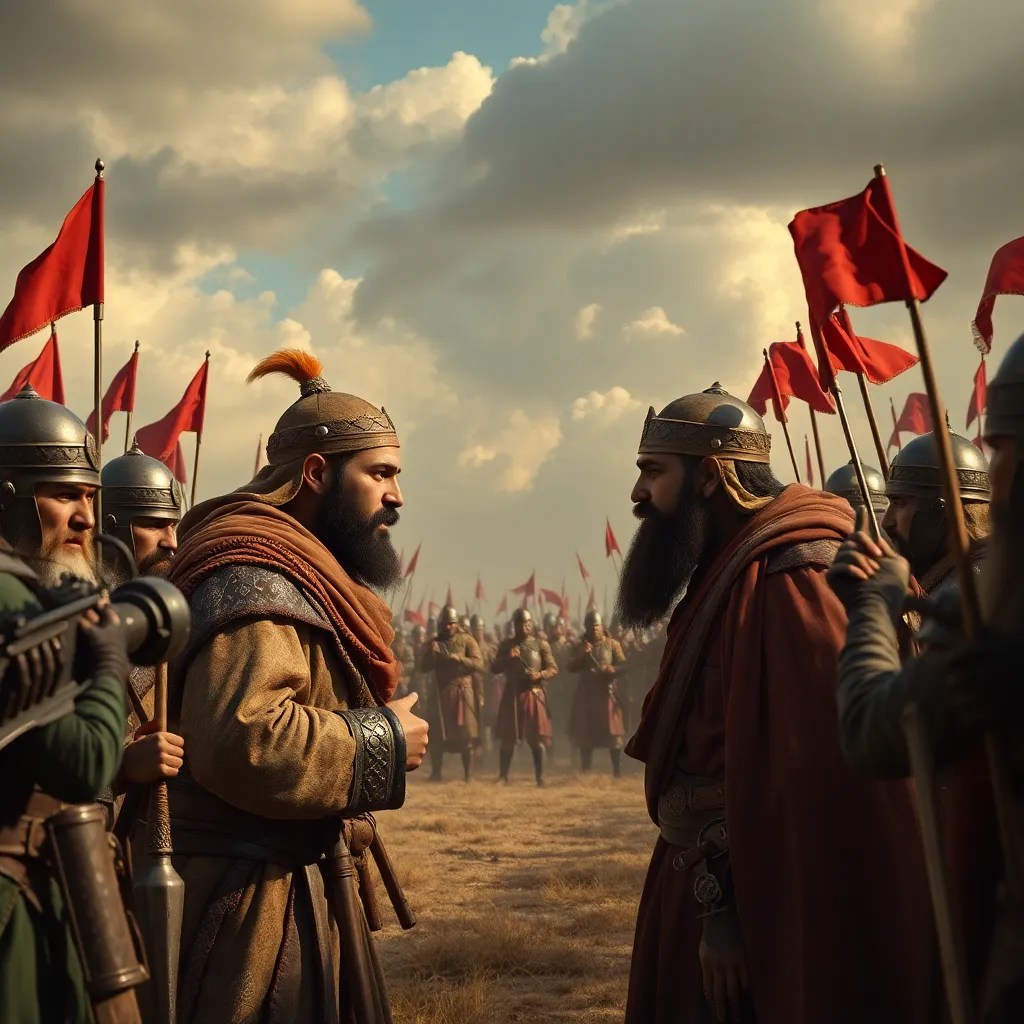
Arnold’s rendering of the climactic battle is a masterclass in restrained yet devastating storytelling. The duel between Sohrab and Rustum unfolds with a tragic inevitability that grips the heart. Arnold describes the clash of father and son with vivid detail, capturing the raw power of their combat while letting the emotional weight simmer beneath the surface. Sohrab’s youthful vigor matches Rustum’s seasoned strength, but the older warrior’s experience proves decisive.

When Rustum’s final, fatal blow lands, it is not triumph but doom that settles over the battlefield. Sohrab’s dying words—his revelation of his parentage—pierce Rustum like a dagger. The mighty warrior, who has vanquished countless foes, is brought to his knees by the cruel irony of fate. Arnold’s language here is devastatingly beautiful, painting Rustum not as a hero but as a broken man, shattered by the realization that his own hand has destroyed his legacy.

Grief Beyond Words: The Universal Tragedy

What makes Sohrab and Rustum so heart-wrenching is its universal resonance. At its core, the poem is not just about a father and son—it is about the devastating consequences of misunderstanding, pride, and the inexorable march of fate. Sohrab dies not only because Rustum fails to recognize him, but because the forces of the universe seem to conspire against them.

Arnold’s melancholic tone is unrelenting, and the reader cannot help but feel both sympathy for Rustum and an overwhelming grief for Sohrab. Rustum’s anguish is palpable as he cradles his dying son, a moment of recognition that comes far too late. And as the Oxus River flows on, indifferent to the tragedy it has witnessed, the reader is left with an aching sense of loss.

The Eternal River: A Metaphor for Life’s Indifference

The poem’s final lines, which describe the eternal flow of the Oxus River, serve as a poignant reminder of life’s indifference to human suffering. While Sohrab’s death devastates Rustum and echoes in the hearts of readers, the river flows on, unchanging, unconcerned. Arnold’s imagery here is haunting, driving home the idea that human grief, no matter how profound, is but a ripple in the vast ocean of existence.

Why This Tale Still Matters

Arnold’s Sohrab and Rustum endures not only for its poetic beauty but for its emotional depth. It is a story that forces us to confront the fragility of human connections and the inexorable power of fate. The characters, though drawn from an ancient epic, feel achingly real in their struggles and sorrows.

In a world often consumed by pride, misunderstanding, and unspoken truths, Sohrab and Rustum is a timeless reminder of the cost of silence and the tragedy of missed opportunities. It compels us to question how often we, like Rustum, fail to see the truths before us until it is too late.

As readers, we are left mourning for Sohrab, who dies with unfulfilled dreams and unanswered questions, and for Rustum, whose legendary strength cannot shield him from the most devastating blow of all. Their story is a testament to the enduring power of love, loss, and the human condition.

Share Your Thoughts

If this tale of devastating loss and unspoken truths has moved you, share your thoughts in the comments. How did Sohrab’s innocence and Rustum’s grief impact you? Let us grieve together for a tragedy that transcends time.

Click like if this tale stirred your soul, and share this article with others who need to experience the haunting beauty of Sohrab and Rustum. Perhaps, in their story, we can find a reflection of our own lives—and a lesson we must never forget.
A Timeless Celebration: The Pastoral Festival on Keats’ Grecian Urn

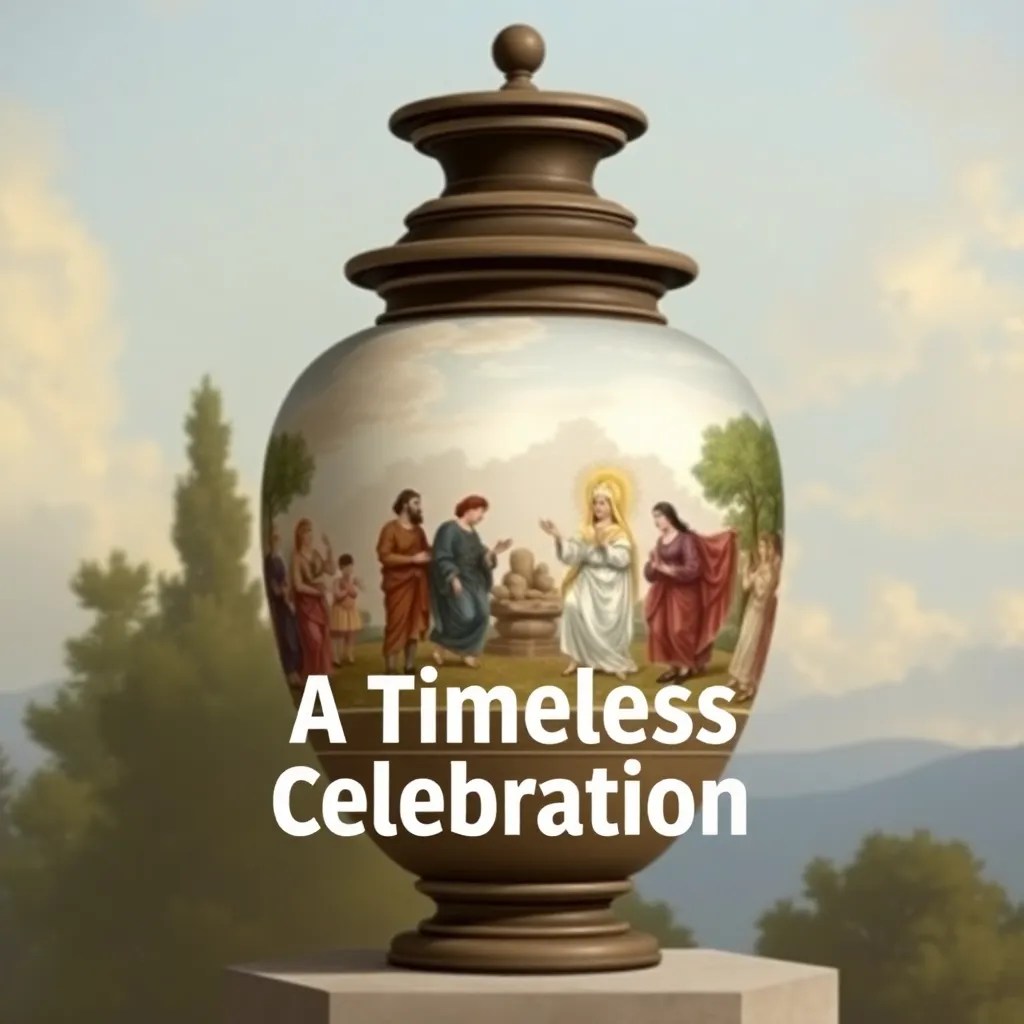
John Keats’ Ode on a Grecian Urn transports readers to an ancient world frozen in beauty and meaning. Among its enchanting depictions is a pastoral festival or religious celebration, an evocative tableau capturing a lively, communal event that will never fade or conclude. This scene, like others on the urn, is a rich canvas for exploring themes of permanence, vitality, and the human desire to preserve joy.

The Scene: A Bustling Festival Frozen in Time

Keats alludes to a festive gathering, possibly in a small town or pastoral setting, where the inhabitants are immersed in religious or communal celebration. We see images of young men and women adorned in ceremonial dress, trees in eternal bloom, and the distant altar awaiting its sacred role in the ritual. The streets are quiet, as all who dwell there are drawn to the collective moment of reverence.

This imagined depiction conveys movement and energy, yet it is forever paused on the urn. Keats’ vivid imagery allows readers to visualize an ancient culture full of life, faith, and artistry—locked in an endless moment of perfection.

Interpreting the Pastoral Scene

  1. The Joy of Rituals: The celebration on the urn reflects humanity’s universal inclination toward rituals that bring people together, whether for religious devotion, seasonal festivals, or communal milestones. By preserving such a scene in perpetuity, Keats highlights the beauty and significance of shared human experiences.
  2. Art’s Immortalizing Power: The festival participants will never grow tired, and the trees will never lose their blossoms. This permanence contrasts with the ephemeral nature of real-life celebrations, emphasizing art’s ability to eternalize fleeting moments of joy and meaning.
  3. The Paradox of Eternal Festivity: While the scene is vibrant and alive, its participants are trapped in their revelry. Keats prompts readers to question whether such permanence is a blessing or a curse. The festival is perfect, yet it can never evolve or lead to anything beyond itself. This duality reflects life’s tension between wanting to savor the moment and moving forward.

Keats’ Thoughts Behind the Ode

Keats was deeply attuned to the fleeting nature of human life, especially as he faced his own mortality. The Grecian urn, as an enduring artifact, became a symbol of what he could not achieve: permanence. The festival’s vibrant yet unchanging celebration represents his yearning for eternal beauty and his recognition of the limitations of life.

The urn’s portrayal is not merely a reflection of an ancient past but a timeless commentary on human desires, communal connections, and the role of art in preserving them.

Modern Relevance of the Festival Scene

In today’s world of digital experiences and fleeting trends, Keats’ depiction of the pastoral festival offers a profound reminder of the enduring value of shared moments. It speaks to our longing for connection, ritual, and a sense of belonging that transcends time.

For modern readers, this scene also highlights the importance of appreciating traditions and celebrating life’s transient joys while we have them. Keats’ message encourages us to cherish our present moments while understanding that, through art and memory, their beauty can last forever.

The pastoral festival on Keats’ Grecian urn isn’t just a frozen image; it’s an invitation to reflect on life, art, and the joy of celebration. How do you interpret the paradox of eternal festivity? Does the permanence of art inspire you to celebrate your fleeting moments?

Share your thoughts in the comments! If Keats’ vision resonates with you, like and reblog this article to keep the timeless beauty of his poetry alive. Let’s celebrate the enduring legacy of art together.

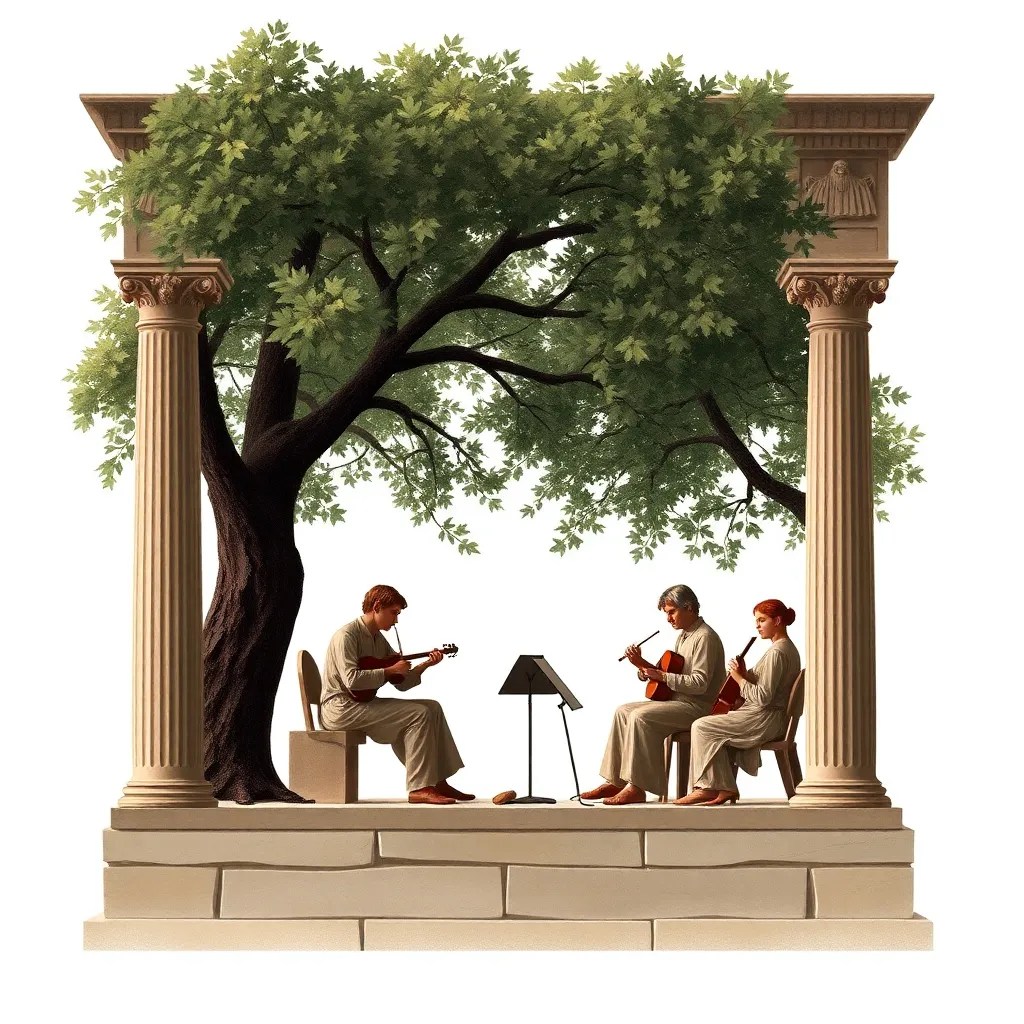
The Silent Symphony: Musicians Under the Trees in Keats’ Grecian Urn

The Silent Symphony: Musicians Under the Trees in Keats’ Grecian Urn

John Keats, the Romantic poet who celebrated beauty and eternity, invites us to explore the quiet yet profound world of art in Ode on a Grecian Urn. Among the vivid images painted in words is a timeless scene of musicians playing under trees, frozen forever in their act. This portrayal isn’t just a snapshot of an ancient pastoral life; it’s a gateway to understanding the power of art to transcend time and evoke emotions.

The Scene: Music Frozen in Time

Keats describes a group of musicians under shady boughs, forever mid-performance. Their instruments are poised, their tunes unheard yet eternal, and their joy everlasting. The leaves of the trees never fall, and the melodies never fade. This portrayal captures a moment of perfect harmony between man and nature, untainted by the passage of time.

This scene is not just about music but a metaphor for the timelessness of art. The urn preserves a moment of creativity, vitality, and celebration, offering it to every viewer and reader who contemplates its silent symphony.

The Power of Silent Music

Keats’ depiction of the musicians emphasizes a paradox: though we cannot hear their tunes, the silence enhances their beauty. For Keats, imagined music surpasses real sound, as it lives in the realm of perfection, unbound by flaws or fading.

He writes:

“Heard melodies are sweet, but those unheard
Are sweeter.”

This line underscores the idea that the imagination can create its own idealized experience, transcending the limitations of physical reality. In this way, the urn becomes a muse, inspiring endless interpretations and inviting modern readers to use their imagination to complete the scene.

Why It Resonates with Modern Readers

  1. Eternal Creativity:
    In an age of fleeting digital content, Keats’ silent musicians remind us of the enduring power of art to inspire across generations. Their music may not play in real time, but its essence is alive, just as a work of literature, film, or painting continues to impact audiences long after its creation.
  2. Connection to Nature:
    The tranquil image of musicians beneath leafy trees resonates with contemporary readers longing for simplicity and connection in an era dominated by urbanization and technological overload.
  3. Celebration of Imagination:
    Keats’ belief in the power of the imagination aligns with modern creative pursuits, where interpretation and individual experience are as important as the art itself.

A Reflection on Keats’ Genius

By embedding eternal music within a silent medium, Keats challenges us to think about art’s purpose. Art, he suggests, does not need to speak aloud to touch the soul. In fact, its stillness allows it to transcend time, offering something fresh to every viewer.

This timeless quality is what makes Keats’ work not just a relic of Romanticism but a relevant and vital piece of literature today. His scene of the musicians under the trees invites modern readers to pause and appreciate the beauty of silence, the permanence of art, and the boundless nature of human imagination.

Call to Action for Readers

Keats’ Ode on a Grecian Urn teaches us that beauty and art live forever. Take a moment to ponder his words and envision the silent symphony under the shade of timeless trees. Let it inspire you to find beauty in your surroundings and create something lasting in your life.

Share this article to honor Keats’ vision. What are your thoughts on the silent music of art? Like, comment, and reblog to join the conversation and keep the timeless symphony alive!

The Heifer Led to Sacrifice: A Reflection on Keats’ Grecian Urn Scene

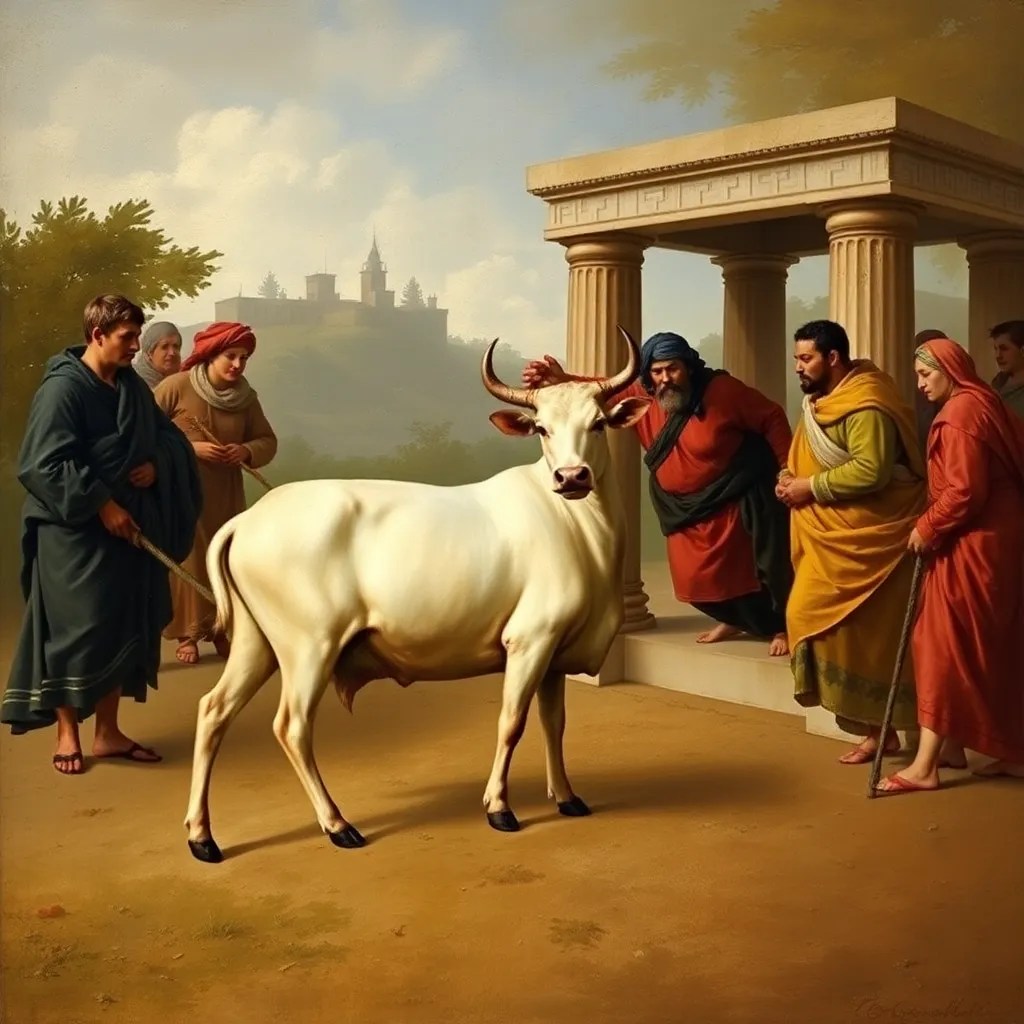
John Keats’ Ode on a Grecian Urn paints timeless scenes that explore the interplay between life, art, and eternity. Among these is a vivid depiction of a heifer being led to the altar for sacrifice. This scene, like the others on the urn, is frozen in time, offering a window into ancient rituals and a reflection on themes of permanence and mortality.

The Scene: A Silent Ritual

Keats describes a moment in which a heifer, adorned for sacrifice, is being forcibly led by its master to the altar. Surrounding the animal, we imagine a group of people dressed in ceremonial attire, their faces expressive yet motionless in the artwork. While the moment is steeped in solemnity, the urn’s silent portrayal captures only the act—not its culmination.

The Interpretation

This scene, though specific to the context of ancient rituals, resonates universally. The heifer’s sacrifice symbolizes themes of duty, loss, and reverence, and Keats uses this imagery to reflect on broader existential questions:

  1. Permanence of Art, Transience of Life: The heifer, forever on the way to the altar, is never sacrificed. Keats marvels at this eternal pause, highlighting how art immortalizes even the most transient acts. While the actual sacrifice would result in death and decay, the urn preserves the ritual in a state of unending reverence.
  2. Rituals and Meaning: The depiction evokes the cultural and religious significance of sacrifice, showcasing the human tendency to find meaning in acts of devotion. It also prompts readers to consider the ethical and emotional weight of such traditions.
  3. The Frozen Moment: Just as the lover eternally chases his beloved, the heifer is eternally led to its fate. This suspension in time adds a bittersweet beauty to the scene. Keats suggests that, while life moves forward relentlessly, art offers a reprieve—an opportunity to reflect on moments without the consequence of time.

Keats’ Thoughts While Writing

Keats, deeply aware of his own mortality, found solace in art’s ability to outlast life. The scene of the heifer led to sacrifice might reflect his feelings of inevitability and loss, as well as his admiration for art’s capacity to render such moments timeless and meaningful. Through this, he contemplates the interplay of permanence (in art) and ephemerality (in life).

For the Layman

Imagine a painting where a cow is being taken for a ritual. It might seem ordinary, but in Keats’ vision, this frozen scene becomes extraordinary. The cow will never reach the altar; it will always remain on its path, beautifully adorned and surrounded by solemn rituals. Keats uses this image to remind us that life is fleeting, but art captures moments forever, allowing us to reflect on their deeper meaning.

A Universal Reflection

The heifer’s scene speaks to humanity’s timeless struggle with sacrifice, purpose, and loss. By capturing this moment in perpetuity, Keats invites us to marvel at the beauty of life’s rituals, even as they remind us of our mortality. Like the urn itself, the heifer’s journey is a story of endurance, silently whispering to generations: “Beauty is truth, truth beauty.”

The Pursuit of Love on the Grecian Urn: A Window into Keats’ Thoughts

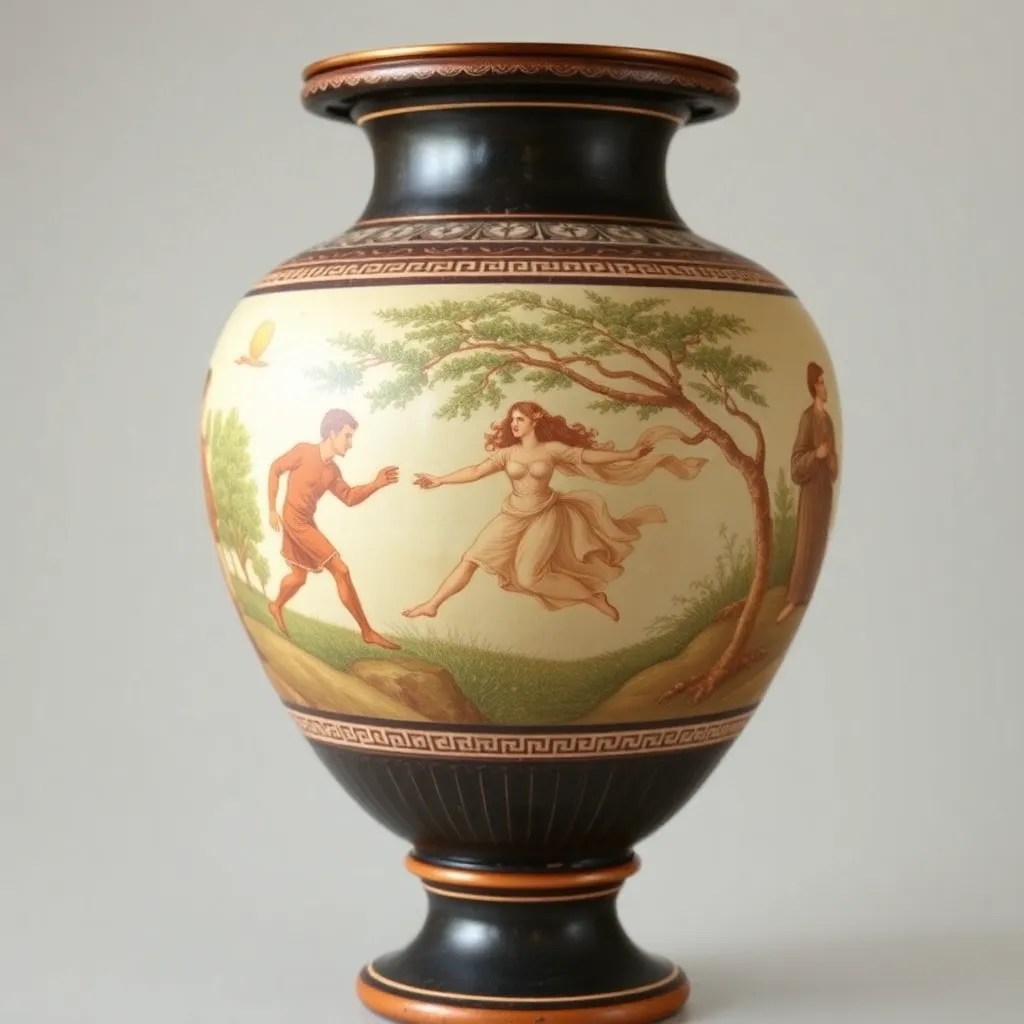
John Keats’ Ode on a Grecian Urn is one of the most celebrated poems in English literature, filled with timeless themes like beauty, permanence, and the nature of art. One of the vivid scenes depicted on the urn shows a lover chasing his beloved through an idyllic setting, yet never quite catching her. This captivating episode, rich in both visual and philosophical implications, reveals much about the poet’s contemplation of life and eternity.

The Scene: Eternal Chase

In the painting imagined by Keats, a youthful lover stretches out in pursuit of his beloved, her figure seemingly floating ahead, perpetually beyond his grasp. The scene is alive with motion, yet frozen in time, as it exists on the silent, unchanging urn. Keats describes the moment with admiration, calling attention to its beauty and vitality, though the figures themselves are locked in an eternal moment.

The Interpretation

This episode is not merely a depiction of romantic pursuit but serves as a metaphor for human desire, ambition, and the eternal yearning for fulfillment. Keats suggests that although the lover can never physically capture his beloved, there is profound beauty in the act of pursuit itself. Their love, untainted by time, remains forever new and unfulfilled, untouched by the fading effects of reality.

  1. The Immortal Beauty of Art: The urn preserves this moment forever. Unlike human life, where passions wane and beauty fades, the lovers on the urn are immortalized in their idealized state. Keats marvels at how art can transcend time, allowing beauty and emotion to remain perpetually fresh.
  2. The Paradox of Eternity: While the lovers’ moment is eternal, it is also incomplete. Keats highlights a paradox: what makes the scene beautiful is also what denies it fulfillment. The lover’s chase is endlessly hopeful but equally futile. This duality reflects the human condition—always striving, always yearning, never fully satisfied.
  3. Art vs. Reality: The static perfection of art contrasts with the dynamic imperfection of real life. In life, a lover might catch their beloved, but the passion could fade or become marred by imperfection. On the urn, however, the lover’s emotions remain forever vivid, untouched by disappointment.

Keats’ Thoughts While Writing

Keats wrote the ode during a time when he was grappling with personal struggles, including financial difficulties and declining health. His deep appreciation for beauty and art was perhaps a response to the transience of his own life. Through this ode, he explored the idea that while human experiences are fleeting, art offers a way to preserve beauty and emotion for eternity.

For the Layman

Keats uses the image of a lover chasing his beloved to talk about our own dreams and desires. While we may never achieve all that we hope for, the excitement of striving for those dreams is what makes life meaningful. The lover on the urn will never stop running, but he also will never grow tired or lose hope. For Keats, this eternal pursuit, captured in art, is both beautiful and bittersweet.

By exploring such universal themes, Keats transforms the scene from a mere painting on a vase into a profound meditation on human existence. The eternal chase, with its joy and sorrow, reflects the richness of life itself—an experience that, though fleeting, is beautiful in its imperfection.

Path of Wisdom

In the realm of wisdom, I roam free,

My heart’s home, where truth I see.

Through trials and tests, I find my way,

In the light of knowledge, I shall stay.

With each step, I learn and grow,

In the garden of wisdom, I sow.

The path of sophism, clear and bright,

Guiding me through day and night.

Though the world may swirl in confusion,

In wisdom’s embrace, I find resolution.

For in the realm of truth, I am at peace,

In the arms of sophism, all worries cease.

John Milton: A Visionary Poet Who Defied Darkness

John Milton, a towering figure in English literature, overcame the challenges of blindness to produce some of the most enduring and influential works in the canon of Western literature. Born on December 9, 1608, in London, Milton lived through a period of political and social upheaval, witnessing the English Civil War and the execution of King Charles I. His life and works are marked by a profound engagement with political, religious, and philosophical themes.

Milton’s Blindness: One of the most remarkable aspects of Milton’s life was his resilience in the face of adversity. In 1652, at the age of 43, he lost his eyesight, likely due to glaucoma. Despite this profound setback, Milton refused to let his blindness extinguish his literary ambitions. He adapted by dictating his compositions to scribes, showcasing an indomitable spirit that would characterize the rest of his career.

“Paradise Lost”: Milton’s magnum opus, “Paradise Lost,” stands as a testament to his creative genius. This epic poem, composed in blank verse, explores the biblical narrative of the Fall of Man. Published in 1667, “Paradise Lost” delves into themes of free will, disobedience, and the cosmic battle between good and evil. The work is characterized by its vivid imagery, powerful language, and philosophical depth.

Excerpt from “Paradise Lost”: “Better to reign in Hell than serve in Heaven.”

Satan, in “Paradise Lost,” Book I

This famous line reflects the rebellious spirit of Satan, one of the central figures in Milton’s epic. It encapsulates the theme of individualism and defiance that runs through the poem.

“Paradise Regained”: Following “Paradise Lost,” Milton penned “Paradise Regained,” a shorter epic that explores the temptation of Christ in the wilderness. Published in 1671, this work presents a contrasting vision, emphasizing Christ’s triumph over temptation and the restoration of paradise through redemption.

Excerpt from “Paradise Regained”: “The world was all before them, where to choose Their place of rest, and Providence their guide.”

Closing lines of “Paradise Regained”

This concluding sentiment highlights the theme of divine guidance and the idea of individuals having the freedom to choose their destiny, a recurring motif in Milton’s writings.

“Samson Agonistes”: Written in 1671, “Samson Agonistes” is a tragic drama that explores the biblical story of Samson, focusing on his captivity and ultimate sacrifice. The work is a powerful exploration of divine justice, human suffering, and the redemptive power of faith.

Excerpt from “Samson Agonistes”: “Yet not the more Cease I to wander where the Muses haunt Clear spring, or shady grove, or sunny hill, Smit with the love of sacred song; but chief Thee, Sion, and the flow’ry brooks beneath.”

In these lines, Milton expresses his enduring commitment to the pursuit of poetic inspiration, even in the midst of personal and societal challenges.

Legacy: John Milton’s contributions to literature extend far beyond his individual works. His use of blank verse, intricate theological explorations, and commitment to individual liberty have left an indelible mark on subsequent generations of writers. Despite the darkness that enveloped his later years, Milton’s legacy shines brightly as a beacon of literary and philosophical enlightenment. His ability to transform personal adversity into timeless art stands as an enduring testament to the triumph of the human spirit.

T.S. Eliot: A Literary Analysis of Life, Works, and Notable Poems

Abstract:

This academic article delves into the life and literary contributions of T.S. Eliot, one of the preeminent poets of the 20th century. Examining the multifaceted aspects of Eliot’s life, this study aims to provide a comprehensive understanding of his poetic evolution, major works, and the enduring impact of his contributions to modernist literature.

Introduction:

Thomas Stearns Eliot, born in 1888 in St. Louis, Missouri, embarked on a literary journey that would redefine modernist poetry. Influenced by his experiences in both the United States and England, Eliot’s works reflect a profound engagement with existentialism, spirituality, and the complexities of the modern world.

Biography:

Eliot’s early life, marked by academic excellence and cultural exposure, laid the groundwork for his intellectual development. A move to England in 1914 solidified his immersion in European literary circles, where he encountered influential figures like Ezra Pound. Eliot’s trajectory from a bank clerk to a literary luminary showcases the transformative power of his engagement with literature.

Literary Evolution:

T.S. Eliot’s poetic evolution is characterized by distinct phases. The publication of “The Love Song of J. Alfred Prufrock” in 1915 marked his debut, introducing readers to his innovative use of fragmented imagery and stream-of-consciousness narrative. The subsequent “Prufrock and Other Observations” (1917) solidified his reputation as a modernist trailblazer.

Major Works:

Eliot’s poetic oeuvre extends beyond “The Love Song of J. Alfred Prufrock.” “The Waste Land” (1922), often regarded as his magnum opus, embodies the fragmentation and disillusionment of post-World War I society. “The Hollow Men” (1925) and “Ash-Wednesday” (1930) further explore themes of existential despair and spiritual redemption.

Famous Poems:

a. “The Love Song of J. Alfred Prufrock”: Notable for its introspective monologue, this poem captures the anxiety and alienation of modern urban life. The famous opening lines, “Let us go then, you and I, / When the evening is spread out against the sky,” resonate with readers as a timeless exploration of the human condition.

b. “The Waste Land”: This sprawling and allusive work, filled with cultural references and mythological symbols, remains a cornerstone of modernist literature. The iconic opening line, “April is the cruellest month,” encapsulates the poem’s exploration of societal decay and the quest for spiritual renewal.

c. “The Hollow Men”: Eliot’s exploration of post-war disillusionment is encapsulated in this poem’s memorable lines, “This is the way the world ends / Not with a bang but a whimper.” The haunting imagery and existential themes contribute to its lasting impact.

Conclusion:

T.S. Eliot’s legacy in the world of English literature is indelible. His intricate exploration of modernity, spirituality, and human consciousness in poetic form continues to resonate with readers and scholars alike. Through an in-depth analysis of his life, major works, and notable poems, this article seeks to underscore the enduring significance of T.S. Eliot in the landscape of 20th-century literature.

The Poetic Brilliance of John Donne: Exploring Love and Divinity in His Poems

John Donne, a 17th-century English poet, is renowned for his profound exploration of themes such as love, religion, and metaphysics. His unique blend of wit, intellect, and emotional depth sets him apart as one of the most celebrated poets of the English Renaissance. Two significant categories of Donne’s poetry are his love poems and divine poems, each offering a captivating glimpse into the complexities of the human experience.

Love Poems:

Donne’s love poems are characterized by their intense and often unconventional expressions of love. One of his most famous love poems is “The Good-Morrow,” where Donne explores the idea of a spiritual connection between lovers. The poem opens with the lines:

I wonder, by my troth, what thou and I Did till we loved?

Were we not weaned till then? But sucked on country pleasures, childishly?

Donne challenges conventional notions of love by suggesting that true love transcends physical desires and creates a deeper, more profound connection between souls.

In another iconic love poem, “A Valediction: Forbidding Mourning,” Donne uses metaphors of compasses and spheres to depict the unbreakable bond between two lovers, even when physically separated. The closing lines beautifully encapsulate this sentiment:

So let us melt, and make no noise, No tear-floods, nor sigh-tempests move;

‘Twere profanation of our joys To tell the laity our love.

Donne’s love poems often involve intricate metaphors and elaborate conceits, demonstrating his intellectual prowess and mastery of poetic devices.

Divine Poems:

Donne’s divine poems explore his spiritual and religious beliefs, delving into the complexities of faith and divine love. One of his notable divine poems is “Holy Sonnet XIV” (commonly known as “Batter my heart, three-person’d God”), where Donne expresses his desire for a profound spiritual transformation:

Batter my heart, three-person’d God, for you As yet but knock, breathe, shine, and seek to mend;

That I may rise and stand, o’erthrow me, and bend Your force to break, blow, burn, and make me new.

The intensity of Donne’s plea reflects his deep-seated conviction in the transformative power of divine love.

In “Hymn to God, My God, in My Sickness,” Donne reflects on his own mortality and impending death. The poem’s concluding lines capture the poet’s acceptance of divine providence:

Since I am coming to that holy room, Where, with Thy choir of saints for evermore, I shall be made Thy music.

Donne’s divine poems showcase a profound engagement with theological concepts, combining intellectual rigor with emotional depth to explore the mysteries of faith.

Conclusion: John Donne’s love poems and divine poems offer readers a rich tapestry of human experience, blending intellect, emotion, and spirituality. Through his intricate metaphors, vivid imagery, and profound insights, Donne continues to captivate readers and inspire contemplation on the enduring themes of love and divinity. His poetry remains a testament to the enduring power of language to convey the complexities of the human soul.

Abdur Rehman Baba: The Poet of Pashto Elegance

Abdur Rehman Baba, born in 1651 in the present-day Khyber Pakhtunkhwa province of Pakistan, stands as one of the most celebrated poets in Pashto literature. His works, primarily composed in the Pashto language, have transcended cultural and linguistic boundaries, earning him admiration not only in the Pashto-speaking regions but also among poetry enthusiasts worldwide. This article delves into the life, legacy, and poetic contributions of Abdur Rehman Baba, providing readers with an insightful glimpse into the rich tapestry of his literary masterpieces.

Life of Abdur Rehman Baba:

Abdur Rehman Baba was born into the Kakazai tribe, a prominent Pashtun ethnic group known for their rich cultural heritage. Raised in the scenic valleys of Peshawar of Pakistan, his upbringing was deeply influenced by the rugged beauty of the region and the traditional Pashtun way of life. Despite the turbulence of the times, marked by invasions and political upheavals, Abdur Rehman Baba’s poetic spirit thrived.

Abdur Rehman Baba was not just a poet; he was a mystic, a philosopher, and a humanist. His verses often reflected a deep connection with spirituality and a profound understanding of human nature. His poetry was not confined to the Pashto language alone; it resonated with the universal themes of love, peace, and tolerance.

Poetic Themes and Style:

Abdur Rehman Baba’s poetry is characterized by its simplicity, yet it carries profound meanings and emotions. His verses often revolve around themes of love, peace, unity, and the divine. The poet’s deep spirituality is evident in his works, where he explores the relationship between the individual soul and the divine.

One of his most famous works, the “Kulyaat-e-Rehman” (The Complete Works of Rehman), is a collection of his poetry that has been cherished by Pashto-speaking communities for generations. The anthology comprises ghazals, rubais, and other traditional Pashto poetic forms, showcasing the poet’s versatility and mastery over his craft.

Excerpts from Abdur Rehman Baba’s Poetry (Translated into English):

  1. On Love and Tolerance: “I am in love, and Truth is my sweetheart, I am not afraid of difficulties, as love is my guard. Let’s live together, O people of the world, In peace and harmony, where love is our word.”
  2. On the Transience of Life: “Life is but a fleeting moment, A journey through time, transient and potent. Embrace each day with joy and grace, For life’s beauty lies in its ephemeral embrace.”
  3. On Spiritual Awakening: “Seek within, the answers you yearn to find, In the silence of your soul, wisdom you’ll bind. The path to God is paved with love, A journey within, guided from above.”

Legacy and Influence:

Abdur Rehman Baba’s poetry continues to resonate with people, transcending the boundaries of language and culture. His messages of love, peace, and spirituality have universal appeal and remain relevant in the contemporary world. The poet’s tomb in Peshawar has become a site of pilgrimage for admirers, symbolizing the enduring impact of his words on generations.

Conclusion:

Abdur Rehman Baba’s life and poetry stand as a testament to the enduring power of language and culture. His works, translated into various languages, continue to inspire and captivate readers worldwide. The poet’s ability to distill complex emotions into simple yet profound verses has cemented his place as a literary icon not only in Pashto literature but in the broader realm of world poetry. As we explore the legacy of Abdur Rehman Baba, we find a timeless treasure trove of wisdom and beauty that transcends the confines of time and space.

The Enduring Grandeur: Exploring the Timeless Realm of Epic Poetry

The word “epic” conjures images of grand narratives, mythical heroes, and worlds beyond the familiar. In the realm of literature, an epic poem stands as a towering monument, a tapestry woven with tales of adventure, valor, and the struggles that define humanity. While epics have evolved over time, the core tenets of this genre remain as potent as ever, resonating with readers across cultures and centuries.

At its heart, an epic is a long, narrative poem that recounts the deeds of a legendary or historical hero. These heroes are larger than life, often grappling with divine forces, monstrous beasts, and challenges that shake the very foundations of their world. Their journeys are fraught with peril, but also marked by unwavering courage, fierce loyalty, and a profound sense of destiny.

The classical epics, those composed in the ancient world, hold a special place in literary history. These foundational works established the genre’s conventions and continue to inspire contemporary writers. Among the most celebrated examples are:

The Iliad and Odyssey by Homer: These Greek epics, dating back to the 8th century BC, narrate the Trojan War and its aftermath. The Iliad focuses on the warrior Achilles and his rage, while the Odyssey charts Odysseus’s ten-year journey home following the war. Through vivid imagery and poignant human drama, Homer explores themes of war, heroism, and the complexities of the human condition.

The Epic of Gilgamesh: This Mesopotamian epic, believed to be the oldest surviving major work of literature, predates Homer by centuries. It tells the story of Gilgamesh, a powerful king on a quest for immortality. Through Gilgamesh’s encounter with death, love, and loss, the poem explores themes of mortality, friendship, and the search for meaning in a finite existence.

The Mahabharata and Ramayana: These Indian epics, composed between the 4th century BC and the 4th century AD, are monumental in both length and scope. The Mahabharata chronicles a dynastic war between cousins, weaving in philosophical and religious teachings, while the Ramayana tells the tale of Rama, a prince exiled with his wife Sita, whose abduction sparks a great war. Both epics delve into questions of dharma, duty, and the triumph of good over evil.

The Aeneid by Virgil: Written in the 1st century BC, the Aeneid is a Roman epic that follows Aeneas, a Trojan refugee destined to found the city of Rome. Inspired by Homer, Virgil imbues his work with Roman values of piety, duty, and empire-building, while also grappling with the legacy of violence and the pursuit of destiny.

Reading these classic epics is akin to stepping into a world where myth and history intersect. We journey alongside heroes who face impossible odds, witness acts of both extraordinary courage and devastating betrayal, and ponder the timeless questions that humanity has grappled with since the dawn of civilization.

What makes these epics truly enduring is their ability to transcend their specific cultural contexts. The themes of love, loss, courage, and the struggle against fate resonate with readers across geographical and temporal boundaries. Whether it’s Achilles’s rage, Odysseus’s cunning, Gilgamesh’s search for meaning, or Rama’s unwavering devotion, these heroes and their stories capture the essence of what it means to be human.

In conclusion, the epic poem remains a vital component of the literary landscape. Its grand narratives, larger-than-life heroes, and timeless themes continue to captivate readers, providing avenues for understanding ourselves and the world around us. As long as stories are told and songs are sung, the epic will stand as a testament to the power of human imagination and the enduring spirit of our collective narratives.