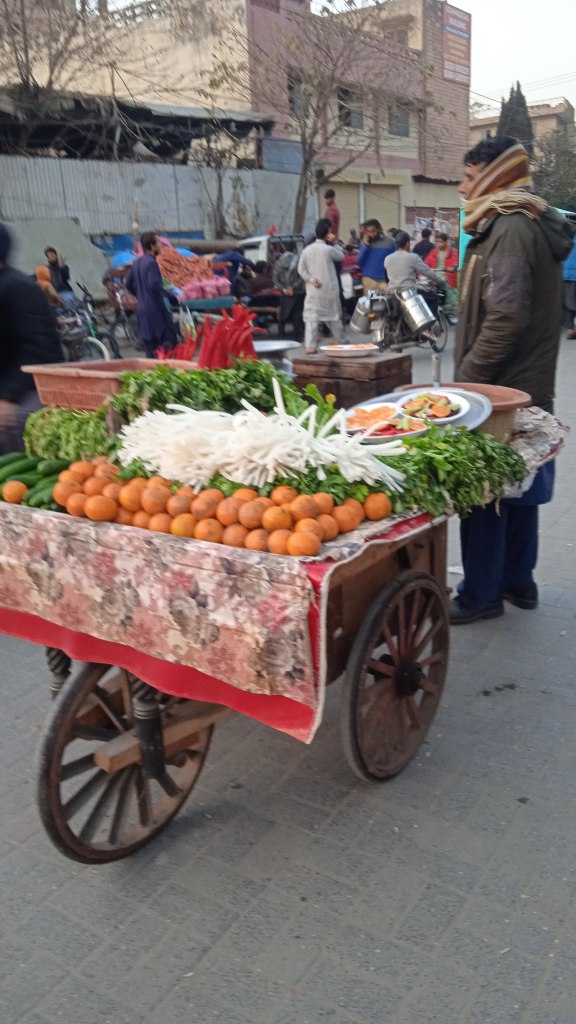
A Vibrant Sunday Market: Where Everything Old and New Finds a Buyer
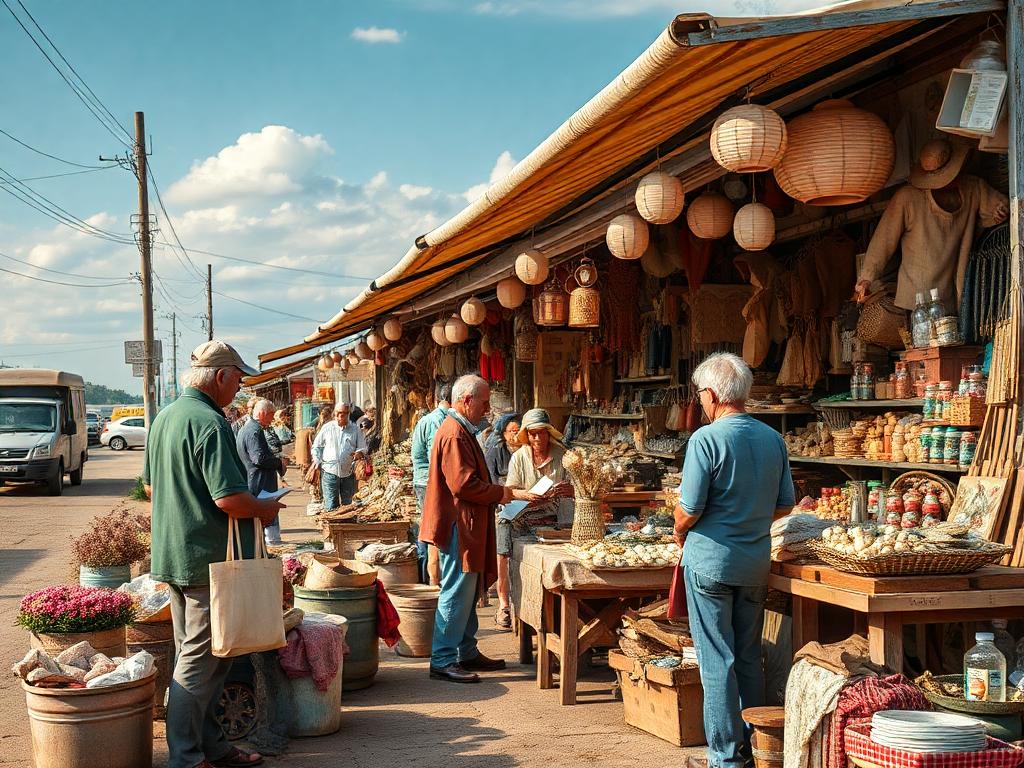
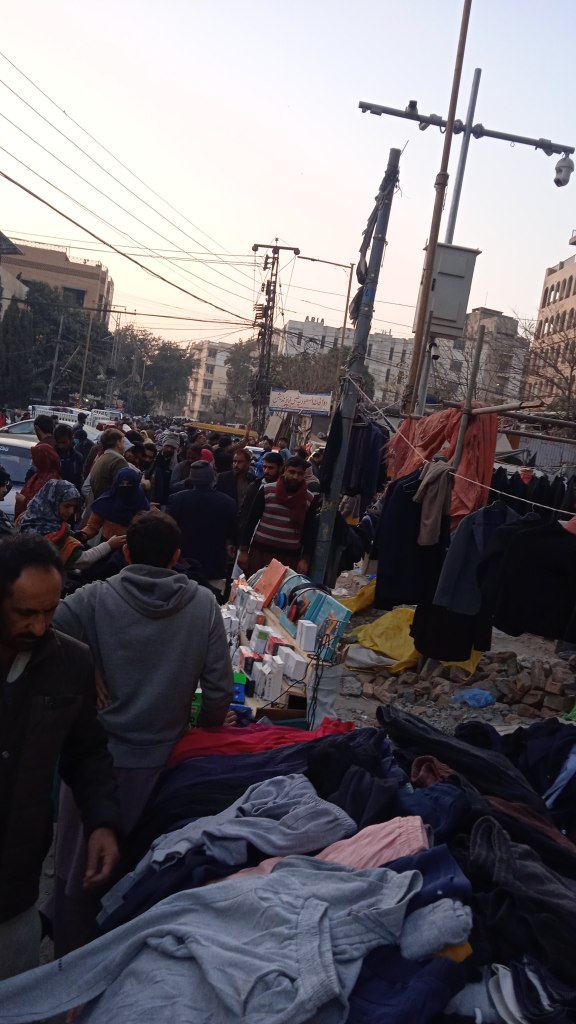
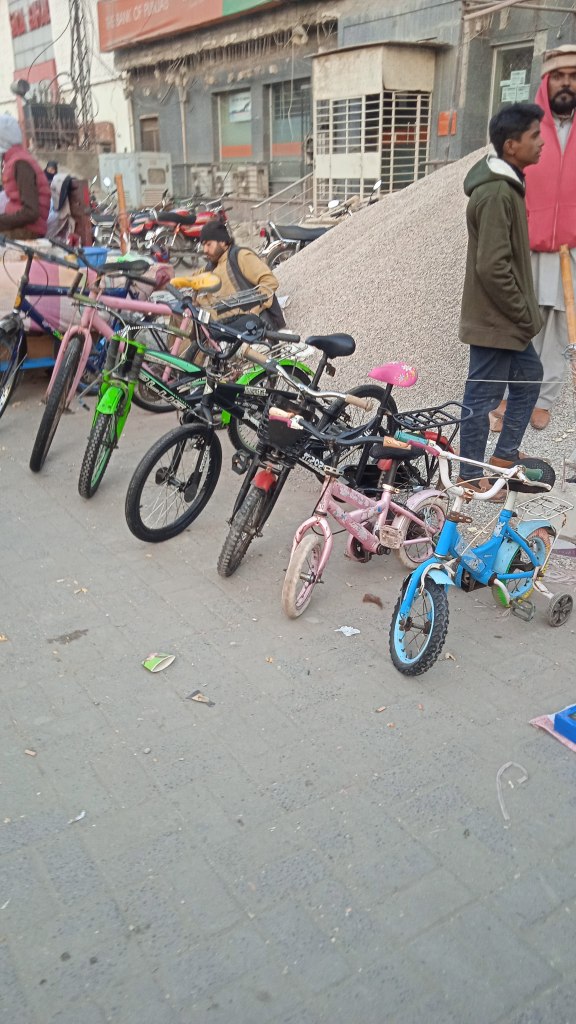
On a crisp Sunday evening, I embarked on an unforgettable journey to a bustling roadside market, the kind of place where the essence of community thrives and treasures, both old and new, await discovery. This vibrant bazaar, sprawling across a few chaotic yet colorful streets, offered an eclectic mix of goods—from antique collectibles to modern gadgets—all laid out on simple pieces of cloth in front of the shopkeepers. It was a sight to behold and an experience to cherish. The place is known as Juma Bazar in the old city of Rawalpindi (Pakistan).


A Symphony of Sounds and Sights

As I stepped into the market, the cacophony of life enveloped me. Vendors shouted out their prices in rhythmic chants, hoping to outdo their neighbors. The aroma of freshly fried snacks mingled with the scent of old leather and wood. Hawkers pushed carts laden with roasted corn, candy, and steaming cups of tea, catering to hungry shoppers.

The market was a mosaic of items. One vendor displayed tarnished brass utensils, their aged patina whispering stories of bygone eras, while another showcased pristine kitchenware that gleamed in the dying evening sun. Nearby, a man sold building materials—rusty nails, screws, and tools—likely salvaged and ready for a second life.

Treasures for All

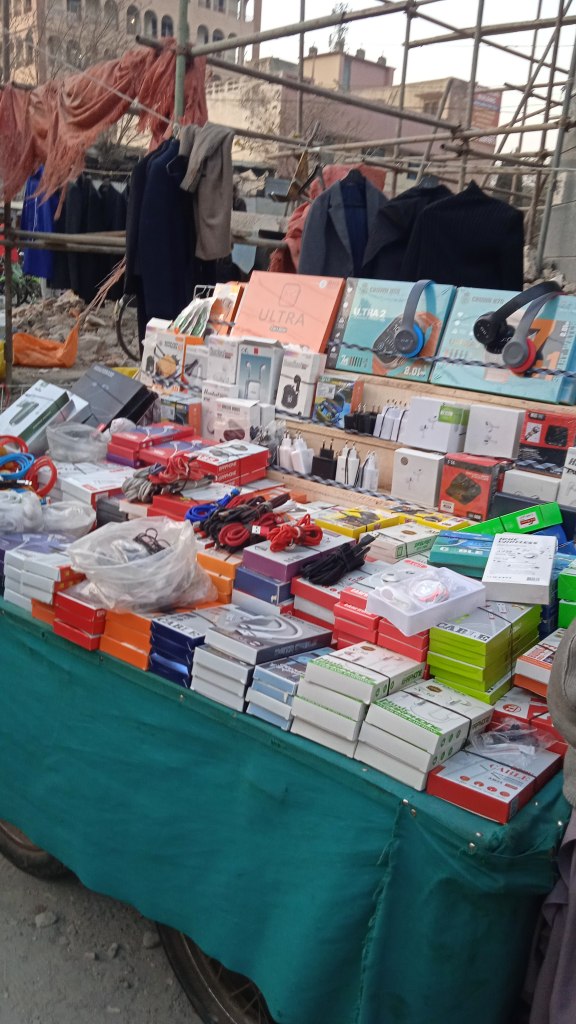
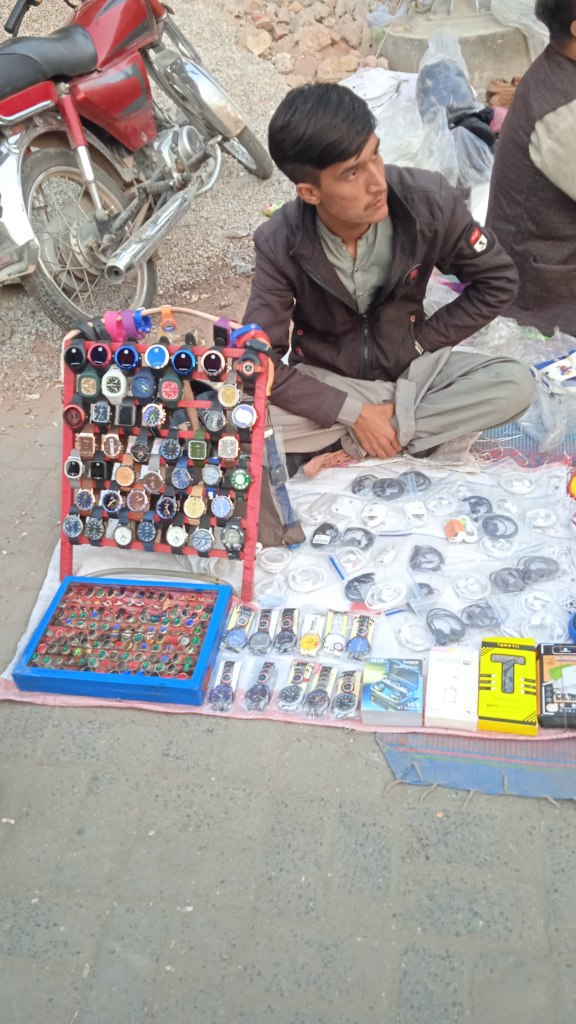
The variety was astounding. A little further down, I found a vendor selling colorful, second-hand toys. Children tugged at their parents’ sleeves, begging for dolls, action figures, or puzzle sets. Next to them was a display of electronics: outdated DVD players, long discs from the 70s, quirky alarm clocks, (false) silver and gold chains and even an assortment of phone chargers that seemed to fit every model ever made.

Clothes and shoes dominated another section, where rows of jeans, dresses, and sneakers were piled high. Shoppers sifted through the garments, hunting for bargains. The air buzzed with negotiations as customers haggled passionately for the best price.

A Collector’s Paradise

For collectors, this market was a haven. Vintage wristwatches, old vinyl records, weathered books, and antique coins were meticulously arranged on makeshift stalls. One vendor’s collection of old cameras caught my eye. He spoke with pride about their history, showing me a decades-old Polaroid that still worked.

A Feast for the Taste Buds

After hours of exploration, I gave in to the tempting aromas wafting through the air. The food vendors here were just as diverse as the goods. I relished a plate of spicy chaat, followed by a sweet, syrupy jalebi. Nearby, a hawker sold fresh sugarcane balls (gander), which offered a refreshing reprieve from the sun.

People Watching: The Heart of the Market

One of the best parts of my visit was watching the people. There were families out for a weekend adventure, seasoned bargain hunters who knew the market’s every nook, and tourists like me, wide-eyed and marveling at the sheer scale of it all. Each person had their own story and reason for being there, adding to the vibrant tapestry of the market.

A Global Perspective

Markets like these are universal, yet unique. In Morocco, you might find souks brimming with spices and textiles; in Thailand, floating markets offer goods from wooden boats. But the charm of this roadside bazaar lay in its raw authenticity. It wasn’t polished or curated; it was a living, breathing entity where the past and present coexisted.

Why You Should Visit

If you ever find yourself near a market like this, don’t hesitate to dive in. It’s more than just a shopping experience; it’s a window into the culture, history, and everyday life of a community. Share this story with friends who love unique experiences and leave a comment about your own market adventures. Let’s celebrate these timeless hubs of human connection and commerce together.

A Vibrant Sunday Market: Where Everything Old and New Finds a Buyer

On a crisp Sunday evening, I embarked on an unforgettable journey to a bustling roadside market, the kind of place where the essence of community thrives and treasures, both old and new, await discovery. This vibrant bazaar, sprawling across a few chaotic yet colorful streets, offered an eclectic mix of goods—from antique collectibles to modern gadgets—all laid out on simple pieces of cloth in front of the shopkeepers. It was a sight to behold and an experience to cherish. The place is known as Juma Bazar in the old city of Rawalpindi (Pakistan).

A Symphony of Sounds and Sights

As I stepped into the market, the cacophony of life enveloped me. Vendors shouted out their prices in rhythmic chants, hoping to outdo their neighbors. The aroma of freshly fried snacks mingled with the scent of old leather and wood. Hawkers pushed carts laden with roasted corn, candy, and steaming cups of tea, catering to hungry shoppers.

The market was a mosaic of items. One vendor displayed tarnished brass utensils, their aged patina whispering stories of bygone eras, while another showcased pristine kitchenware that gleamed in the dying evening sun. Nearby, a man sold building materials—rusty nails, screws, and tools—likely salvaged and ready for a second life.

Treasures for All

The variety was astounding. A little further down, I found a vendor selling colorful, second-hand toys. Children tugged at their parents’ sleeves, begging for dolls, action figures, or puzzle sets. Next to them was a display of electronics: outdated DVD players, long discs from the 70s, quirky alarm clocks, (false) silver and gold chains and even an assortment of phone chargers that seemed to fit every model ever made.

Clothes and shoes dominated another section, where rows of jeans, dresses, and sneakers were piled high. Shoppers sifted through the garments, hunting for bargains. The air buzzed with negotiations as customers haggled passionately for the best price.

A Collector’s Paradise

For collectors, this market was a haven. Vintage wristwatches, old vinyl records, weathered books, and antique coins were meticulously arranged on makeshift stalls. One vendor’s collection of old cameras caught my eye. He spoke with pride about their history, showing me a decades-old Polaroid that still worked.

A Feast for the Taste Buds

After hours of exploration, I gave in to the tempting aromas wafting through the air. The food vendors here were just as diverse as the goods. I relished a plate of spicy chaat, followed by a sweet, syrupy jalebi. Nearby, a hawker sold fresh sugarcane balls (gander), which offered a refreshing reprieve from the sun.

People Watching: The Heart of the Market

One of the best parts of my visit was watching the people. There were families out for a weekend adventure, seasoned bargain hunters who knew the market’s every nook, and tourists like me, wide-eyed and marveling at the sheer scale of it all. Each person had their own story and reason for being there, adding to the vibrant tapestry of the market.

A Global Perspective

Markets like these are universal, yet unique. In Morocco, you might find souks brimming with spices and textiles; in Thailand, floating markets offer goods from wooden boats. But the charm of this roadside bazaar lay in its raw authenticity. It wasn’t polished or curated; it was a living, breathing entity where the past and present coexisted.

Why You Should Visit

If you ever find yourself near a market like this, don’t hesitate to dive in. It’s more than just a shopping experience; it’s a window into the culture, history, and everyday life of a community. Share this story with friends who love unique experiences and leave a comment about your own market adventures. Let’s celebrate these timeless hubs of human connection and commerce together.

The Art of Street Photography: Capturing Urban Stories

Introduction: In the dynamic realm of visual storytelling, street photography stands out as a vibrant and authentic reflection of urban life. This article explores the roots, techniques, and cultural impact of street photography, showcasing real-life examples that exemplify its significance in documenting and interpreting the essence of city life.

Understanding Street Photography:

Street photography is an un-staged genre that captures candid moments in public spaces. It thrives on spontaneity, keen observation, and the ability to encapsulate the raw emotions of everyday life. Renowned photographers such as Henri Cartier-Bresson and Daido Moriyama paved the way for this art form, emphasizing the beauty of the mundane.

Techniques Employed in Street Photography:

  1. Observation and Timing:
    • Street photographers master the art of observation, anticipating moments before they unfold. Timing is crucial, as a split second can make the difference between an ordinary shot and a masterpiece.
  2. Composition and Framing:
    • Effective composition is key in street photography. Framing subjects within the context of their surroundings creates a compelling narrative. Techniques such as the rule of thirds and leading lines are often employed to enhance visual appeal.
  3. Use of Light and Shadows:
    • Playing with natural light and shadows adds depth and mood to street photographs. Golden hours and overcast days provide unique opportunities to capture striking images.

Real-Life Examples:

  1. Humans of New York (HONY):
    • Brandon Stanton’s “Humans of New York” project has gained international acclaim for its poignant portraits and accompanying personal stories. By capturing the diverse faces of New York City, HONY humanizes urban life, fostering empathy and understanding.
  2. Vivian Maier’s Hidden Legacy:
    • Vivian Maier’s posthumously discovered work is a testament to the unnoticed brilliance of a nanny who secretly documented life on the streets of Chicago. Her photographs offer a compelling glimpse into mid-20th century urban existence.

Cultural Impact:

  1. Preservation of Urban History:
    • Street photography acts as a visual archive, preserving the history and evolution of cities. The images capture changing landscapes, fashion trends, and societal shifts over time.
  2. Cultural Diversity and Social Commentary:
    • Street photographers often focus on the diverse cultures within urban environments. By documenting everyday scenes, they contribute to a broader conversation about social issues, diversity, and the human experience.

Conclusion:

In conclusion, street photography is a powerful medium that goes beyond mere visual aesthetics. It serves as a cultural time capsule, capturing the pulse of cities and the people who inhabit them. Through the lens of talented photographers, we gain insight into the universal stories that unfold on the streets, creating a tapestry of urban life that is both timeless and ever-evolving.

Choosing the Right Background: Green Screen vs. Black Screen in Videography

Green Vs Black

Introduction:

When it comes to creating captivating videos, choosing the right background can significantly impact the overall quality of your production. Two popular choices for videographers are green screens and black screens, each with its own set of pros and cons. In this blog, we will explore the advantages and disadvantages of both options, along with common problems and effective solutions.

Green Screen:

Pros:

Versatility: Green screens are widely used in the industry due to their versatility. The vibrant green color is easily distinguishable from most skin tones and objects, making it easier to replace with various backgrounds in post-production.

Keying Accuracy: Green screens provide high accuracy in chroma keying. This means that software can easily identify and remove the green background, allowing for seamless integration of new visual elements.

Better for Outdoor Scenes: If your video involves outdoor scenes or nature shots, a green screen can be more effective than a black screen. The green color doesn’t clash with natural elements like grass and trees.

Cons:

Spill Issues: One common problem with green screens is spill, where the green color reflects onto the subject. This can create a greenish tint around the edges, requiring additional editing to correct.

Color Interference: Certain wardrobe colors may interfere with the green screen, leading to parts of the subject being unintentionally removed during post-production.

Lighting Sensitivity: Achieving even lighting on a green screen is crucial. Shadows and uneven lighting can make keying more challenging and time-consuming.

Black Screen:

Pros:

Minimal Spill Issues: Unlike green screens, black screens generally have fewer spill issues. This can result in cleaner, more defined edges around the subject during post-production.

Contrast and Drama: Black backgrounds can add a sense of drama and sophistication to your videos. They work particularly well for interviews, product shots, or any scenario where a sleek and modern look is desired.

Wardrobe Freedom: With a black screen, you don’t have to worry about wardrobe colors interfering with the background. This can provide more flexibility in terms of costume choices for your subjects.

Cons:

Challenges in Post-Production: Achieving accurate chroma keying with a black screen can be more challenging compared to a green screen. The lack of color contrast makes it harder for editing software to distinguish between the subject and background.

Limited Versatility: Unlike green screens, black screens are not as versatile when it comes to incorporating various backgrounds. The lack of color information makes it difficult to replace the background seamlessly.

Reflection Issues: Black surfaces can reflect light, potentially causing unwanted glares or reflections on shiny objects or glass surfaces.

Conclusion:

Ultimately, the choice between a green screen and a black screen depends on your specific videography needs. Green screens offer versatility and accuracy in post-production, while black screens provide a more polished and dramatic aesthetic. Understanding the pros and cons of each option will empower you to make an informed decision based on the requirements of your project. Whether you choose green or black, investing time in proper lighting and post-production techniques is key to achieving professional and visually appealing results in your videography endeavors.

Blossoms of Autumn: A Symphony in Color

In the garden of autumn, a palette unfolds, Where flowers of brilliance, their stories told. A symphony of colors, a sight to behold, Nature’s brush strokes, a canvas of gold.

Crimson dahlias, like rubies in the sun, Petals unfurling, a ballet begun. Their fiery glow, second to none, A tapestry of warmth, a season’s fun.

Golden marigolds, a sunlit delight, Bursts of sunshine, dispelling the night. Amber and orange, a pure delight, Harbingers of joy, in the soft twilight.

Mauve chrysanthemums, a regal bloom, Whispers of elegance, in nature’s room. Autumn’s crown, in the fading gloom, A fragrant enchantment, in full bloom.

Violets shy, in the cool shade, A gentle presence, in hues displayed. Purple whispers, secrets conveyed, In autumn’s embrace, dreams are laid.

The colors of flowers in this season’s kiss, A harmonious chorus, a moment of bliss. In the tapestry of autumn, love and bliss, Nature’s garden, a haven of pure amiss.

Street Puppetry Shows in Pakistan: A Fading Art Kept Alive by Passionate Folks

Introduction:

Street puppetry shows, once a vibrant and integral part of cultural expression, have witnessed a decline globally in recent decades. However, in the rich tapestry of Pakistan’s cultural heritage, these shows continue to be a source of entertainment and storytelling, preserved and nurtured by dedicated artists. This article delves into the history, popularity, and the challenges faced by street puppetry in Pakistan, particularly in the face of scientific advancements that have contributed to its diminishing presence.

Historical Significance:

Puppetry in Pakistan has a long and diverse history, dating back centuries. The art form has evolved with the cultural and religious influences that have shaped the region. Traditional puppetry in Pakistan can be traced to ancient forms of storytelling and religious performances. Over time, it became an integral part of local festivals, weddings, and other celebrations.

Popularity and Cultural Significance:

Street puppetry shows gained immense popularity in Pakistan during the mid-20th century. These shows, performed by skilled puppeteers, featured colorful puppets that came to life with intricate movements and expressions. Themes ranged from folk tales and historical narratives to moral lessons, providing entertainment and education to audiences of all ages.

The appeal of street puppetry was its accessibility; these performances took place in public spaces, captivating both urban and rural audiences. Puppeteers, often belonging to generations of artists, passed down their craft, creating a cultural legacy that resonated with the diverse communities across the country.

Challenges Faced:

Despite its rich history and cultural significance, street puppetry in Pakistan has faced numerous challenges, leading to its decline. One of the major factors is the emergence of modern entertainment mediums, such as television, cinema, and the internet. These alternatives offer more sophisticated and visually appealing storytelling, making traditional puppetry seem outdated to younger generations.

Moreover, economic factors contribute to the decline of street puppetry. As urbanization and industrialization increase, public spaces diminish, leaving fewer opportunities for puppeteers to perform. Additionally, the economic struggles faced by many puppeteers force them to explore alternative means of livelihood, leaving behind the traditional art form.

Scientific Advancements and Changing Tastes:

Scientific advancements in audiovisual technology have played a role in the diminishing popularity of street puppetry shows. The advent of high-definition television, computer-generated imagery (CGI), and virtual reality has set new standards for entertainment, making traditional puppetry appear quaint and less engaging to contemporary audiences.

Adapting to Modern Times:

Despite these challenges, a passionate group of puppeteers in Pakistan remains committed to preserving and revitalizing street puppetry. Some have embraced modern technologies to enhance their performances, incorporating sound effects and multimedia elements while staying true to the essence of the art form.

Conclusion:

Street puppetry shows in Pakistan, though facing challenges, continue to hold a special place in the hearts of those who appreciate the country’s rich cultural heritage. While scientific advancements and changing tastes pose hurdles, the resilience of dedicated puppeteers ensures that this fading art form perseveres, adapting to the demands of modern times while maintaining its traditional charm. As custodians of a unique cultural legacy, these artists play a crucial role in keeping the magic of street puppetry alive for future generations.

Watch the puppet dancing to the tune of the musician at https://youtu.be/YNm22fjLdoI

Savoring Spice: A Culinary Journey through Peshawari Chappal Kebab Street, Where Woodfire Magic Meets Spicy Delight!

https://youtu.be/_so1CdTicGY

As I stepped into the bustling streets of Peshawar in Pakistan, the aromatic symphony of spices and sizzling meat wafted through the air, guiding me to a small, unassuming street food shop renowned for its Peshawari Chappal Kebab. The fragrant smoke rising from the woodfire oven hinted at the culinary delights awaiting me.

The shop, though modest in appearance, exuded an inviting warmth. A skilled chef manned a large pan, deftly skewering marinated meat. The focal point of the operation was the pan filled with bubbling hot oil, situated over a crackling woodfire. This traditional method of cooking lent the kebabs a distinct smoky flavor that permeated the air.

The secret behind the Peshawari Chappal Kebab lay in its meticulously crafted marinade. The chef generously coated succulent chunks of meat, usually beef, with a blend of garlic, ginger, and an array of ground spices. Crushed red pepper, cumin, coriander, and garam masala played key roles, infusing the meat with a bold and fiery character that set this kebab apart.

As the chef skillfully maneuvered the skewers over the grill, the tantalizing aroma intensified, drawing a crowd of eager onlookers. The sizzle of meat meeting hot oil echoed through the narrow street, creating a sensory experience that left my mouth watering in anticipation.

The sizzling kebabs were flipped with precision, each turn revealing a caramelized exterior that promised a perfect blend of crunch and tenderness. The chef’s practiced hands and the woodfire’s smoky embrace added a layer of authenticity to the culinary spectacle, captivating the senses of everyone present.

Once the kebabs reached a glorious golden brown, the chef expertly lifted them from the oil, allowing excess oil to drip away. The crowd watched in awe as the kebabs were served on a plate, garnished with fresh coriander and accompanied by a side of naan bread and chutney.

I eagerly sank my teeth into the Peshawari Chappal Kebab, and the explosion of flavors was nothing short of extraordinary. The intense spiciness, the smokiness from the woodfire, and the juiciness of the perfectly cooked meat created a symphony of taste that lingered long after each bite.

As I savored the unforgettable experience, I couldn’t help but appreciate the cultural richness and culinary mastery that defined Peshawari Chappal Kebab. It was evident why millions flocked to savor this spicy delight, especially during the brisk winter months when the warmth of the woodfire and the heat of the kebabs provided a welcome respite from the chill all over the city.

The Buddhist Monastery of Yester Years

The Buddhist Monastery

Takht-i-Bahithrone of the water spring‘), is an Indo-Parthian archaeological site of an ancient Buddhist monastery in Mardan, Khyber-Pakhtunkhwa of Pakistan. The site is considered among the most imposing relics of Buddhism in all of Gandhara and has been “exceptionally well-preserved.”

The Buddhist monastery was founded in the 1st century CE, and was in use until the 7th century. The complex is regarded by archaeologists as being particularly representative of the architecture of Buddhist monastic centers from its era. Takht-i-Bahi was listed as a UNESCO World Heritage Site in 1980. Source: Wikipedia

Photo credit: The News dated 21 February 2021

In the Company of Nature

In a picturesque village nestled amidst the lush green fields, a serene scene unfolds, capturing the essence of simplicity and tradition. The artwork portrays an old man, gracefully seated in his traditional Punjabi attire, exuding an aura of calmness and contentment. His weathered face reflects a lifetime of wisdom and experience.

At his side walks an ox, harnessed to a centuries-old machine called “arhat”. The machine’s handle rests upon the ox’s shoulders, connecting him to the timeless task at hand. With a steady rhythm, he pulls the handle, activating the mechanism that draws water from the depths of the well. The absence of modern technology is conspicuous, highlighting the village’s reliance on age-old methods.

As the ox plods forward, the machine hums with ancient efficiency. Metal buckets, drenched in the cool water, swing gently back and forth, like pendulums in a rhythmic dance. Droplets cascade from their brims, cascading into the awaiting pond below. Each bucketful contributes to the vitality of the village, sustaining crops and nourishing the land.

The scene is bathed in the soft glow of a frail flame emanating from a lantern nearby. Its flickering light creates a gentle ambiance, casting warm shadows that dance across the canvas. The lantern’s simplicity contrasts with the bustling city’s electric glow, emphasizing the village’s connection to a simpler time.

Surrounding the old man and his faithful ox, the atmosphere is permeated with a cool tranquility. The silence is occasionally punctuated by the sound of the ox’s hooves against the ground, blending harmoniously with the distant chirping of crickets. The air carries the scent of damp earth and fresh water, a reminder of the close bond between man and nature.

This village scene, captured by my camera recently in a folk festival in Islamabad, Pakistan, encapsulates the beauty of a bygone era. It celebrates the quiet strength of tradition and the harmony found in the union of man, animal, and the natural world. In this rustic tableau, the old man’s relaxed demeanor and the ox’s unwavering dedication inspire a profound appreciation for the enduring ways of life that continue to shape our world.