The King in Black: A Shadow Ruler Across Myths, Legends, and Imagination
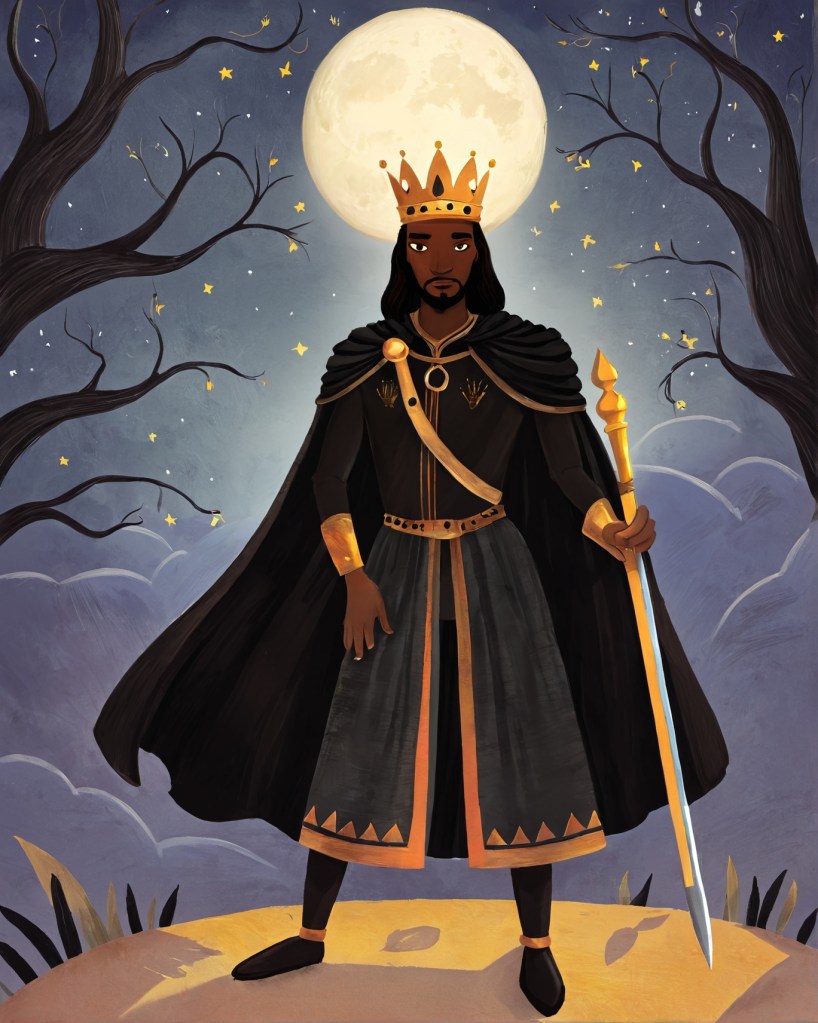
Darkness has always fascinated humankind, from ancient myths to modern-day storytelling. One of the most intriguing figures that emerges from the depths of imagination is the King in Black. Whether depicted as a mythical ruler of shadows, an antagonist in fantasy lore, or a metaphor for power corrupted by darkness, the King in Black captivates audiences with his mystery, menace, and allure.

In this article, we’ll explore the essence of the King in Black, his symbolic meanings across cultures, his influence in pop culture, and why this enigmatic figure still resonates with readers today. Stay until the end and let us know your thoughts—like, comment, and share your interpretation of the King in Black!


Who is the King in Black?

The King in Black represents dark authority—a ruler who controls, or is consumed by, the forces of shadow. Unlike ordinary kings, this figure operates in the realm beyond light, where power is shrouded in mystery. He doesn’t rule through kindness but through fear, manipulation, and cunning strategies. Yet, he isn’t always a villain; sometimes, he symbolizes the balance necessary to maintain cosmic harmony.

In many stories, the King in Black embodies themes of:

  • Control over darkness: Commanding unseen forces or forbidden knowledge.
  • Isolation and fear: His power often leaves him alienated, both feared and misunderstood.
  • Duality: While darkness suggests evil, it can also imply hidden wisdom or protection.

The King in Black Across Myths and Stories

Many cultures have versions of a shadowed ruler, each offering a unique take on what it means to command darkness. Let’s explore a few of these interpretations:

  1. Mythological Archetypes:
    In Norse mythology, Loki, the trickster god, is often depicted as a chaotic ruler who thrives in the shadows. Similarly, in Hindu mythology, Rahu—the dark planet—represents an eclipse, symbolizing hidden power that disrupts light. Both characters embody the King in Black’s archetype: a figure of darkness who disrupts the order yet holds crucial knowledge.
  2. Literary Inspirations:
    Writers have often explored the trope of the shadow king. Shakespeare’s Macbeth, for instance, shows how ambition and the allure of power plunge a king into moral darkness. Meanwhile, in fantasy fiction, characters like Sauron from The Lord of the Rings demonstrate how darkness can corrupt, transforming rulers into tyrants.
  3. Modern Interpretations:
    In pop culture, the King in Black motif has evolved into characters such as villainous overlords in comics and films. These figures often represent chaos, rebellion, or the seductive appeal of forbidden power. The King in Black (Knull) from the Marvel Universe is a perfect example—a dark god who controls a symbiotic army and wages war against light itself.

The Seduction of Darkness: Why the King in Black Fascinates Us

Why does the figure of the King in Black intrigue so many readers? The answer lies in his duality. He represents not just darkness as evil, but the inner struggle within every person. We are drawn to characters who embody the fear we suppress—our insecurities, our ambition, and our desire for control. The King in Black’s story is a cautionary tale about what happens when the thirst for power overwhelms the light within us.

But it’s also a story of redemption. The darkness can teach us resilience, introspection, and the courage to confront what we fear most. It invites us to ask: Can there be light without shadow?


How the King in Black Connects with Today’s World

The King in Black’s symbolism resonates strongly in today’s world, where people constantly battle inner conflicts. We are drawn to stories where darkness is not just fought but understood. Whether it’s through fantasy novels, films, or graphic novels, readers and audiences connect with the King in Black because he reflects our personal struggles—from dealing with mental health issues to the fight between ambition and humility.

Moreover, the King in Black teaches us that even in the darkest moments, knowledge and power can be found, as long as we don’t lose ourselves to the void.


What Does the King in Black Mean to You?

The King in Black isn’t just a character from ancient myths or modern fantasy; he is a symbol that takes on different meanings depending on the person interpreting him. Some may see him as a villain, others as a tragic figure consumed by ambition. Some may find comfort in his darkness, while others fear his shadowy reign.

What’s your interpretation of the King in Black? Do you think his story is one of redemption or ruin? Let us know your thoughts in the comments below!


Conclusion: The Eternal Reign of the King in Black

The King in Black’s story is far from over—his presence continues to evolve in literature, films, and cultural conversations. Whether as a figure of fear, wisdom, or duality, he challenges us to confront the darkness within and around us.

If this exploration of the King in Black intrigued you, don’t keep it to yourself—like, comment, and share this article to spark more conversations! Let’s see how many different interpretations of the King in Black we can gather from readers like you!

The Achilles Heel: Myth, Literature, and the Enduring Symbol of Human Vulnerability

Abstract

The concept of the “Achilles heel” is deeply entrenched in Western cultural and literary traditions, originating from ancient Greek mythology. This paper aims to explore the historical background of the Achilles heel, its mythological origins, and its subsequent permeation into various aspects of literature and modern vernacular. Through an analysis of ancient texts and their interpretations, we can understand the enduring significance of Achilles and his vulnerable heel in shaping human understanding of invulnerability and weakness.

Read more: The Achilles Heel: Myth, Literature, and the Enduring Symbol of Human Vulnerability

Introduction

The term “Achilles heel” is widely recognized today as a metaphor for a critical vulnerability or a fatal flaw in an otherwise strong entity. This paper traces the origins of the term back to the mythological figure Achilles, a hero of the Trojan War, whose story has been immortalized in Homer’s epic poem, “The Iliad.” By examining the historical and literary contexts of Achilles’ myth, we can gain insight into how this concept has evolved and its lasting impact on literature and culture.

Historical and Mythological Origins

Achilles is one of the most prominent figures in Greek mythology, renowned for his prowess as a warrior. According to myth, Achilles was the son of the mortal Peleus, king of the Myrmidons, and the sea nymph Thetis. His most notable characteristic, as described in “The Iliad,” was his near invincibility in battle. However, this near invincibility was undermined by a singular vulnerability: his heel.

The story of Achilles’ heel is not detailed in Homer’s “Iliad” but is found in later sources such as Statius’ “Achilleid” and Ovid’s “Metamorphoses.” According to these accounts, Thetis attempted to make Achilles immortal by dipping him in the River Styx, which granted invulnerability to any part of the body it touched. However, as she held him by his heel, that spot remained untouched by the waters, leaving it vulnerable. This seemingly minor flaw would ultimately lead to Achilles’ demise when Paris, guided by Apollo, shot an arrow that struck his heel.

Literary Analysis

Achilles’ story is rich with themes of heroism, mortality, and fate. In “The Iliad,” Achilles embodies the Greek heroic ideal—brave, strong, and nearly invincible. Yet, his rage and pride also underscore his humanity and the Greek understanding of hubris. The concept of the Achilles heel serves as a poignant reminder that even the mightiest heroes have their weaknesses.

The literary significance of Achilles’ heel extends beyond its mythological roots. It has been a powerful symbol in literature, representing the idea that no person, no matter how strong, is without vulnerabilities. This theme resonates in various literary works, from Shakespeare’s plays to modern novels, where characters often grapple with their own “Achilles heels.”

In Shakespeare’s “Troilus and Cressida,” Achilles is depicted as a formidable but flawed hero, further exploring the complexities of his character and his vulnerabilities. Modern literature continues to draw on this concept, using the Achilles heel to illustrate the fragile nature of human strength and the inevitability of human flaws.

Cultural Impact

The metaphor of the Achilles heel has transcended literature to become a part of everyday language. It is used to describe a critical weakness in individuals, organizations, or systems that otherwise appear strong. This usage underscores a universal truth about the human condition: vulnerability is an inherent part of existence.

The enduring appeal of the Achilles heel metaphor lies in its ability to convey the paradox of strength and weakness. It reflects the human experience, where even those who seem invincible have their frailties. This metaphor is evident in diverse fields, from psychology to politics, emphasizing its relevance across different domains.

The Trojan Horse and the Enigma of Helen of Troy

The tale of the Trojan Horse stands as one of the most iconic episodes in Greek mythology, symbolizing the cunning and treachery that could determine the fate of nations. Central to this narrative is the enigmatic figure of Helen of Troy, whose beauty sparked the conflict that culminated in the infamous ruse. This article delves into the intricacies of the Trojan Horse, exploring its significance within the context of Helen’s story, from the events leading up to its construction to the aftermath of its deceptive entry into the city of Troy.

Before the Trojan Horse:

To understand the significance of the Trojan Horse, one must first grasp the events that preceded its conception. The roots of the Trojan War lie in the elopement of Helen, the most beautiful woman in the world, with Paris, a prince of Troy. This act of passion, or perhaps manipulation by the gods, ignited a conflict that would consume the Greek and Trojan civilizations for years to come.

Helen’s abduction by Paris, whether voluntary or coerced, enraged her husband Menelaus, King of Sparta, and his brother Agamemnon, the powerful ruler of Mycenae. Bound by oath to protect Helen’s marriage vows, the Greek kings rallied their forces, assembling a formidable army to sail across the Aegean Sea and lay siege to the impregnable walls of Troy.

Throughout the long years of war, Helen’s presence loomed large over both camps. Her beauty became a symbol of desire and discord, fueling the passions of men and the machinations of the gods alike. Yet, her role in the conflict remained ambiguous, raising questions of agency and culpability that continue to resonate in interpretations of the Trojan War.

The Deception Unveiled:

As the war dragged on, with neither side gaining a decisive advantage, the Greeks devised a plan to end the stalemate once and for all. The idea of the Trojan Horse, attributed to the cunning Odysseus, emerged as a stroke of strategic genius. Constructed under the guise of a peace offering, the massive wooden equine was hollowed out to conceal a select group of Greek warriors.

Led by Odysseus, this clandestine band infiltrated the horse under cover of darkness, biding their time until the signal was given to unleash their fury upon the unsuspecting Trojans. The ruse played upon the Trojans’ hubris and naivety, exploiting their belief in the invincibility of their city’s walls.

The Aftermath:

The fall of Troy, precipitated by the Trojan Horse, marked the culmination of a decade-long conflict that had claimed countless lives and shattered kingdoms. As the Trojans reveled in their apparent victory, unaware of the danger lurking within their midst, the Greeks emerged from their wooden prison, sowing chaos and destruction in their wake.

Among the casualties of the sack of Troy was the city’s prized possession, Helen herself. Whether she had been complicit in the Greeks’ deception or merely a pawn in their machinations, her fate remains a subject of speculation and debate. Some accounts suggest that she was reunited with Menelaus and returned to Sparta, while others paint a darker picture of her subsequent wanderings and trials.

Conclusion:

The Trojan Horse stands as a timeless symbol of deception and betrayal, its legacy intertwined with the enigma of Helen of Troy. Through its construction and deployment, the Greeks achieved victory through subterfuge, forever enshrining the tale in the annals of mythology and history. Yet, the true nature of Helen’s role in these events remains elusive, a testament to the enduring power of myth to provoke thought and inspire interpretation.