Popular Literary Forms in 2024
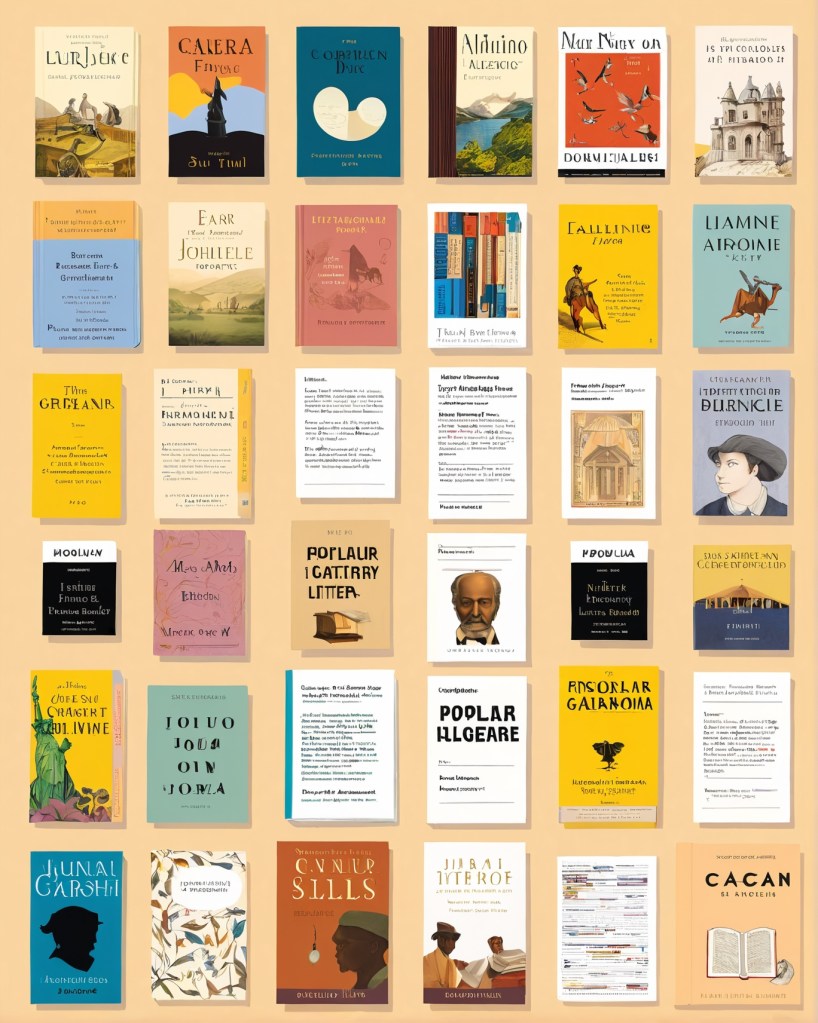
In 2024, various forms of literature continue to captivate readers, each with its unique appeal and popularity. Here’s a look at the most popular literary forms along with notable references for each:

1. Novel

Novels remain the most widely read form of literature. They encompass a variety of genres, including fiction, romance, and science fiction. In 2024, readers are particularly drawn to novels that explore contemporary themes and diverse narratives. Some of the most anticipated novels include titles like The Covenant of Water by Abraham Verghese and Fourth Wing by Rebecca Yarros, which have gained significant traction on platforms like Goodreads and Amazon.

2. Short Story

Short stories are increasingly popular for their brevity and ability to deliver impactful narratives in a compact format. In 2024, collections such as How Long ‘til Black Future Month? by N.K. Jemisin and When the Hibiscus Falls by M. Evelina Galang are among the top recommendations. These collections are celebrated for their engaging storytelling and accessibility, appealing to both casual and dedicated readers.

3. Poetry

Poetry continues to resonate with readers, offering emotional depth and artistic expression. Contemporary poets like Amanda Gorman and Ocean Vuong have garnered significant attention, with their works often featured in bestseller lists. In 2024, poetry collections that reflect social issues and personal experiences are particularly popular, making poetry a vibrant part of the literary landscape.

4. Drama

Drama, particularly in the form of plays and screenplays, remains a vital literary form. The resurgence of interest in theatrical performances and adaptations for streaming platforms has contributed to its popularity. Notable works in 2024 include plays that address contemporary social issues, drawing audiences both in theaters and through digital mediums.

5. Nonfiction

Nonfiction literature, encompassing memoirs, biographies, and essays, is increasingly popular among readers seeking real-life stories and insights. In 2024, works like Spare by Prince Harry and The Light We Carry by Michelle Obama have captured widespread attention, reflecting a growing interest in personal narratives that connect with broader societal themes. Nonfiction’s ability to inform and engage readers makes it a significant part of the current literary scene.These literary forms highlight the diverse interests of readers in 2024, showcasing a blend of traditional storytelling and modern themes that resonate across various demographics.

Top 10 Shakespearian Timeless Classics Loved Worldwide

William Shakespeare, often regarded as the greatest playwright in the English language, has created a vast array of works that continue to resonate with audiences worldwide. His dramas explore profound themes of love, ambition, betrayal, and the human condition, making them timeless classics. Here are ten of Shakespeare’s most essential plays, along with their famous dialogues and key literary themes.

Read More

The Achilles Heel: Myth, Literature, and the Enduring Symbol of Human Vulnerability

Abstract

The concept of the “Achilles heel” is deeply entrenched in Western cultural and literary traditions, originating from ancient Greek mythology. This paper aims to explore the historical background of the Achilles heel, its mythological origins, and its subsequent permeation into various aspects of literature and modern vernacular. Through an analysis of ancient texts and their interpretations, we can understand the enduring significance of Achilles and his vulnerable heel in shaping human understanding of invulnerability and weakness.

Read more: The Achilles Heel: Myth, Literature, and the Enduring Symbol of Human Vulnerability

Introduction

The term “Achilles heel” is widely recognized today as a metaphor for a critical vulnerability or a fatal flaw in an otherwise strong entity. This paper traces the origins of the term back to the mythological figure Achilles, a hero of the Trojan War, whose story has been immortalized in Homer’s epic poem, “The Iliad.” By examining the historical and literary contexts of Achilles’ myth, we can gain insight into how this concept has evolved and its lasting impact on literature and culture.

Historical and Mythological Origins

Achilles is one of the most prominent figures in Greek mythology, renowned for his prowess as a warrior. According to myth, Achilles was the son of the mortal Peleus, king of the Myrmidons, and the sea nymph Thetis. His most notable characteristic, as described in “The Iliad,” was his near invincibility in battle. However, this near invincibility was undermined by a singular vulnerability: his heel.

The story of Achilles’ heel is not detailed in Homer’s “Iliad” but is found in later sources such as Statius’ “Achilleid” and Ovid’s “Metamorphoses.” According to these accounts, Thetis attempted to make Achilles immortal by dipping him in the River Styx, which granted invulnerability to any part of the body it touched. However, as she held him by his heel, that spot remained untouched by the waters, leaving it vulnerable. This seemingly minor flaw would ultimately lead to Achilles’ demise when Paris, guided by Apollo, shot an arrow that struck his heel.

Literary Analysis

Achilles’ story is rich with themes of heroism, mortality, and fate. In “The Iliad,” Achilles embodies the Greek heroic ideal—brave, strong, and nearly invincible. Yet, his rage and pride also underscore his humanity and the Greek understanding of hubris. The concept of the Achilles heel serves as a poignant reminder that even the mightiest heroes have their weaknesses.

The literary significance of Achilles’ heel extends beyond its mythological roots. It has been a powerful symbol in literature, representing the idea that no person, no matter how strong, is without vulnerabilities. This theme resonates in various literary works, from Shakespeare’s plays to modern novels, where characters often grapple with their own “Achilles heels.”

In Shakespeare’s “Troilus and Cressida,” Achilles is depicted as a formidable but flawed hero, further exploring the complexities of his character and his vulnerabilities. Modern literature continues to draw on this concept, using the Achilles heel to illustrate the fragile nature of human strength and the inevitability of human flaws.

Cultural Impact

The metaphor of the Achilles heel has transcended literature to become a part of everyday language. It is used to describe a critical weakness in individuals, organizations, or systems that otherwise appear strong. This usage underscores a universal truth about the human condition: vulnerability is an inherent part of existence.

The enduring appeal of the Achilles heel metaphor lies in its ability to convey the paradox of strength and weakness. It reflects the human experience, where even those who seem invincible have their frailties. This metaphor is evident in diverse fields, from psychology to politics, emphasizing its relevance across different domains.

The Dichotomy of Good and Evil: Exploring the Role of Angels in Marlowe’s Doctor Faustus

Introduction:

In Christopher Marlowe’s timeless tragedy “Doctor Faustus,” the presence of good and bad angels serves as a symbolic representation of the eternal struggle between virtue and vice, morality and temptation. These ethereal beings play a pivotal role in the protagonist’s spiritual journey, reflecting the inner conflict inherent in human nature. Through their interactions with Faustus, Marlowe explores themes of ambition, redemption, and the consequences of succumbing to temptation.

The Good Angel:

The Good Angel in “Doctor Faustus” embodies the voice of conscience and righteousness. It serves as Faustus’s moral compass, urging him to repent and seek redemption for his sinful desires. The Good Angel represents the idealized version of Faustus’s aspirations, guiding him towards the path of virtue and salvation. Its presence highlights the eternal struggle between the forces of good and evil within the human soul.

Symbolism:

In literary terms, the Good Angel can be interpreted as a manifestation of the superego, according to Freudian psychology. It represents the internalized moral standards and values that strive to restrain Faustus’s reckless pursuit of power. The angel’s ethereal nature symbolizes purity and divine intervention, contrasting sharply with the dark forces that seek to ensnare Faustus’s soul.

Importance:

The Good Angel serves as a constant reminder of Faustus’s capacity for redemption. Despite his transgressions and pact with the devil, the angel offers hope for salvation through repentance. Its presence underscores the underlying theme of divine mercy and forgiveness, suggesting that even the most sinful souls can find redemption if they sincerely repent.

Dialogue:

The interactions between Faustus and the Good Angel are characterized by inner turmoil and conflict. The angel’s admonitions and warnings evoke feelings of guilt and remorse within Faustus, highlighting the internal struggle between his worldly ambitions and moral conscience. Their dialogue serves as a dramatic device, intensifying the psychological tension and suspense as Faustus grapples with his inner demons.

The Bad Angel:

Contrasting with the Good Angel, the Bad Angel embodies temptation, corruption, and the allure of worldly power. It serves as Faustus’s inner tempter, enticing him with promises of wealth, knowledge, and earthly pleasures in exchange for his soul. The Bad Angel symbolizes the darker impulses within Faustus’s psyche, urging him to embrace his desires without regard for the consequences.

Symbolism:

In symbolic terms, the Bad Angel can be interpreted as a representation of the id, according to Freudian theory. It embodies Faustus’s primal instincts and desires, driving him towards self-gratification and hedonism. The angel’s demonic appearance and persuasive rhetoric symbolize the seductive nature of evil, enticing Faustus to forsake his moral principles in pursuit of power and glory.

Importance:

The Bad Angel plays a crucial role in Faustus’s downfall, serving as the catalyst for his descent into damnation. Its relentless temptations and manipulations gradually erode Faustus’s moral resolve, leading him further astray from the path of righteousness. The angel’s presence highlights the destructive consequences of unchecked ambition and the tragic consequences of succumbing to temptation.

Dialogue:

The exchanges between Faustus and the Bad Angel are characterized by deception and manipulation. The angel’s cunning rhetoric and false promises exploit Faustus’s vulnerabilities, fueling his desires and leading him towards his eventual doom. Their dialogue serves as a dramatic device, illustrating the internal conflict and moral ambiguity that defines Faustus’s character.

Conclusion:

In “Doctor Faustus,” the good and bad angels represent the eternal struggle between virtue and vice, morality and temptation. Through their interactions with Faustus, Marlowe explores the complexities of human nature and the consequences of moral compromise. The angels serve as symbolic embodiments of the protagonist’s inner conflict, highlighting the universal themes of ambition, redemption, and the eternal battle between good and evil.

Eternal Longing: Faustus’ Ode to Helen

Enter the world of Christopher Marlowe’s “Doctor Faustus,” where the protagonist’s insatiable thirst for knowledge leads him to conjure the legendary beauty of Helen of Troy. In this iconic dialogue, Faustus becomes enraptured by Helen’s enchanting allure, expressing his longing for her with fervent passion. As he speaks of her incomparable beauty and imagines himself embarking on a timeless quest for love, Faustus’ words resonate with longing and desire, drawing readers into a realm where mortal yearning meets immortal fascination.

FAUSTUS:

Was this the face that launched a thousand ships

And burnt the topless towers of Ilium?

Sweet Helen, make me immortal with a kiss.

Her lips suck forth my soul. See where it flies!

Come, Helen, come, give me my soul again.

Here will I dwell, for Heaven is in these lips,

And all is dross that is not Helena.

I will be Paris, and for love of thee,

Instead of Troy, shall Wittenberg be sacked;

And I will combat with weak Menelaus,

And wear thy colors on my plumed crest;

Yea, I will wound Achilles in the heel

And then return to Helen for a kiss.

O, thou art fairer than the evening air

Clad in the beauty of a thousand stars;

Brighter art thou than flaming Jupiter

When he appeared to hapless Semele;

More lovely than the monarch of the sky

In wanton Arethusa’s azured arms;

And none but thou shalt be my paramour!

The Enigmatic Duo: An Analysis of Rosencrantz and Guildenstern in Shakespeare’s Hamlet

William Shakespeare’s renowned tragedy, “Hamlet,” features a plethora of intricate characters whose complexities contribute to the depth of the play’s themes. Among these characters are Rosencrantz and Guildenstern, two figures whose presence serves as a catalyst for Hamlet’s introspection and actions. Through their interactions with the titular character, as well as their own motivations and characteristics, Rosencrantz and Guildenstern emerge as enigmatic figures whose roles extend beyond mere companionship

Characterization:

Rosencrantz and Guildenstern, often referred to as “schoolfellows” of Hamlet, are portrayed as childhood friends of the Danish prince. However, their allegiance is ambiguous, as they are summoned by King Claudius to spy on Hamlet and discern the cause of his erratic behavior. Shakespeare provides little insight into their individual personalities, leaving much of their characterization open to interpretation.

Rosencrantz is often depicted as the more affable and compliant of the duo, readily agreeing to carry out Claudius’s bidding without questioning his motives. He appears eager to please the king and is willing to manipulate his friendship with Hamlet for personal gain. Guildenstern, on the other hand, is portrayed as slightly more introspective, expressing occasional doubts about their mission and the implications of their actions. Despite this, he ultimately follows Rosencrantz’s lead, illustrating their shared sense of loyalty and obedience to authority.

Dynamic with Hamlet:

The relationship between Rosencrantz, Guildenstern, and Hamlet is complex and multifaceted. Initially, Hamlet welcomes their arrival with enthusiasm, expressing genuine pleasure at seeing his old friends. However, as he becomes aware of their true intentions, his attitude towards them shifts dramatically. Hamlet perceives Rosencrantz and Guildenstern as pawns of the court, betraying his trust and attempting to manipulate him for their own gain.

Hamlet’s interactions with Rosencrantz and Guildenstern serve as a microcosm of his broader distrust of society and human nature. He views them as symbols of moral corruption and deceit, reflecting his disillusionment with the world around him. Hamlet’s treatment of Rosencrantz and Guildenstern is characterized by cynicism and bitterness, as he recognizes their complicity in the web of lies and treachery that surrounds him.

Symbolism and Themes:

Rosencrantz and Guildenstern represent various thematic elements within “Hamlet,” including the nature of friendship, the corrupting influence of power, and the inevitability of fate. Their willingness to betray Hamlet for the favor of the king highlights the theme of moral ambiguity and the pervasive nature of deceit within the play.

Furthermore, Rosencrantz and Guildenstern serve as foils to Hamlet, emphasizing his moral integrity and sense of purpose in contrast to their moral ambiguity and lack of agency. Their ultimate fate, which is manipulated by Claudius to secure his own safety, underscores the theme of powerlessness in the face of fate and the arbitrary nature of human existence.

Conclusion: In William Shakespeare’s “Hamlet,” Rosencrantz and Guildenstern emerge as complex and enigmatic characters whose roles extend beyond mere companionship. Through their interactions with Hamlet and their own motivations and characteristics, they symbolize broader thematic elements within the play, including the corrupting influence of power and the inevitability of fate. Their ambiguous allegiances and ultimate betrayal underscore the moral ambiguity and pervasive deceit that permeate the world of “Hamlet,” adding depth and complexity to Shakespeare’s timeless tragedy.

Unraveling Heathcliff’s Impact in the Classic Novel “Tom Jones”

Introduction:

In Henry Fielding’s timeless classic “Tom Jones,” the character of Heathcliff stands as a pivotal figure, shaping the narrative and influencing the development of other characters. Let’s delve into the significance of Heathcliff’s presence, his relationships, and his profound impact on the themes of the novel.

Characterization of Heathcliff:

Heathcliff is portrayed as a compelling and enigmatic figure within the pages of “Tom Jones.” From his mysterious origins to his brooding demeanor, Heathcliff captures the reader’s attention from the outset. His dark past and ambiguous motives add depth to the story, making him a captivating presence throughout.

Heathcliff’s Relationships in Tom Jones:

Throughout the novel, Heathcliff’s interactions with other characters propel the plot forward and reveal different facets of his personality. His tumultuous relationship with Tom Jones serves as the cornerstone of the narrative, fueling both conflict and character growth. Additionally, his interactions with characters such as Sophia Western and Squire Allworthy shed light on his impact on the story’s dynamics.

Impact of Heathcliff in Tom Jones:

Heathcliff’s presence in “Tom Jones” significantly contributes to the exploration of various themes, including love, revenge, and redemption. His passionate and often destructive nature underscores the complexities of human emotions and relationships, adding layers of depth to the narrative. Furthermore, his pursuit of vengeance and eventual journey towards redemption enriches the novel’s overarching themes of morality and forgiveness.

Conclusion:

In “Tom Jones,” Heathcliff emerges as a multifaceted character whose influence reverberates throughout the narrative. From his complex relationships to his thematic significance, Heathcliff’s role in the novel is undeniable. Henry Fielding masterfully crafts a timeless story enriched by Heathcliff’s enigmatic persona, making “Tom Jones” a literary classic that continues to captivate readers worldwide.

John Milton: A Visionary Poet Who Defied Darkness

John Milton, a towering figure in English literature, overcame the challenges of blindness to produce some of the most enduring and influential works in the canon of Western literature. Born on December 9, 1608, in London, Milton lived through a period of political and social upheaval, witnessing the English Civil War and the execution of King Charles I. His life and works are marked by a profound engagement with political, religious, and philosophical themes.

Milton’s Blindness: One of the most remarkable aspects of Milton’s life was his resilience in the face of adversity. In 1652, at the age of 43, he lost his eyesight, likely due to glaucoma. Despite this profound setback, Milton refused to let his blindness extinguish his literary ambitions. He adapted by dictating his compositions to scribes, showcasing an indomitable spirit that would characterize the rest of his career.

“Paradise Lost”: Milton’s magnum opus, “Paradise Lost,” stands as a testament to his creative genius. This epic poem, composed in blank verse, explores the biblical narrative of the Fall of Man. Published in 1667, “Paradise Lost” delves into themes of free will, disobedience, and the cosmic battle between good and evil. The work is characterized by its vivid imagery, powerful language, and philosophical depth.

Excerpt from “Paradise Lost”: “Better to reign in Hell than serve in Heaven.”

Satan, in “Paradise Lost,” Book I

This famous line reflects the rebellious spirit of Satan, one of the central figures in Milton’s epic. It encapsulates the theme of individualism and defiance that runs through the poem.

“Paradise Regained”: Following “Paradise Lost,” Milton penned “Paradise Regained,” a shorter epic that explores the temptation of Christ in the wilderness. Published in 1671, this work presents a contrasting vision, emphasizing Christ’s triumph over temptation and the restoration of paradise through redemption.

Excerpt from “Paradise Regained”: “The world was all before them, where to choose Their place of rest, and Providence their guide.”

Closing lines of “Paradise Regained”

This concluding sentiment highlights the theme of divine guidance and the idea of individuals having the freedom to choose their destiny, a recurring motif in Milton’s writings.

“Samson Agonistes”: Written in 1671, “Samson Agonistes” is a tragic drama that explores the biblical story of Samson, focusing on his captivity and ultimate sacrifice. The work is a powerful exploration of divine justice, human suffering, and the redemptive power of faith.

Excerpt from “Samson Agonistes”: “Yet not the more Cease I to wander where the Muses haunt Clear spring, or shady grove, or sunny hill, Smit with the love of sacred song; but chief Thee, Sion, and the flow’ry brooks beneath.”

In these lines, Milton expresses his enduring commitment to the pursuit of poetic inspiration, even in the midst of personal and societal challenges.

Legacy: John Milton’s contributions to literature extend far beyond his individual works. His use of blank verse, intricate theological explorations, and commitment to individual liberty have left an indelible mark on subsequent generations of writers. Despite the darkness that enveloped his later years, Milton’s legacy shines brightly as a beacon of literary and philosophical enlightenment. His ability to transform personal adversity into timeless art stands as an enduring testament to the triumph of the human spirit.

T.S. Eliot: A Literary Analysis of Life, Works, and Notable Poems

Abstract:

This academic article delves into the life and literary contributions of T.S. Eliot, one of the preeminent poets of the 20th century. Examining the multifaceted aspects of Eliot’s life, this study aims to provide a comprehensive understanding of his poetic evolution, major works, and the enduring impact of his contributions to modernist literature.

Introduction:

Thomas Stearns Eliot, born in 1888 in St. Louis, Missouri, embarked on a literary journey that would redefine modernist poetry. Influenced by his experiences in both the United States and England, Eliot’s works reflect a profound engagement with existentialism, spirituality, and the complexities of the modern world.

Biography:

Eliot’s early life, marked by academic excellence and cultural exposure, laid the groundwork for his intellectual development. A move to England in 1914 solidified his immersion in European literary circles, where he encountered influential figures like Ezra Pound. Eliot’s trajectory from a bank clerk to a literary luminary showcases the transformative power of his engagement with literature.

Literary Evolution:

T.S. Eliot’s poetic evolution is characterized by distinct phases. The publication of “The Love Song of J. Alfred Prufrock” in 1915 marked his debut, introducing readers to his innovative use of fragmented imagery and stream-of-consciousness narrative. The subsequent “Prufrock and Other Observations” (1917) solidified his reputation as a modernist trailblazer.

Major Works:

Eliot’s poetic oeuvre extends beyond “The Love Song of J. Alfred Prufrock.” “The Waste Land” (1922), often regarded as his magnum opus, embodies the fragmentation and disillusionment of post-World War I society. “The Hollow Men” (1925) and “Ash-Wednesday” (1930) further explore themes of existential despair and spiritual redemption.

Famous Poems:

a. “The Love Song of J. Alfred Prufrock”: Notable for its introspective monologue, this poem captures the anxiety and alienation of modern urban life. The famous opening lines, “Let us go then, you and I, / When the evening is spread out against the sky,” resonate with readers as a timeless exploration of the human condition.

b. “The Waste Land”: This sprawling and allusive work, filled with cultural references and mythological symbols, remains a cornerstone of modernist literature. The iconic opening line, “April is the cruellest month,” encapsulates the poem’s exploration of societal decay and the quest for spiritual renewal.

c. “The Hollow Men”: Eliot’s exploration of post-war disillusionment is encapsulated in this poem’s memorable lines, “This is the way the world ends / Not with a bang but a whimper.” The haunting imagery and existential themes contribute to its lasting impact.

Conclusion:

T.S. Eliot’s legacy in the world of English literature is indelible. His intricate exploration of modernity, spirituality, and human consciousness in poetic form continues to resonate with readers and scholars alike. Through an in-depth analysis of his life, major works, and notable poems, this article seeks to underscore the enduring significance of T.S. Eliot in the landscape of 20th-century literature.

The Poetic Brilliance of John Donne: Exploring Love and Divinity in His Poems

John Donne, a 17th-century English poet, is renowned for his profound exploration of themes such as love, religion, and metaphysics. His unique blend of wit, intellect, and emotional depth sets him apart as one of the most celebrated poets of the English Renaissance. Two significant categories of Donne’s poetry are his love poems and divine poems, each offering a captivating glimpse into the complexities of the human experience.

Love Poems:

Donne’s love poems are characterized by their intense and often unconventional expressions of love. One of his most famous love poems is “The Good-Morrow,” where Donne explores the idea of a spiritual connection between lovers. The poem opens with the lines:

I wonder, by my troth, what thou and I Did till we loved?

Were we not weaned till then? But sucked on country pleasures, childishly?

Donne challenges conventional notions of love by suggesting that true love transcends physical desires and creates a deeper, more profound connection between souls.

In another iconic love poem, “A Valediction: Forbidding Mourning,” Donne uses metaphors of compasses and spheres to depict the unbreakable bond between two lovers, even when physically separated. The closing lines beautifully encapsulate this sentiment:

So let us melt, and make no noise, No tear-floods, nor sigh-tempests move;

‘Twere profanation of our joys To tell the laity our love.

Donne’s love poems often involve intricate metaphors and elaborate conceits, demonstrating his intellectual prowess and mastery of poetic devices.

Divine Poems:

Donne’s divine poems explore his spiritual and religious beliefs, delving into the complexities of faith and divine love. One of his notable divine poems is “Holy Sonnet XIV” (commonly known as “Batter my heart, three-person’d God”), where Donne expresses his desire for a profound spiritual transformation:

Batter my heart, three-person’d God, for you As yet but knock, breathe, shine, and seek to mend;

That I may rise and stand, o’erthrow me, and bend Your force to break, blow, burn, and make me new.

The intensity of Donne’s plea reflects his deep-seated conviction in the transformative power of divine love.

In “Hymn to God, My God, in My Sickness,” Donne reflects on his own mortality and impending death. The poem’s concluding lines capture the poet’s acceptance of divine providence:

Since I am coming to that holy room, Where, with Thy choir of saints for evermore, I shall be made Thy music.

Donne’s divine poems showcase a profound engagement with theological concepts, combining intellectual rigor with emotional depth to explore the mysteries of faith.

Conclusion: John Donne’s love poems and divine poems offer readers a rich tapestry of human experience, blending intellect, emotion, and spirituality. Through his intricate metaphors, vivid imagery, and profound insights, Donne continues to captivate readers and inspire contemplation on the enduring themes of love and divinity. His poetry remains a testament to the enduring power of language to convey the complexities of the human soul.

Abdur Rehman Baba: The Poet of Pashto Elegance

Abdur Rehman Baba, born in 1651 in the present-day Khyber Pakhtunkhwa province of Pakistan, stands as one of the most celebrated poets in Pashto literature. His works, primarily composed in the Pashto language, have transcended cultural and linguistic boundaries, earning him admiration not only in the Pashto-speaking regions but also among poetry enthusiasts worldwide. This article delves into the life, legacy, and poetic contributions of Abdur Rehman Baba, providing readers with an insightful glimpse into the rich tapestry of his literary masterpieces.

Life of Abdur Rehman Baba:

Abdur Rehman Baba was born into the Kakazai tribe, a prominent Pashtun ethnic group known for their rich cultural heritage. Raised in the scenic valleys of Peshawar of Pakistan, his upbringing was deeply influenced by the rugged beauty of the region and the traditional Pashtun way of life. Despite the turbulence of the times, marked by invasions and political upheavals, Abdur Rehman Baba’s poetic spirit thrived.

Abdur Rehman Baba was not just a poet; he was a mystic, a philosopher, and a humanist. His verses often reflected a deep connection with spirituality and a profound understanding of human nature. His poetry was not confined to the Pashto language alone; it resonated with the universal themes of love, peace, and tolerance.

Poetic Themes and Style:

Abdur Rehman Baba’s poetry is characterized by its simplicity, yet it carries profound meanings and emotions. His verses often revolve around themes of love, peace, unity, and the divine. The poet’s deep spirituality is evident in his works, where he explores the relationship between the individual soul and the divine.

One of his most famous works, the “Kulyaat-e-Rehman” (The Complete Works of Rehman), is a collection of his poetry that has been cherished by Pashto-speaking communities for generations. The anthology comprises ghazals, rubais, and other traditional Pashto poetic forms, showcasing the poet’s versatility and mastery over his craft.

Excerpts from Abdur Rehman Baba’s Poetry (Translated into English):

  1. On Love and Tolerance: “I am in love, and Truth is my sweetheart, I am not afraid of difficulties, as love is my guard. Let’s live together, O people of the world, In peace and harmony, where love is our word.”
  2. On the Transience of Life: “Life is but a fleeting moment, A journey through time, transient and potent. Embrace each day with joy and grace, For life’s beauty lies in its ephemeral embrace.”
  3. On Spiritual Awakening: “Seek within, the answers you yearn to find, In the silence of your soul, wisdom you’ll bind. The path to God is paved with love, A journey within, guided from above.”

Legacy and Influence:

Abdur Rehman Baba’s poetry continues to resonate with people, transcending the boundaries of language and culture. His messages of love, peace, and spirituality have universal appeal and remain relevant in the contemporary world. The poet’s tomb in Peshawar has become a site of pilgrimage for admirers, symbolizing the enduring impact of his words on generations.

Conclusion:

Abdur Rehman Baba’s life and poetry stand as a testament to the enduring power of language and culture. His works, translated into various languages, continue to inspire and captivate readers worldwide. The poet’s ability to distill complex emotions into simple yet profound verses has cemented his place as a literary icon not only in Pashto literature but in the broader realm of world poetry. As we explore the legacy of Abdur Rehman Baba, we find a timeless treasure trove of wisdom and beauty that transcends the confines of time and space.

The Enduring Grandeur: Exploring the Timeless Realm of Epic Poetry

The word “epic” conjures images of grand narratives, mythical heroes, and worlds beyond the familiar. In the realm of literature, an epic poem stands as a towering monument, a tapestry woven with tales of adventure, valor, and the struggles that define humanity. While epics have evolved over time, the core tenets of this genre remain as potent as ever, resonating with readers across cultures and centuries.

At its heart, an epic is a long, narrative poem that recounts the deeds of a legendary or historical hero. These heroes are larger than life, often grappling with divine forces, monstrous beasts, and challenges that shake the very foundations of their world. Their journeys are fraught with peril, but also marked by unwavering courage, fierce loyalty, and a profound sense of destiny.

The classical epics, those composed in the ancient world, hold a special place in literary history. These foundational works established the genre’s conventions and continue to inspire contemporary writers. Among the most celebrated examples are:

The Iliad and Odyssey by Homer: These Greek epics, dating back to the 8th century BC, narrate the Trojan War and its aftermath. The Iliad focuses on the warrior Achilles and his rage, while the Odyssey charts Odysseus’s ten-year journey home following the war. Through vivid imagery and poignant human drama, Homer explores themes of war, heroism, and the complexities of the human condition.

The Epic of Gilgamesh: This Mesopotamian epic, believed to be the oldest surviving major work of literature, predates Homer by centuries. It tells the story of Gilgamesh, a powerful king on a quest for immortality. Through Gilgamesh’s encounter with death, love, and loss, the poem explores themes of mortality, friendship, and the search for meaning in a finite existence.

The Mahabharata and Ramayana: These Indian epics, composed between the 4th century BC and the 4th century AD, are monumental in both length and scope. The Mahabharata chronicles a dynastic war between cousins, weaving in philosophical and religious teachings, while the Ramayana tells the tale of Rama, a prince exiled with his wife Sita, whose abduction sparks a great war. Both epics delve into questions of dharma, duty, and the triumph of good over evil.

The Aeneid by Virgil: Written in the 1st century BC, the Aeneid is a Roman epic that follows Aeneas, a Trojan refugee destined to found the city of Rome. Inspired by Homer, Virgil imbues his work with Roman values of piety, duty, and empire-building, while also grappling with the legacy of violence and the pursuit of destiny.

Reading these classic epics is akin to stepping into a world where myth and history intersect. We journey alongside heroes who face impossible odds, witness acts of both extraordinary courage and devastating betrayal, and ponder the timeless questions that humanity has grappled with since the dawn of civilization.

What makes these epics truly enduring is their ability to transcend their specific cultural contexts. The themes of love, loss, courage, and the struggle against fate resonate with readers across geographical and temporal boundaries. Whether it’s Achilles’s rage, Odysseus’s cunning, Gilgamesh’s search for meaning, or Rama’s unwavering devotion, these heroes and their stories capture the essence of what it means to be human.

In conclusion, the epic poem remains a vital component of the literary landscape. Its grand narratives, larger-than-life heroes, and timeless themes continue to captivate readers, providing avenues for understanding ourselves and the world around us. As long as stories are told and songs are sung, the epic will stand as a testament to the power of human imagination and the enduring spirit of our collective narratives.