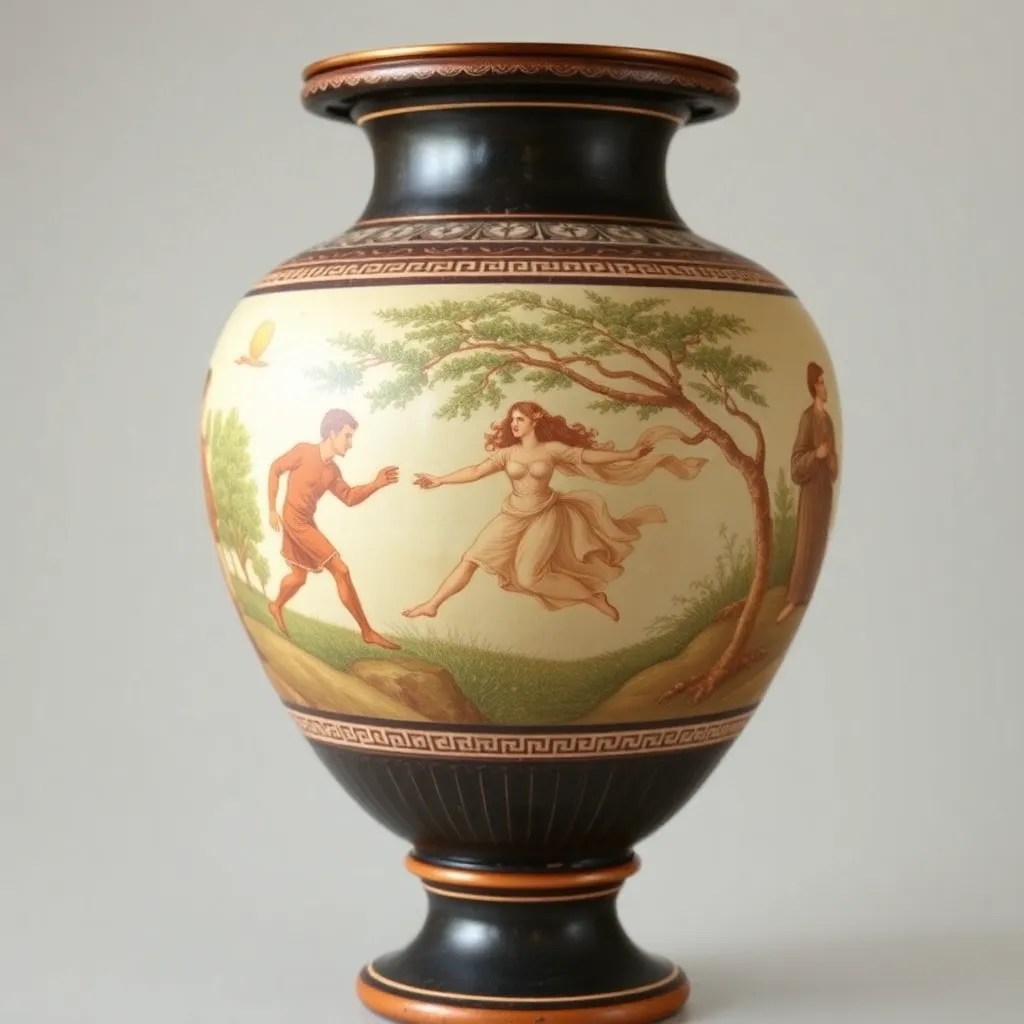
John Keats’ Ode on a Grecian Urn is one of the most celebrated poems in English literature, filled with timeless themes like beauty, permanence, and the nature of art. One of the vivid scenes depicted on the urn shows a lover chasing his beloved through an idyllic setting, yet never quite catching her. This captivating episode, rich in both visual and philosophical implications, reveals much about the poet’s contemplation of life and eternity.
The Scene: Eternal Chase
In the painting imagined by Keats, a youthful lover stretches out in pursuit of his beloved, her figure seemingly floating ahead, perpetually beyond his grasp. The scene is alive with motion, yet frozen in time, as it exists on the silent, unchanging urn. Keats describes the moment with admiration, calling attention to its beauty and vitality, though the figures themselves are locked in an eternal moment.
The Interpretation
This episode is not merely a depiction of romantic pursuit but serves as a metaphor for human desire, ambition, and the eternal yearning for fulfillment. Keats suggests that although the lover can never physically capture his beloved, there is profound beauty in the act of pursuit itself. Their love, untainted by time, remains forever new and unfulfilled, untouched by the fading effects of reality.
- The Immortal Beauty of Art: The urn preserves this moment forever. Unlike human life, where passions wane and beauty fades, the lovers on the urn are immortalized in their idealized state. Keats marvels at how art can transcend time, allowing beauty and emotion to remain perpetually fresh.
- The Paradox of Eternity: While the lovers’ moment is eternal, it is also incomplete. Keats highlights a paradox: what makes the scene beautiful is also what denies it fulfillment. The lover’s chase is endlessly hopeful but equally futile. This duality reflects the human condition—always striving, always yearning, never fully satisfied.
- Art vs. Reality: The static perfection of art contrasts with the dynamic imperfection of real life. In life, a lover might catch their beloved, but the passion could fade or become marred by imperfection. On the urn, however, the lover’s emotions remain forever vivid, untouched by disappointment.
Keats’ Thoughts While Writing
Keats wrote the ode during a time when he was grappling with personal struggles, including financial difficulties and declining health. His deep appreciation for beauty and art was perhaps a response to the transience of his own life. Through this ode, he explored the idea that while human experiences are fleeting, art offers a way to preserve beauty and emotion for eternity.
For the Layman
Keats uses the image of a lover chasing his beloved to talk about our own dreams and desires. While we may never achieve all that we hope for, the excitement of striving for those dreams is what makes life meaningful. The lover on the urn will never stop running, but he also will never grow tired or lose hope. For Keats, this eternal pursuit, captured in art, is both beautiful and bittersweet.
By exploring such universal themes, Keats transforms the scene from a mere painting on a vase into a profound meditation on human existence. The eternal chase, with its joy and sorrow, reflects the richness of life itself—an experience that, though fleeting, is beautiful in its imperfection.
 Janson's blog