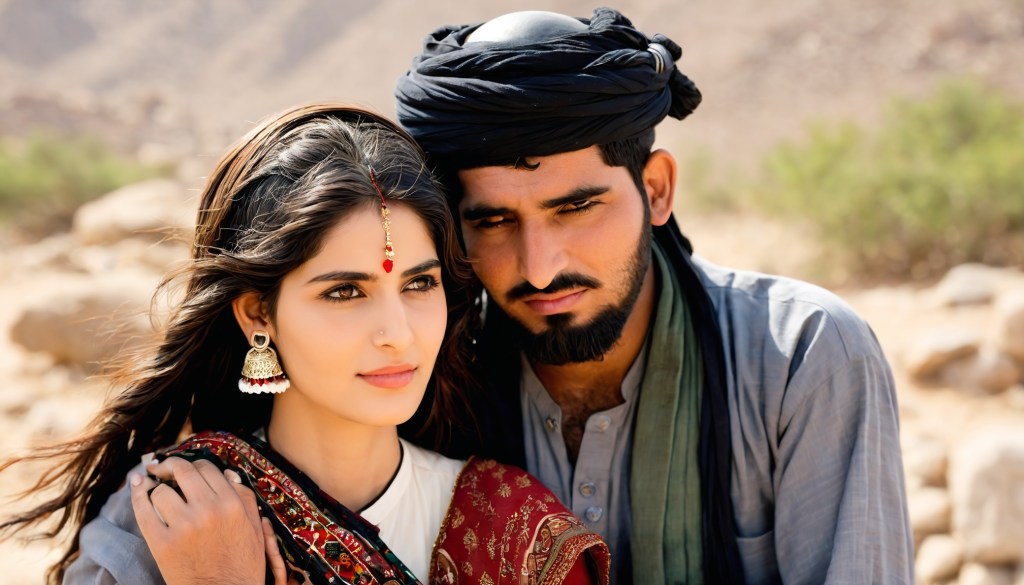
A Short Story
In the rugged mountains of the Pashtun homeland, where the winds whispered tales of honor and bravery, lived a young man named Aimal. He was known for his unwavering commitment to the Pashtunwali code, a set of unwritten rules that governed the lives of the Pashtun people. This ancient code, predating even the arrival of Islam, was a way of life that emphasized honor, hospitality, and revenge, binding the community together in a tapestry of shared values and traditions.
The Call to Honor
Aimal’s village, nestled in the heart of Khyber Pakhtunkhwa, was a microcosm of Pashtun society. Here, the tenets of Pashtunwali were not just words; they were the very essence of existence. The villagers revered melmastia (hospitality), nanawatai (asylum), and badal (revenge). Aimal’s father, a respected elder, often recounted stories of their ancestors who had defended their land and honor against invaders.One fateful day, news arrived that a rival tribe had crossed into their territory, seeking to settle old scores. The elders convened, and Aimal listened intently as they discussed the implications of this incursion. The code of badal dictated that they must respond to this affront, but Aimal felt a stirring of doubt. He had seen the devastation that cycles of revenge could bring, and he wondered if there might be another way.
A Test of Values
As the village prepared for conflict, Aimal sought counsel from his father. “Father, must we always respond with violence? Is there no room for forgiveness in our code?” His father, a man of deep wisdom, looked at him with a mixture of pride and concern. “Son, the code is a guide, but it is not absolute. Each situation demands its own response. You must weigh honor against the cost of bloodshed.”That night, Aimal lay awake, contemplating his father’s words. He recalled the principle of melmastia, the sacred duty to offer hospitality even to one’s enemy. The next morning, he made a bold decision. Instead of preparing for battle, he rode to the rival tribe’s camp, determined to speak with their leader.
The Encounter
Upon reaching the encampment, Aimal was met with suspicion. He introduced himself and requested a meeting with their chief. After much deliberation, the chief, an imposing figure named Gulzar, agreed to hear him out. Aimal spoke passionately about the virtues of hospitality and the futility of revenge. “We are bound by our code to protect our honor, but must that honor come at the cost of more lives? Let us find a way to coexist rather than perpetuate this cycle of violence.”Gulzar listened, his expression inscrutable. After a long pause, he replied, “You speak of peace, young man, but what of the blood that has been spilled? How can we forget the past?”Aimal took a deep breath, knowing that this was a pivotal moment. “We cannot change the past, but we can shape our future. If we extend the hand of peace, perhaps we can forge a new path, one that honors our ancestors without repeating their mistakes.”
A New Path
After days of negotiation, Aimal and Gulzar reached an unprecedented agreement. They would hold a gathering of both tribes, a jirga, to discuss their grievances and seek a peaceful resolution. The elders from both sides were skeptical but ultimately agreed, recognizing the wisdom in Aimal’s approach.The day of the jirga arrived, and the air was thick with tension. As representatives from both tribes gathered, Aimal stood before them, his heart pounding. He spoke of the importance of unity, of the shared heritage that bound them as Pashtuns. He reminded them of the principles of nanawatai, emphasizing that even enemies deserved respect and dignity.Slowly, the atmosphere shifted. Stories of past grievances were shared, but so were tales of friendship and kinship. The elders began to nod in agreement, and the seeds of reconciliation were sown.
The Legacy of Pashtunwali
In the weeks that followed, Aimal’s village and the rival tribe began to rebuild their relationship. They held joint celebrations, shared meals, and honored the principles of melmastia. Aimal became a symbol of a new understanding of Pashtunwali, one that embraced both honor and compassion.Years later, as Aimal sat with his children under the same stars that had witnessed their ancestors’ struggles, he reflected on the journey they had taken. The Pashtunwali code had not changed, but his interpretation of it had evolved. He understood now that true honor lay not just in vengeance, but in the courage to seek peace.Through Aimal’s story, the essence of Pashtunwali lived on—a testament to the resilience and adaptability of a culture that, while steeped in tradition, could also embrace change. The winds continued to whisper tales of honor, but now they spoke of a new legacy: one of understanding, unity, and a future forged in the spirit of hospitality.
 Janson's blog